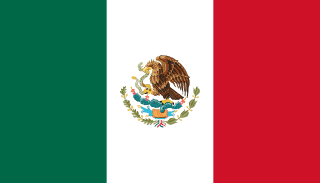
Mexico
United Mexican States
Population: UN WPP 2024, revision 1, projection for 1 July 2026. Sources and methodology.
Geography and territory
Mexico occupies the southern portion of North America, covering 1,964,375 square kilometers and ranking as the thirteenth-largest country in the world. Its territory is bordered by the Pacific Ocean to the west, the Gulf of Mexico and the Caribbean Sea to the east, the United States to the north, and Guatemala and Belize to the south. This position between two oceans gives the country an extraordinary range of landscapes, climates, and ecosystems packed into a single national territory.
The Mexican landscape is shaped by two major mountain chains, the Sierra Madre Occidental and the Sierra Madre Oriental, which frame the broad Mexican Plateau at the country’s core. The Trans-Mexican Volcanic Belt crosses the center of the country and holds its tallest peaks, including the Peak of Orizaba at 5,636 meters, along with the active volcanoes Popocatépetl and Iztaccíhuatl. Mexico is further defined by two distinctive peninsulas: Baja California, a narrow strip of land stretching more than 1,200 kilometers along the Pacific, and the limestone Yucatán Peninsula, riddled with thousands of natural sinkholes known as cenotes.
Climate varies enormously with elevation and latitude. Coastal lowlands are warm and humid, the high plateau enjoys a milder, temperate climate, and the arid north stands in sharp contrast to the lush tropical rainforest of the southeast. Mexico is one of just seventeen countries classified as megadiverse, home to roughly 10 percent of all known species on the planet, a distinction that makes conservation of its varied habitats a matter of genuinely global significance.
History
Mexico’s history stretches back thousands of years through a succession of Mesoamerican civilizations that developed sophisticated knowledge of astronomy, mathematics, and monumental architecture. The Olmecs, often regarded as Mesoamerica’s founding culture, flourished from around 1500 BCE. Later came the Maya, who built extraordinary cities such as Palenque and Chichén Itzá, and Teotihuacán, which grew into one of the largest urban centers of the ancient world. By the time Europeans arrived, the Aztec Empire, ruling from its capital Tenochtitlán, controlled much of central Mexico.
The Spanish conquest, led by Hernán Cortés beginning in 1519, upended this world entirely. Over three centuries of colonial rule, New Spain became the wealthiest and most populous viceroyalty in the Americas, and the blending of Indigenous and Spanish cultures produced the mestizo identity that defines Mexico today. The independence movement, launched by the priest Miguel Hidalgo on September 16, 1810, finally achieved its goal in 1821 with the formal proclamation of Mexican independence.
Independent Mexico faced a turbulent path: the loss of more than half its territory to the United States in the war of 1846-1848, French intervention and the short-lived empire of Maximilian, the long dictatorship of Porfirio Díaz, and the Mexican Revolution of 1910, one of the first major social revolutions of the twentieth century. Figures like Emiliano Zapata and Pancho Villa became enduring symbols of the fight for land and social justice, and the Constitution of 1917, remarkably progressive for its time, laid the legal foundation of the modern Mexican state.
Culture and society
Mexican culture ranks among the most vibrant and instantly recognizable in the world, forged from the fusion of pre-Hispanic traditions and Spanish colonial heritage. The Day of the Dead, recognized by UNESCO as Intangible Cultural Heritage of Humanity, is a singular celebration honoring departed loved ones with altars, marigold flowers, sugar skulls, and music. Patron saint festivals, Christmas posadas, and devotion to the Virgin of Guadalupe give structure to the country’s rich cultural calendar throughout the year.
In literature, Mexico has produced towering figures such as Nobel laureate Octavio Paz, Juan Rulfo, author of the classic novel Pedro Páramo, and Carlos Fuentes. Mexican visual art achieved worldwide renown through the muralism of Diego Rivera, David Alfaro Siqueiros, and José Clemente Orozco, alongside the searingly personal paintings of Frida Kahlo. Mariachi music, with its charro costumes, trumpets, and violins, remains an instantly recognizable sonic emblem of the nation.
Mexican society is marked by warmth, a deep sense of family, and everyday creativity. With more than 68 officially recognized Indigenous languages, the country possesses an extraordinary degree of linguistic diversity that continues to shape regional identities. Mexican cinema has enjoyed a striking international resurgence in recent years, led by directors such as Alfonso Cuarón, Alejandro González Iñárritu, and Guillermo del Toro, all of whom have won the Academy Award for Best Director.
Economy
Mexico ranks as the fifteenth-largest economy in the world by nominal GDP and the second-largest in Latin America, with an economy valued at roughly $1.83 trillion. Its economic model rests on a strong export-oriented manufacturing base, a large services sector, oil production, and tourism. The country is the world’s leading producer of silver and a significant oil producer, an industry historically managed by the state-owned company Pemex.
Manufacturing, propelled by decades of free trade agreements, has become a cornerstone of the economy. The automotive industry is especially prominent, with Mexico ranking among the top vehicle manufacturers and exporters worldwide. Maquiladora plants strung along the northern border produce electronics, auto parts, medical devices, and aerospace components destined for international markets, tightly integrating Mexico into North American supply chains.
Tourism contributes substantially to GDP, drawing more than 45 million international visitors annually. Beach destinations such as Cancún, the Riviera Maya, Los Cabos, and Puerto Vallarta are complemented by cultural tourism in colonial cities and archaeological sites across the country. Remittances sent home by millions of Mexicans living abroad represent another vital source of foreign currency, underscoring how closely tied the national economy is to its diaspora and to the millions of Mexican workers building lives north of the border.
Food and cuisine
Mexican cuisine was recognized by UNESCO as Intangible Cultural Heritage of Humanity in 2010, an honor reflecting its depth, history, and cultural weight. Corn, chili peppers, and beans form the essential triad at the heart of Mexican cooking, a direct legacy of pre-Hispanic civilizations. From this foundation, hundreds of regional dishes have evolved, varying dramatically from one state to the next.
Tacos, in their nearly infinite variety, may be the country’s most iconic dish, ranging from tacos al pastor and carnitas to barbacoa, birria, and cochinita pibil. Mole, the complex sauce that can contain more than thirty ingredients including chilies, chocolate, spices, and nuts, represents the pinnacle of Mexican culinary sophistication. Tamales, enchiladas, chiles en nogada, pozole, and tlacoyos round out an immense and deeply regional gastronomic repertoire.
Traditional Mexican drinks include tequila and mezcal, both distilled from agave and now enjoyed worldwide, as well as pulque, a fermented beverage with pre-Hispanic roots. Hot chocolate, invented in Mesoamerica, along with aguas frescas made from horchata, hibiscus, and tamarind, and the beer-based michelada, all form part of the country’s everyday drinking culture. Bustling public markets, such as La Merced in Mexico City, keep this culinary heritage alive as a living, daily tradition rather than a museum piece.
Tourism and landmarks
Mexico is home to 35 UNESCO World Heritage Sites, placing it among the ten countries with the most listings anywhere in the world. Its archaeological zones are unrivaled: Teotihuacán with its Pyramids of the Sun and Moon, Chichén Itzá and its Kukulcán pyramid, one of the New Seven Wonders of the World, Palenque rising from the Chiapas jungle, and Monte Albán overlooking the valleys of Oaxaca.
Mexico’s colonial cities offer architectural treasures of their own. Guanajuato, with its underground alleyways and famed Cervantino Festival, San Miguel de Allende, repeatedly named one of the best cities in the world to visit, Oaxaca with its extraordinary craft traditions, and Puebla with its exuberant Baroque churches all rank among the country’s urban gems. Mexico City itself, one of the largest metropolitan areas on the planet, layers Aztec ruins, viceregal palaces, and contemporary architecture into a single sprawling cityscape.
Mexico’s natural attractions range from the turquoise Caribbean waters and coral reefs off Cozumel to the Copper Canyon in Chihuahua, whose depths exceed those of the Grand Canyon. Baja California offers gray whale watching along its coasts, while the Sian Ka’an Biosphere Reserve and the cenotes of the Yucatán Peninsula provide some of the country’s most memorable ecotourism experiences. Farther south, the cloud forests of Chiapas and the wetlands of the Gulf coast add yet more variety to a country whose natural attractions rival its cultural ones.
Fun facts about Mexico
- Mexico City was built atop the ruins of Tenochtitlán, the Aztec capital, which itself stood on an island in a lake, a legacy that causes many of the city’s buildings to sink gradually today
- Mexico gave the world chocolate, vanilla, avocado, tomato, chili peppers, and chewing gum, all products with Mesoamerican origins
- UNAM, the National Autonomous University of Mexico, is the largest university in Latin America, and its central campus is itself a UNESCO World Heritage Site
- Popocatépetl, one of the most active volcanoes on Earth, sits just 70 kilometers from Mexico City, one of the most populous urban areas on the planet
- Mexico contains the largest network of underwater caves in the world, with thousands of kilometers explored beneath the Yucatán Peninsula
Mexico in numbers
Latest World Bank and UNDP observations, each with its own year. “World median” is the middle value among the countries that report the same indicator; “#” ranks from the highest value.
Population since 1960
Mexico had 36.7 million people in 1960 and 131.9 million in 2025 — 3.6 times as many.
People
80.0% of people live in towns and cities (world median 63.4%). 24.1% are under 15 and 8.5% are 65 or older — a middle-aged population. Women have 1.89 children on average, below the replacement level of about 2.1 needed to keep a population stable in the long run without migration.
Economy
The economy grew by 0.6% in real terms in 2025. Consumer prices rose by 3.8% in 2025. Services make up the largest share of output (58.9% of GDP); agriculture contributes 3.9%.
Development and environment
UNDP rates human development in Mexico as high, with an index of 0.789 in 2023 (rank 81 of 193). 83.1% of people use the internet and 99.8% have access to electricity. Forest covers 34.2% of the land (world median 32.8%).
Sources: World Bank, World Development Indicators (CC BY 4.0), most recent observation from 2015 onward; UNDP Human Development Report 2025. Retrieved 2026-10-10. Sector shares need not add up to 100% because taxes and subsidies on products are excluded. Missing values are left blank rather than estimated. Sources and methodology.
Climate of Mexico
Averaged across Mexico, the warmest month is June (25.8 °C) and the coolest is January (16.0 °C), a seasonal swing of 9.8 °C. The annual mean is 21.4 °C.
About 763 mm of precipitation falls in a typical year. September is the wettest month (145 mm) and March the driest (15 mm). The three wettest consecutive months, July to September, bring 53% of the year's total — a pronounced rainy season.
Show monthly values as a table
| Month | Mean °C | Low °C | High °C | Precipitation, mm |
|---|---|---|---|---|
| January | 16.0 | 8.2 | 23.8 | 21 |
| February | 17.4 | 9.2 | 25.7 | 16 |
| March | 19.5 | 11.0 | 28.1 | 15 |
| April | 22.1 | 13.6 | 30.7 | 17 |
| May | 24.3 | 16.0 | 32.7 | 44 |
| June | 25.8 | 18.4 | 33.2 | 105 |
| July | 25.5 | 18.9 | 32.2 | 128 |
| August | 25.4 | 18.8 | 32.1 | 134 |
| September | 24.2 | 17.7 | 30.8 | 145 |
| October | 21.9 | 14.7 | 29.1 | 84 |
| November | 18.4 | 10.7 | 26.1 | 33 |
| December | 16.1 | 8.5 | 23.8 | 22 |
Figures are 1991–2020 averages across the whole land area of Mexico, from the World Bank Climate Change Knowledge Portal, CRU TS 4.08 (CC BY 4.0). They are not readings from one weather station: the capital, the coast and high ground can be much warmer, cooler, wetter or drier.
Travel essentials for Mexico
The practical details visitors ask about first. Traffic in Mexico drives on the right, like most of the world. Mains electricity is 120 V at 60 Hz, so appliances built only for 220–240 V need a voltage converter.
- Emergency number
- 911
- Driving side
- Right
- Plug types
- Type A, Type BA: two flat parallel pins; B: two flat pins plus a round earth pin
- Voltage
- 120 V60 Hz
- Dialling code
- +52From abroad: your exit code, then 52 and the number
- Currency
- Mexican Peso (MXN)
- Time zone
- UTC-5 to UTC-8Current local time in Mexico
Compiled from IEC plug and voltage standards, national emergency-service listings and the UN road-traffic conventions. Emergency numbers and local coverage can change — confirm them locally on arrival. Mexico's internet domain is .mx.
Where Mexico ranks in the world
Each position counts only the countries with data in that ranking guide. First place is the highest value — for price levels, the most expensive. Select a card to see the full table.
- Population11th of 196133.0 millionUN projection, July 2026
- Land area13th of 1951,943,950 km²World Bank, 2023
- Population density119th of 19467 per km²World Bank, 2023
- GDP (nominal)13th of 187$1.83TWorld Bank, 2024, current US$
- GDP per capita67th of 187$13,988World Bank, 2024, current US$
- Life expectancy84th of 19475.3 yearsWorld Bank, 2024
- Price level65th of 16554 (US = 100)ICP 2021, household consumption
Bordering countries of Mexico


Compare Mexico with another country
Frequently asked questions about Mexico
What is the capital of Mexico?
The capital of Mexico is Mexico City.
What is the population of Mexico?
The UN World Population Prospects projection for Mexico is 132,997,658 people (133.0 million) on 1 July 2026. National statistical offices may publish different estimates.
What language is spoken in Mexico?
The official language of Mexico is Spanish.
What currency is used in Mexico?
The currency of Mexico is the Mexican Peso (MXN).
How big is Mexico?
Mexico covers an area of 1,964,375 km².
What type of government does Mexico have?
Mexico is a federal presidential republic.
Which countries border Mexico?
Mexico shares land borders with United States, Guatemala, Belize.
What is the highest point in Mexico?
The highest point in Mexico is Peak of Orizaba (5,636 m).
