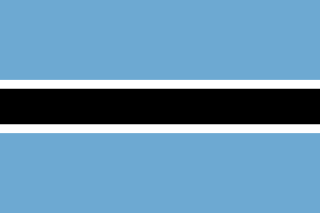
Botswana
Republic of Botswana
Population: UN WPP 2024, revision 1, projection for 1 July 2026. Sources and methodology.
Geography and territory
Botswana is a landlocked nation at the heart of Southern Africa, covering 581,730 square kilometers of territory, an area comparable in size to France. The country’s dominant geographic feature is the Kalahari Desert, which spreads across roughly 70 percent of the land with its reddish sands, thorny scrub, and dry savanna. Despite its name, the Kalahari is not a true sand-sea desert; it receives enough seasonal rainfall to support grasslands and woodland that sustain a remarkably diverse array of wildlife.
In the northwest, the Okavango Delta ranks among the most extraordinary natural phenomena on Earth. It is the world’s largest inland delta, where the waters of the Okavango River fan out across an area that can reach 22,000 square kilometers at the height of the annual flood, weaving a maze of channels, lagoons, and islands that supports exceptional biodiversity. Rather than draining into the sea, the delta’s waters simply evaporate and seep into the Kalahari sands, and this singular ecosystem was named a UNESCO World Heritage Site in 2014, transforming an otherwise arid landscape into a seasonal oasis that draws immense concentrations of African wildlife.
The Makgadikgadi Pans, in the country’s east-central region, form another emblematic landscape: an enormous expanse of salt flats left behind by an ancient superlake that once covered much of Botswana. During the rainy season, the pans flood partially and attract huge flocks of pink flamingos along with migrating herds of wildebeest and zebra. Overall, Botswana’s terrain is largely flat, with elevations ranging from about 500 to 1,400 meters; the country’s highest point, Otse Hill, reaches 1,491 meters south of Gaborone. The climate is semi-arid, with rainfall concentrated in the austral summer months and long dry spells the rest of the year. Botswana shares borders with South Africa, Namibia, Zambia, and Zimbabwe, sitting at a strategic crossroads of the subcontinent.
History
The San people, often known as Bushmen, are the oldest inhabitants of the region that is now Botswana, with a presence stretching back tens of thousands of years. These hunter-gatherers developed an intimate understanding of the Kalahari ecosystem and left behind an extraordinary artistic legacy in the rock paintings of the Tsodilo Hills, now a UNESCO World Heritage Site. Beginning in the eighteenth century, Tswana-speaking peoples migrated into the region from the north, establishing organized chiefdoms that would eventually give the country its name.
In the nineteenth century, pressure from Boer settlers advancing from South Africa led Tswana chiefs to petition for British protection, and in 1885 the Bechuanaland Protectorate was established. Unlike many other African colonies, British administration remained comparatively light, allowing traditional structures of authority to persist largely intact. On 30 September 1966, Bechuanaland peacefully achieved independence under the leadership of Seretse Khama, who became the first president of the newly named Republic of Botswana.
Botswana’s postcolonial history is widely regarded as one of the great success stories of Africa. At independence, it was among the poorest countries in the world, with barely 12 kilometers of paved road. The discovery of diamonds in 1967, combined with prudent management of the resulting revenue, transformed the country dramatically. Under a succession of democratic governments, Botswana has maintained exemplary political stability, holding free elections without interruption since independence and avoiding the coups and civil conflicts that troubled many of its neighbors, earning it a reputation as one of Africa’s most solid and prosperous democracies.
Culture and society
Botswana’s culture is deeply rooted in the traditions of the Tswana people, who make up the majority of the population. The concept of botho, closely related to the South African idea of ubuntu, embodies a philosophy of shared humanity, mutual respect, and communal solidarity that underpins social relationships. The kgotla, a traditional public assembly where communities debate issues and reach collective decisions, remains a vital institution both in rural villages and in modern national politics.
Traditional music and dance occupy a central place in cultural life. Setapa, an energetic dance performed with rapid footwork, accompanies celebrations and rites of passage. The music of the San people, with its intricate polyphonic singing and percussive rhythms, has been recognized for its exceptional cultural value. Craftwork includes fine palm-leaf basketry, particularly the baskets woven in the Ngamiland region and decorated with bold geometric patterns, prized both as everyday objects and as works of art.
Modern Batswana society blends respect for tradition with a strong orientation toward education and progress. The government has invested heavily in education and health care, achieving some of the highest literacy rates on the continent. The fight against HIV/AIDS, which devastated the country in the 1990s and 2000s, has become a model of effective public health response in Africa, with universal antiretroviral treatment programs and prevention campaigns that have sharply reduced infection rates.
Economy
Botswana’s economy rests on the foundation of its diamond wealth. The country is one of the world’s leading diamond producers by value, and Debswana, a joint venture between the government and De Beers, anchors the national mining industry. Diamonds account for roughly 70 percent of export earnings and have financed Botswana’s transformation from one of the poorest countries on Earth into an upper-middle-income economy in the span of barely five decades, an achievement that has few parallels among resource-rich developing nations.
Tourism is the country’s second most important economic sector, drawing visitors from around the world to its spectacular reserves and luxury safari lodges. Botswana has deliberately pursued a low-volume, high-value tourism model designed to maximize revenue while minimizing environmental impact, positioning the country as an exclusive destination for travelers seeking wildlife and wilderness. Cattle ranching is another significant sector, and Botswana’s beef is among the few in Africa that meets the export standards required by the European Union.
Aware that diamonds are a finite resource, the government has pushed to diversify the economy toward financial services, technology, and other service industries. Botswana enjoys a strong reputation for good governance, low corruption, and macroeconomic stability, factors that make it one of the most attractive destinations for foreign investment on the continent. The national currency, the pula, takes its name from the Setswana word for rain, a fitting reminder of how precious water remains in this semi-arid nation.
Food and cuisine
Botswana’s cuisine reflects the simplicity and land-based traditions of its pastoral and farming communities. Seswaa is the country’s signature dish: beef, goat, or lamb slow-cooked for hours until it falls apart, then pounded and served with pap or bogobe, a porridge made from sorghum or maize. Served at nearly every important celebration, seswaa embodies the hospitality and generosity central to Tswana culture.
Bogobe, prepared from sorghum, millet, or maize, forms the backbone of everyday meals and is eaten in both sweet and savory versions. Vetkoek, a fried dough inherited from South African influence, is filled with minced meat or spread with jam. Mopane worms, the caterpillars of the mopane moth gathered from trees of the same name, provide a highly nutritious source of protein and are a prized delicacy across the country, whether dried, fried, or stewed in tomato sauce.
Traditional beer brewed from fermented sorghum remains central to community gatherings and ceremonies. In rural areas, dishes made from wild Kalahari melon and the many preparations of morogo, wild edible leafy greens, round out the diet with essential vitamins and minerals. South African and British influences are evident in urban areas, where the braai, or barbecue, is as much a social ritual in Botswana as it is south of the border.
Tourism and landmarks
The Okavango Delta is Botswana’s undisputed crown jewel and one of the most sought-after wilderness destinations on the planet. Exploring its channels by mokoro, the traditional dugout canoe of the delta’s inhabitants, offers close encounters with hippos, crocodiles, elephants, sitatunga antelope, and an astonishing variety of birdlife. Luxury camps and lodges on private islands within the delta provide exclusive safari experiences that combine deep immersion in the wild with exceptional comfort.
Chobe National Park, in the north, holds the largest concentration of elephants in Africa, with an estimated population exceeding 120,000 animals. Sunset boat safaris on the Chobe River, watching herds of elephants bathe along the banks, rank among the most memorable wildlife experiences the continent has to offer. The Central Kalahari Game Reserve, one of the largest protected areas in the world at more than 52,000 square kilometers, offers the chance to see Kalahari lions, cheetahs, gemsbok, and the seasonal migrations of wildebeest and zebra.
The Tsodilo Hills, sometimes called the Louvre of the Desert, hold more than 4,500 rock paintings spanning roughly 100,000 years of human history, making them one of the richest concentrations of rock art anywhere in the world. The Makgadikgadi Pans offer surreal landscapes of white salt flats stretching to the horizon, where visitors can sleep beneath some of the most spectacular starry skies on the planet. Kubu Island, a rocky outcrop covered in ancient baobab trees rising from the middle of the pans, is a sacred site for the San people and an otherworldly sight for travelers.
Fun facts about Botswana
- Botswana is one of the few African countries to have held uninterrupted democratic elections since independence in 1966, without a single coup or civil war.
- The name of the national currency, the pula, means “rain” in Setswana and doubles as a common expression of good wishes, reflecting how precious water is in this semi-arid land.
- The Tsodilo Hills contain rock paintings up to 100,000 years old and are regarded by the San as a sacred place where, according to tradition, the gods descended to earth.
- Botswana is home to roughly a third of all African elephants, with a population exceeding 130,000 individuals.
- At independence Botswana ranked among the 25 poorest countries on Earth; today it is classified as an upper-middle-income economy thanks to disciplined management of its diamond wealth.
- Nearly 40 percent of Botswana’s land area is set aside for wildlife conservation in national parks, reserves, and management areas, one of the highest shares of any country in the world.
Botswana in numbers
Latest World Bank and UNDP observations, each with its own year. “World median” is the middle value among the countries that report the same indicator; “#” ranks from the highest value.
Population since 1960
Botswana had 516,165 people in 1960 and 2.6 million in 2025 — 5.0 times as many.
People
68.0% of people live in towns and cities (world median 63.4%). 32.0% are under 15 and 4.1% are 65 or older — a young population. Women have 2.70 children on average, above the replacement level of about 2.1.
Economy
The economy shrank by 0.7% in real terms in 2025. Consumer prices rose by 2.7% in 2025. Services make up the largest share of output (64.6% of GDP); agriculture contributes 1.8%.
Development and environment
UNDP rates human development in Botswana as high, with an index of 0.731 in 2023 (rank 111 of 193). 57.5% of people use the internet and 80.2% have access to electricity. Forest covers 27.8% of the land (world median 32.8%).
Sources: World Bank, World Development Indicators (CC BY 4.0), most recent observation from 2015 onward; UNDP Human Development Report 2025. Retrieved 2026-10-10. Sector shares need not add up to 100% because taxes and subsidies on products are excluded. Missing values are left blank rather than estimated. Sources and methodology.
Climate of Botswana
Averaged across Botswana, the warmest month is January (26.5 °C) and the coolest is July (14.8 °C), a seasonal swing of 11.7 °C. The annual mean is 22.1 °C.
About 392 mm of precipitation falls in a typical year. January is the wettest month (92 mm) and July the driest (1 mm). The three wettest consecutive months, December to February, bring 60% of the year's total — a pronounced rainy season.
Show monthly values as a table
| Month | Mean °C | Low °C | High °C | Precipitation, mm |
|---|---|---|---|---|
| January | 26.5 | 20.0 | 33.1 | 92 |
| February | 26.0 | 19.6 | 32.5 | 76 |
| March | 24.8 | 18.1 | 31.7 | 56 |
| April | 22.0 | 14.6 | 29.5 | 25 |
| May | 18.3 | 9.5 | 27.2 | 6 |
| June | 15.2 | 6.0 | 24.5 | 1 |
| July | 14.8 | 5.3 | 24.4 | 1 |
| August | 17.8 | 8.2 | 27.5 | 1 |
| September | 21.9 | 12.6 | 31.2 | 4 |
| October | 25.1 | 17.0 | 33.3 | 19 |
| November | 26.1 | 18.7 | 33.5 | 46 |
| December | 26.4 | 19.5 | 33.4 | 66 |
Figures are 1991–2020 averages across the whole land area of Botswana, from the World Bank Climate Change Knowledge Portal, CRU TS 4.08 (CC BY 4.0). They are not readings from one weather station: the capital, the coast and high ground can be much warmer, cooler, wetter or drier.
Travel essentials for Botswana
The practical details visitors ask about first. Traffic in Botswana drives on the left, one of 54 of the 196 countries profiled here that do — see the full list. Mains electricity is 230 V at 50 Hz, so devices made only for 110–120 V (common in North America) need a converter unless they are dual-voltage — most phone and laptop chargers are.
- Emergency number
- 999Ambulance 997 · Fire 998
- Driving side
- Left
- Plug types
- Type D, Type G, Type MD: three large round pins in a triangle; G: three rectangular pins (British); M: three large round pins (South African)
- Voltage
- 230 V50 Hz
- Dialling code
- +267From abroad: your exit code, then 267 and the number
- Currency
- Pula (BWP)
- Time zone
- CAT (UTC+2)Current local time in Botswana
Compiled from IEC plug and voltage standards, national emergency-service listings and the UN road-traffic conventions. Emergency numbers and local coverage can change — confirm them locally on arrival. Botswana's internet domain is .bw.
Where Botswana ranks in the world
Each position counts only the countries with data in that ranking guide. First place is the highest value — for price levels, the most expensive. Select a card to see the full table.
- Population144th of 1962.6 millionUN projection, July 2026
- Land area47th of 195566,730 km²World Bank, 2023
- Population density187th of 1944.4 per km²World Bank, 2023
- GDP (nominal)128th of 187$19.3BWorld Bank, 2024, current US$
- GDP per capita91st of 187$7,650World Bank, 2024, current US$
- Life expectancy135th of 19469.3 yearsWorld Bank, 2024
- Price level84th of 16546 (US = 100)ICP 2021, household consumption
Bordering countries of Botswana


Compare Botswana with another country
Frequently asked questions about Botswana
What is the capital of Botswana?
The capital of Botswana is Gaborone.
What is the population of Botswana?
The UN World Population Prospects projection for Botswana is 2,603,388 people (2.6 million) on 1 July 2026. National statistical offices may publish different estimates.
What language is spoken in Botswana?
The official language of Botswana is English and Setswana.
What currency is used in Botswana?
The currency of Botswana is the Pula (BWP).
How big is Botswana?
Botswana covers an area of 581,730 km².
What type of government does Botswana have?
Botswana is a parliamentary republic.
Which countries border Botswana?
Botswana shares land borders with South Africa, Namibia, Zambia, Zimbabwe.
What is the highest point in Botswana?
The highest point in Botswana is Otse Hill (1,491 m).

