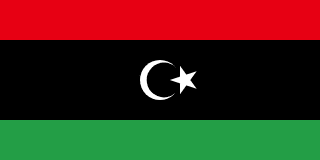
Libya
State of Libya
Population: UN WPP 2024, revision 1, projection for 1 July 2026. Sources and methodology.
Geography and territory
Libya is the fourth-largest country in Africa and the sixteenth-largest in the world, covering 1,759,541 square kilometers across the northern part of the continent. It borders the Mediterranean Sea to the north, Egypt and Sudan to the east, Chad and Niger to the south, and Algeria and Tunisia to the west. Its Mediterranean coastline, roughly 1,770 kilometers long, stands in sharp contrast to the vast desert interior that covers more than 90 percent of the country.
The Sahara Desert covers the overwhelming majority of Libya, shaping a landscape of sand seas, rocky plateaus, hamadas (stone deserts), and depressions where oases have been inhabited since ancient times. The Tibesti massif in the southwest and the Akakus Mountains in the far west offer landscapes of austere beauty, with rock formations sculpted by wind erosion, deep canyons, and natural stone arches that shelter some of the Sahara’s most important rock art.
The coastal strip holds most of the population and economic activity, benefiting from a Mediterranean climate with mild winters and hot summers. The cities of Tripoli and Benghazi sit along this coastal zone, which offers beaches and striking coastal scenery. Inland, the climate is extremely arid, with almost no rainfall and temperatures that can exceed 50°C. The Great Man-Made River, an ambitious engineering project launched in the 1980s, carries fossil groundwater from Saharan aquifers to the coastal cities.
History
The land that is now Libya holds a history stretching back millennia, leaving behind archaeological treasures of immense value. The Phoenicians founded trading colonies along the western coast, including the future Leptis Magna, while the Greeks settled the eastern region of Cyrenaica, founding Cyrene in the 7th century BCE. Under Roman rule, these cities reached extraordinary splendor: Leptis Magna, birthplace of Emperor Septimius Severus, became one of the great cities of the Mediterranean, with theaters, forums, baths, and triumphal arches that still astonish with their monumental scale.
After the fall of the Roman Empire, the territory passed successively through Vandal, Byzantine, and, from the 7th century, Arab control, which introduced Islam and the Arabic language and profoundly reshaped the region’s cultural identity. Ottoman rule, which lasted from the 16th century into the early 20th, gave way to Italian colonization in 1911, during which Libya mounted a heroic resistance led by Omar al-Mukhtar, whose guerrilla struggle against the Italians made him a national hero.
Libya gained independence in 1951 under the monarchy of King Idris I. In 1969, Colonel Muammar Gaddafi overthrew the king in a coup and established a personalist regime that governed the country for 42 years, based on his “Green Book” and an ideology he called the Jamahiriya, or “state of the masses.” The Arab Spring of 2011 sparked an armed uprising that, with international support, brought down Gaddafi’s regime. Since then, Libya has gone through a period of instability and political division, with rival governments complicating national reconstruction.
Culture and society
Libyan culture is the product of a rich mix of Arab, Berber, Tuareg, and Mediterranean traditions that have shaped a complex, distinctive identity. The population is predominantly Arab, but Berber communities in the Jebel Nafusa and Tuareg communities in the southwest preserve their own languages, customs, and traditions that enrich the country’s cultural heritage. Sunni Islam is practiced nearly universally and exerts a decisive influence on social life, codes of conduct, and holidays.
Libyan music blends Andalusian Arab traditions with Berber and Saharan African rhythms. Maluf, a musical tradition of Andalusian origin practiced in Tripoli and other coastal cities, is performed at celebrations and weddings with instruments such as the oud, violin, and darbuka. Bedouin oral poetry, recited at tribal gatherings and festivities, is another deeply rooted cultural expression celebrating honor, love, nature, and tribal identity.
Libyan craftsmanship is expressed in Berber carpets and tapestries with vivid geometric patterns, Tuareg silver jewelry, leatherwork, and hand-painted pottery. Traditional markets, or souks, especially the one in Tripoli’s Medina, are vibrant spaces where these crafts are traded alongside spices, perfumes, and fabrics. Traditional Libyan architecture, with its whitewashed courtyard houses, fortified Berber granaries, and fortified oasis settlements of the Fezzan, forms a valuable built heritage.
Economy
Libya’s economy is dominated by the hydrocarbon sector, which accounts for the vast majority of export revenue and a substantial share of GDP. Libya holds Africa’s largest proven oil reserves, estimated at more than 48 billion barrels, and is a major crude supplier to European markets. Natural gas reserves are similarly significant. Before the 2011 crisis, these resources had given Libya one of the highest per-capita incomes in Africa.
Political instability since 2011 has caused severe disruptions to oil production, with frequent blockades of oil fields and export terminals by rival militias and factions. This volatility has hit the economy hard, reducing government revenue, weakening the currency, and fueling inflation. Diversification efforts undertaken during the Gaddafi era, including irrigated agriculture and petrochemical industry, have been badly damaged by the conflict.
Outside the oil sector, Libya’s economy includes agricultural activity concentrated along the coastal strip, producing grains, olives, citrus, and dates, along with sheep and goat herding in semi-arid areas. Trade and services make up a growing share of urban economic activity. National reconstruction, political reconciliation, and stabilizing oil production are the necessary conditions for Libya to recover its economic potential and improve living conditions for its population.
Food and cuisine
Libyan cuisine reflects its position at the crossroads of Maghreb, Mashreq Arab, and Mediterranean culinary traditions. Couscous is the definitive national dish, prepared in countless ways depending on region and occasion. Libyan couscous typically comes with a lamb or chicken stew, chickpeas, potatoes, zucchini, and a tomato sauce spiced with harissa, a hot chile paste that is an essential condiment of Libyan cooking.
Bazin is another emblematic dish, a barley-flour dough cooked into a thick meat-and-tomato broth and served on a shared platter from which diners scoop portions by hand. Sharba, a thick tomato soup with pasta, minced meat, and chickpeas, is the traditional dish used to break the fast during Ramadan. Roast lamb, especially whole ribs baked with spices, is a festive dish reserved for weddings, religious celebrations, and hosting guests.
Libyan sweets are famous for their artisanal preparation and generous use of honey, almonds, pistachios, and orange-blossom water. Magrood, a fried pastry filled with date paste, and asida, a semolina dessert with butter and honey, are specialties served at every celebration. Mint green tea, brewed ceremoniously and served very sweet in small glasses, is the social drink that accompanies every conversation and gathering in daily Libyan life.
Tourism and landmarks
Libya holds archaeological treasures of exceptional value that, under conditions of stability, would rank it among the Mediterranean’s leading cultural destinations. Leptis Magna, a UNESCO World Heritage Site, is one of the best-preserved Roman cities in the world, with its Arch of Septimius Severus, theater, Baths of Hadrian, forum, and basilica rising among the dunes at the water’s edge, forming a scene of breathtaking beauty.
Sabratha, another UNESCO World Heritage Roman city, preserves a magnificently restored three-story theater standing before the Mediterranean, along with temples, mosaics, and baths. Cyrene, in eastern Cyrenaica, was one of the most important Greek cities in North Africa and retains temples, agoras, and necropolises that testify to its classical splendor. Together, these three sites form an archaeological triangle unmatched anywhere in the world, documenting centuries of Mediterranean civilization.
The Libyan Sahara offers equally extraordinary desert experiences. The Akakus Mountains, a UNESCO World Heritage Site, hold thousands of rock paintings and carvings dating back 12,000 years, documenting the Sahara’s transformation from a green savanna inhabited by elephants and giraffes into today’s desert. The sand seas of Ubari, with their emerald lakes ringed by date palms and golden dunes, create landscapes of surreal beauty. The old town of Ghadames, the “pearl of the desert,” with its traditional architecture of covered lanes and interconnected houses, completes an offering that awaits the stability needed to be fully rediscovered.
Fun facts about Libya
- Libya holds Africa’s largest proven oil reserves, at more than 48 billion barrels.
- Leptis Magna is considered one of the best-preserved Roman cities in the world, rivaling Pompeii in archaeological importance.
- The Great Man-Made River, which carries groundwater from the Sahara to the coast, is one of the largest civil engineering projects ever built.
- Rock paintings in the Akakus Mountains, up to 12,000 years old, show that the Sahara was once a green savanna with rivers and lakes.
- Ghadames, the desert oasis town, features a unique architectural system of covered streets that keep the interior cool even on the hottest days.
- Omar al-Mukhtar, hero of Libyan resistance against Italian colonization, is known as the “Lion of the Desert” and his image appears on Libyan banknotes.
Libya in numbers
Latest World Bank and UNDP observations, each with its own year. “World median” is the middle value among the countries that report the same indicator; “#” ranks from the highest value.
Population since 1960
Libya had 1.5 million people in 1960 and 7.5 million in 2025 — 5.0 times as many.
People
87.9% of people live in towns and cities (world median 63.4%). 26.8% are under 15 and 5.2% are 65 or older — a middle-aged population. Women have 2.30 children on average, close to the replacement level of about 2.1.
Economy
The economy grew by 13.4% in real terms in 2025. Consumer prices rose by 1.8% in 2025. Industry makes up the largest share of output (73.2% of GDP); agriculture contributes 1.5%.
Development and environment
UNDP rates human development in Libya as high, with an index of 0.721 in 2023 (rank 115 of 193). 82.0% of people use the internet and 77.4% have access to electricity. Forest covers 0.1% of the land (world median 32.8%).
Sources: World Bank, World Development Indicators (CC BY 4.0), most recent observation from 2015 onward; UNDP Human Development Report 2025. Retrieved 2026-10-10. Sector shares need not add up to 100% because taxes and subsidies on products are excluded. Missing values are left blank rather than estimated. Sources and methodology.
Climate of Libya
Averaged across Libya, the warmest month is July (30.5 °C) and the coolest is January (12.5 °C), a seasonal swing of 18.0 °C. The annual mean is 22.8 °C.
About 38 mm of precipitation falls in a typical year. January is the wettest month (8 mm) and July the driest (0 mm). What little rain there is falls mostly from December to February (54% of the total).
Less than 250 mm a year is typical of desert climates.
Show monthly values as a table
| Month | Mean °C | Low °C | High °C | Precipitation, mm |
|---|---|---|---|---|
| January | 12.5 | 6.3 | 18.8 | 8 |
| February | 14.5 | 7.7 | 21.4 | 6 |
| March | 18.6 | 11.7 | 25.5 | 4 |
| April | 23.7 | 16.4 | 31.1 | 2 |
| May | 27.4 | 20.1 | 34.6 | 1 |
| June | 30.1 | 23.0 | 37.4 | 0 |
| July | 30.5 | 23.8 | 37.2 | 0 |
| August | 30.5 | 24.0 | 37.2 | 1 |
| September | 28.7 | 22.0 | 35.4 | 2 |
| October | 24.5 | 17.9 | 31.1 | 4 |
| November | 18.6 | 12.0 | 25.2 | 3 |
| December | 13.8 | 7.6 | 20.2 | 7 |
Figures are 1991–2020 averages across the whole land area of Libya, from the World Bank Climate Change Knowledge Portal, CRU TS 4.08 (CC BY 4.0). They are not readings from one weather station: the capital, the coast and high ground can be much warmer, cooler, wetter or drier.
Travel essentials for Libya
The practical details visitors ask about first. Traffic in Libya drives on the right, like most of the world. Mains electricity is 230 V at 50 Hz, so devices made only for 110–120 V (common in North America) need a converter unless they are dual-voltage — most phone and laptop chargers are.
- Emergency number
- 1515
- Driving side
- Right
- Plug types
- Type C, Type LC: two round pins (Europlug); L: three round pins in a row (Italian)
- Voltage
- 230 V50 Hz
- Dialling code
- +218From abroad: your exit code, then 218 and the number
- Currency
- Libyan Dinar (LYD)
- Time zone
- EET (UTC+2)Current local time in Libya
Compiled from IEC plug and voltage standards, national emergency-service listings and the UN road-traffic conventions. Emergency numbers and local coverage can change — confirm them locally on arrival. Libya's internet domain is .ly.
Where Libya ranks in the world
Each position counts only the countries with data in that ranking guide. First place is the highest value — for price levels, the most expensive. Select a card to see the full table.
- Population105th of 1967.5 millionUN projection, July 2026
- Land area16th of 1951,759,540 km²World Bank, 2023
- Population density188th of 1944.2 per km²World Bank, 2023
- GDP (nominal)92nd of 187$48.5BWorld Bank, 2024, current US$
- GDP per capita100th of 187$6,569World Bank, 2024, current US$
- Life expectancy125th of 19471.1 yearsWorld Bank, 2024
Bordering countries of Libya


Compare Libya with another country
Frequently asked questions about Libya
What is the capital of Libya?
The capital of Libya is Tripoli.
What is the population of Libya?
The UN World Population Prospects projection for Libya is 7,539,851 people (7.5 million) on 1 July 2026. National statistical offices may publish different estimates.
What language is spoken in Libya?
The official language of Libya is Arabic.
What currency is used in Libya?
The currency of Libya is the Libyan Dinar (LYD).
How big is Libya?
Libya covers an area of 1,759,541 km².
What type of government does Libya have?
Libya is a transitional government.
Which countries border Libya?
Libya shares land borders with Tunisia, Algeria, Niger, Chad, Sudan, Egypt.
What is the highest point in Libya?
The highest point in Libya is Bikku Bitti (2,267 m).
