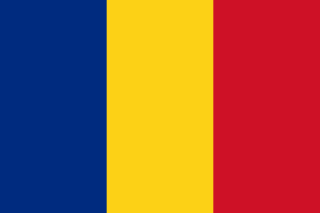
Romania
Romania
Population: UN WPP 2024, revision 1, projection for 1 July 2026. Sources and methodology.
Geography and territory
Romania sits at the crossroads of Central Europe, Eastern Europe, and the Balkans, in the southeastern corner of the continent. Covering 238,397 square kilometers, it ranks as the twelfth-largest country in Europe and is home to about 18.8 million people. Its geography strikes a remarkable balance: roughly a third of the land rises into the Carpathian Mountains, a third rolls across hills and plateaus, and a third spreads out as lowland plain, including the fertile Danube plain stretching along the south and east.
The Carpathians sweep through the country in a broad arc, dividing it into three historic regions: Transylvania in the northwest, ringed by mountains; Moldavia in the northeast; and Wallachia in the south. Moldoveanu Peak, at 2,544 meters in the Fagaras Mountains, is the country’s highest point. The Danube River traces much of the southern border with Bulgaria and Serbia before emptying into the Black Sea through the Danube Delta, one of Europe’s largest and best-preserved wetlands, recognized as a UNESCO World Heritage Site and a Biosphere Reserve.
Romania’s climate is temperate continental, with four distinct seasons. Summers run hot, especially across the southern plains, where temperatures can top 35 degrees Celsius, while winters turn cold and snowy, particularly in the mountains. The country’s biodiversity is exceptional by European standards: its Carpathian forests, many of them virgin or near-pristine, shelter the largest populations of brown bears, wolves, and lynx found anywhere in Europe outside Russia.
History
Romania’s story begins with ancient Dacia, a kingdom that flourished in the Carpathians until it was conquered by the Roman emperor Trajan in 106 AD. Roman rule proved brief but left a lasting mark, giving rise to the Romanian language, the only Romance language spoken in Eastern Europe and a living testament to Rome’s reach into the region. Trajan’s Column in Rome still depicts the conquest of Dacia in carved relief, and Romanians take pride in this dual Dacian and Roman heritage.
Through the Middle Ages, the principalities of Wallachia, Moldavia, and Transylvania developed as distinct political entities, repelling waves of Mongol, Ottoman, and Hungarian incursions. Vlad III of Wallachia, known as Vlad the Impaler for his brutal tactics against the Ottomans, would later inspire Bram Stoker’s Dracula. Stephen the Great of Moldavia is revered as a defender of Christendom against Ottoman expansion, while Transylvania, ruled successively by Hungary and the Habsburgs, developed a multicultural identity shared among Romanian, Hungarian, and ethnic German Saxon communities.
Modern Romania emerged in 1859 with the union of Wallachia and Moldavia under Prince Alexandru Ioan Cuza, and won full independence from the Ottoman Empire in 1877. After World War I, the Great Union of 1918 brought Transylvania, Bukovina, and Bessarabia into the fold, creating Greater Romania. The twentieth century that followed was shaped by World War II, monarchy, and the communist dictatorship of Nicolae Ceausescu from 1965 to 1989. The December 1989 revolution, the only violent overthrow of communism in Eastern Europe, ended with Ceausescu’s execution. Romania joined the European Union in 2007.
Culture and society
Romania holds a cultural heritage of remarkable depth, where centuries-old traditions coexist with a vibrant contemporary arts scene. Folk culture remains exceptionally alive in regions like Maramures and Bucovina, where handicraft traditions, religious festivals, and regional dress remain woven into daily life. The wooden churches of Maramures, with their slender carved spires, and the painted monasteries of Bucovina, whose fifteenth-century exterior frescoes narrate biblical scenes, hold UNESCO World Heritage status and stand as singular achievements of Orthodox religious art.
Romanian music spans folk traditions built around instruments like the nai, or pan flute, the cobza, and the cimbalom, up through classical composers such as George Enescu, widely regarded as the country’s greatest musician, whose biennial Bucharest festival ranks among Europe’s leading classical music events. The sculptor Constantin Brancusi, born in Romania, reshaped modern art with works such as The Kiss and Bird in Space, and his monumental ensemble in Targu Jiu remains a landmark of twentieth-century sculpture.
Romanian letters have produced towering figures including national poet Mihai Eminescu, playwright Eugene Ionesco, father of the theater of the absurd though he built his career in France, philosopher Emil Cioran, and Mircea Eliade, a historian of religion of worldwide renown. Contemporary Romanian cinema has earned extraordinary international recognition, capped by Cristian Mungiu’s Palme d’Or at Cannes for 4 Months, 3 Weeks and 2 Days, alongside acclaimed work from directors Cristi Puiu and Corneliu Porumboiu.
Economy
Romania’s economy has undergone a dramatic transformation since the fall of communism in 1989, shifting from central planning to a market economy fully integrated into the European Union. Growth has been robust, especially since EU accession in 2007, propelled by domestic consumption, foreign investment, and European funding. Significant regional disparities persist, however, between a thriving Bucharest and other major cities and rural areas that in many cases retain more traditional ways of life.
Information technology has become a key engine of growth, with Romania emerging as one of Europe’s leading software development hubs. Cities such as Cluj-Napoca, Timisoara, and Iasi host a fast-expanding tech ecosystem. The automotive industry forms another pillar, with the national brand Dacia, owned by Renault, producing vehicles that sell strongly across Europe. Agriculture remains important as well, with Romania ranking among the EU’s largest grain producers and building a growing reputation for wine.
Romania’s natural resources include oil, natural gas, coal, and minerals; the country was in fact the world’s first significant oil producer in the nineteenth century and still holds meaningful reserves beneath the Black Sea. Nuclear and hydroelectric power round out the energy mix. Tourism carries substantial untapped potential, with assets ranging from the Carpathians and the Danube Delta to Transylvania’s medieval towns and the Black Sea coast drawing steadily growing numbers of international visitors.
Food and cuisine
Romanian cuisine ranks among the richest and most varied in Eastern Europe, shaped by Ottoman, Hungarian, German, Greek, and Slavic influences layered over homegrown peasant traditions. Sarmale, cabbage rolls stuffed with ground meat and rice and slow-cooked with sauerkraut, then served with mamaliga, a cornmeal polenta, and smantana, a tangy sour cream, are widely considered the national dish and appear at nearly every family celebration.
Mici, also called mititei, are small skinless sausages of pork, beef, and lamb seasoned with garlic, cumin, and baking soda, and stand as the quintessential Romanian street food, ubiquitous at cookouts and outdoor gatherings. Ciorba, a sour soup soured with bors, a fermented wheat-bran liquid, anchors everyday meals, appearing in variants made with tripe, meatballs, or vegetables. Homemade bread and mamaliga accompany nearly every dish on the table.
Romania is a wine-producing country with a heritage stretching back more than 6,000 years, placing it among the oldest wine regions on Earth. Native grape varieties such as Feteasca Neagra, Feteasca Alba, and Grasa de Cotnari yield wines of distinctive character, and regions including Dealu Mare, Murfatlar, and Cotnari have begun earning international recognition. Tuica and palinca, artisanal plum brandies, serve as customary drinks of welcome and celebration, while cozonac, a braided sweet bread filled with walnuts and cocoa, is a fixture at Christmas and Easter tables.
Tourism and landmarks
Transylvania stands as Romania’s touristic heartland, a storybook region of fortified medieval towns, hilltop castles, and Saxon villages where time seems to slow down. Bran Castle, marketed commercially as Dracula’s Castle even though its historical link to Vlad the Impaler is tenuous at best, draws more visitors than any other site in the country. The cities of Sibiu, Brasov, and Sighisoara, the latter home to a UNESCO-listed medieval citadel and the birthplace of Vlad Dracula, offer exceptional architectural heritage.
The painted monasteries of Bucovina, in the northeast, are an artistic wonder without parallel: fifteenth- and sixteenth-century frescoes cover the exterior facades of churches such as Voronet, nicknamed the Sistine Chapel of the East for its singular blue pigment, along with Sucevita, Moldovita, and Humor. The wooden churches of Maramures, crowned by towering carved spires, hold their own UNESCO World Heritage listing. The Danube Delta, a birdwatcher’s paradise with more than 300 recorded species and Europe’s largest pelican colony, delivers an unmatched natural experience.
Bucharest, the capital, surprises visitors with its mix of styles: the Palace of the Parliament, the second-largest administrative building in the world after the Pentagon, stands alongside elegant belle époque villas, Orthodox churches, and a revitalized old town packed with restaurants and bars. The Carpathians offer outstanding hiking, skiing, and wildlife-watching, including chances to spot brown bears and wolves in their natural habitat. The Transfagarasan Highway, which winds across the Carpathians above 2,000 meters of elevation, is regarded as one of the most spectacular roads in the world.
Fun facts about Romania
- The Palace of the Parliament in Bucharest is the largest civilian administrative building in the world and the second-largest building overall, behind only the Pentagon.
- Romanian is the easternmost Romance language and the only one native to Eastern Europe, which makes it surprisingly accessible to speakers of Spanish, Italian, or French.
- Romania is home to Europe’s largest population of brown bears outside Russia, with thousands of animals living in the Carpathian forests.
- The Transfagarasan Highway was built on the orders of dictator Nicolae Ceausescu as a strategic military route across the Carpathians.
- Romanian inventor Henri Coanda built and flew the first jet-powered aircraft in 1910, and the Coanda effect in aerodynamics is named in his honor.
- Voronet Monastery’s exterior frescoes rely on a pigment known as Voronet blue, whose exact composition has never been fully replicated by modern chemists.
Romania in numbers
Latest World Bank and UNDP observations, each with its own year. “World median” is the middle value among the countries that report the same indicator; “#” ranks from the highest value.
Population since 1960
Romania had 18.4 million people in 1960 and 19.0 million in 2025 — almost the same number.
The population peaked at 23.2 million in 1990 and has since declined.
People
52.2% of people live in towns and cities (world median 63.4%). 15.6% are under 15 and 20.1% are 65 or older — one of the oldest age structures in the world. Women have 1.39 children on average, below the replacement level of about 2.1 needed to keep a population stable in the long run without migration.
Economy
The economy grew by 0.7% in real terms in 2025. Consumer prices rose by 7.2% in 2025. Services make up the largest share of output (61.7% of GDP); agriculture contributes 3.0%.
Development and environment
UNDP rates human development in Romania as very high, with an index of 0.845 in 2023 (rank 55 of 193). 91.3% of people use the internet and 100.0% have access to electricity. Forest covers 30.2% of the land (world median 32.8%).
Sources: World Bank, World Development Indicators (CC BY 4.0), most recent observation from 2015 onward; UNDP Human Development Report 2025. Retrieved 2026-10-10. Sector shares need not add up to 100% because taxes and subsidies on products are excluded. Missing values are left blank rather than estimated. Sources and methodology.
Climate of Romania
Averaged across Romania, the warmest month is July (21.0 °C) and the coolest is January (−1.6 °C), a seasonal swing of 22.6 °C. The annual mean is 10.1 °C.
2 months have a national mean temperature below freezing.
About 650 mm of precipitation falls in a typical year. June is the wettest month (89 mm) and February the driest (35 mm). The wettest stretch is May to July, with 37% of the year's total.
Show monthly values as a table
| Month | Mean °C | Low °C | High °C | Precipitation, mm |
|---|---|---|---|---|
| January | −1.6 | −5.0 | 1.7 | 37 |
| February | 0.2 | −3.8 | 4.2 | 35 |
| March | 4.7 | −0.1 | 9.6 | 38 |
| April | 10.4 | 4.9 | 16.0 | 49 |
| May | 15.4 | 9.6 | 21.2 | 74 |
| June | 19.1 | 13.4 | 25.0 | 89 |
| July | 21.0 | 14.9 | 27.1 | 76 |
| August | 20.9 | 14.7 | 27.2 | 60 |
| September | 16.1 | 10.3 | 21.9 | 56 |
| October | 10.6 | 5.5 | 15.8 | 52 |
| November | 5.2 | 1.3 | 9.1 | 42 |
| December | −0.2 | −3.3 | 2.9 | 43 |
Figures are 1991–2020 averages across the whole land area of Romania, from the World Bank Climate Change Knowledge Portal, CRU TS 4.08 (CC BY 4.0). They are not readings from one weather station: the capital, the coast and high ground can be much warmer, cooler, wetter or drier.
Travel essentials for Romania
The practical details visitors ask about first. Traffic in Romania drives on the right, like most of the world. Mains electricity is 230 V at 50 Hz, so devices made only for 110–120 V (common in North America) need a converter unless they are dual-voltage — most phone and laptop chargers are.
- Emergency number
- 112
- Driving side
- Right
- Plug types
- Type C, Type FC: two round pins (Europlug); F: two round pins with side earth clips (Schuko)
- Voltage
- 230 V50 Hz
- Dialling code
- +40From abroad: your exit code, then 40 and the number
- Currency
- Romanian Leu (RON)
- Time zone
- EET (UTC+2)Current local time in Romania
Compiled from IEC plug and voltage standards, national emergency-service listings and the UN road-traffic conventions. Emergency numbers and local coverage can change — confirm them locally on arrival. Romania's internet domain is .ro.
Where Romania ranks in the world
Each position counts only the countries with data in that ranking guide. First place is the highest value — for price levels, the most expensive. Select a card to see the full table.
- Population70th of 19618.8 millionUN projection, July 2026
- Land area80th of 195230,080 km²World Bank, 2023
- Population density102nd of 19483 per km²World Bank, 2023
- GDP (nominal)41st of 187$382.6BWorld Bank, 2024, current US$
- GDP per capita54th of 187$20,080World Bank, 2024, current US$
- Life expectancy73rd of 19476.5 yearsWorld Bank, 2024
- Price level91st of 16545 (US = 100)ICP 2021, household consumption
Bordering countries of Romania


Compare Romania with another country
Frequently asked questions about Romania
What is the capital of Romania?
The capital of Romania is Bucharest.
What is the population of Romania?
The UN World Population Prospects projection for Romania is 18,800,605 people (18.8 million) on 1 July 2026. National statistical offices may publish different estimates.
What language is spoken in Romania?
The official language of Romania is Romanian.
What currency is used in Romania?
The currency of Romania is the Romanian Leu (RON).
How big is Romania?
Romania covers an area of 238,397 km².
What type of government does Romania have?
Romania is a semi-presidential republic.
Which countries border Romania?
Romania shares land borders with Ukraine, Moldova, Bulgaria, Serbia, Hungary.
What is the highest point in Romania?
The highest point in Romania is Moldoveanu (2,544 m).