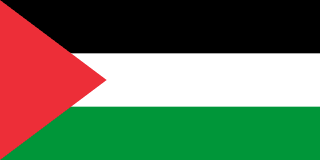
Palestine
State of Palestine
Population: UN WPP 2024, revision 1, projection for 1 July 2026. Sources and methodology.
Geography and territory
The State of Palestine consists of two geographically separate territories: the West Bank, lying west of the Jordan River and covering approximately 5,655 square kilometers, and the Gaza Strip, a narrow 365-square-kilometer stretch of Mediterranean coastline. Israeli territory separates the two, creating persistent challenges for connectivity, administration, and everyday movement between them. Together the territories span about 6,020 square kilometers and are home to more than 5.4 million people.
The West Bank is defined by hilly, mountainous terrain that descends from a central highland spine toward the Jordan Valley to the east and the coastal plains to the west, with elevations in the hills around Hebron exceeding 1,000 meters. The landscape combines centuries-old olive groves, ancient stone terraces, and arid stretches that transform dramatically after winter rains. Gaza, by contrast, is a low, densely built coastal plain that ranks among the most crowded places on Earth.
Most of the territory enjoys a Mediterranean climate, with hot, dry summers and cool, rainy winters. The hills of the West Bank receive moderate rainfall that sustains dry-farmed olives, grapes, and figs, while the Jordan Valley is notably hotter and more arid, dropping below sea level near the Dead Sea shoreline. Access to water is a critical and often contested issue, with underground aquifers serving as the principal source and disputes over usage rights a recurring feature of regional politics. Cities and towns such as Ramallah, Nablus, Hebron, Bethlehem, and Gaza City anchor daily economic and cultural life across the two territories.
History
The land of Palestine ranks among the most historically layered regions on Earth, continuously inhabited for millennia and held sacred by the world’s three major monotheistic faiths. Jericho, in the Jordan Valley, is regarded as one of the oldest continuously inhabited settlements in the world, with archaeological remains dating back more than 10,000 years. Over the centuries the region passed successively under Egyptian, Assyrian, Babylonian, Persian, Greek, and Roman rule, each leaving a distinct imprint on its land and peoples.
Under Roman administration, the region was the setting for the life of Jesus of Nazareth, born in Bethlehem and crucified in Jerusalem, events of enduring historical significance. The Arab conquest of the seventh century brought Islam and the Arabic language to the region, which later became a central theater of the Crusades between the eleventh and thirteenth centuries. Ottoman rule, lasting from 1517 to 1917, gave way to the British Mandate, a period marked by growing Jewish immigration and rising tension between Arab and Jewish communities.
The establishment of the State of Israel in 1948 and the war that followed brought about the Nakba, in which hundreds of thousands of Palestinians were displaced and became refugees. The 1967 war led to Israeli occupation of the West Bank and Gaza. The 1993 Oslo Accords created the Palestinian National Authority, though subsequent negotiations have not produced a comprehensive peace settlement. On November 15, 1988, the Palestine Liberation Organization declared the independence of the State of Palestine, which today is recognized by more than 140 countries and holds non-member observer state status at the United Nations. The decades since have been marked by periods of negotiation interspersed with recurring conflict, particularly around Gaza, and by continued international efforts, so far unresolved, to reach a lasting settlement of the underlying territorial and political disputes.
Culture and society
Palestinian culture is deeply rooted and remarkably resilient, sustained and passed down across generations despite decades of hardship. Palestinian identity finds expression in oral tradition, poetry, music, dance, and craftsmanship, all closely bound to the land. Mahmoud Darwish, widely regarded as the national poet, remains one of the most important voices in contemporary Arabic literature, his verses on exile, longing, and resistance resonating far beyond the region.
Palestinian embroidery, known as tatreez, is among the most distinctive of these artistic traditions: each region, village, and even family carries its own patterns and colors in traditional dresses, or thobes, forming a visual language that communicates origin, status, and belonging. This textile tradition has been inscribed on the UNESCO list of Intangible Cultural Heritage. Dabke, a collective folk dance performed at weddings and celebrations, expresses community and joy across all generations.
Palestinian society places strong value on education, and literacy rates rank among the highest in the Arab world, with a dense network of universities in cities such as Birzeit, Bethlehem, and Gaza producing generations of engineers, doctors, and scholars. The extended family remains the fundamental social unit, and communal solidarity has long served as an essential mechanism for endurance. Religious life is central as well, with the great majority of Palestinians practicing Islam and a historic Christian minority concentrated especially around Bethlehem, Ramallah, and Jerusalem. The Palestinian diaspora, spread across the Arab world, Latin America, Europe, and North America, maintains close cultural ties to the homeland through food, music, language, and collective memory.
Economy
The Palestinian economy operates under exceptionally difficult conditions, heavily constrained by restrictions on movement, border controls, and limited access to natural resources. The services sector, encompassing trade, public administration, and financial services, accounts for the largest share of GDP, which stands at roughly $17.2 billion. International aid has historically been an important source of funding, though its flow has remained inconsistent and unpredictable.
Agriculture, despite constraints on land and water, remains economically and symbolically significant. The olive tree is Palestine’s emblematic crop, and Palestinian olive oil is prized for its exceptional quality, produced from native varieties grown on ancient stone terraces. Other agricultural products include grapes, almonds, figs, citrus fruit, and vegetables. The limestone quarrying industry, supplying the well-known Jerusalem stone used in construction, is another traditional sector.
A small but growing technology sector has emerged as a source of hope, with an increasing community of entrepreneurs and startups based in Ramallah and other cities. Remittances from the diaspora supplement household incomes for many families, and the currencies most commonly used in daily transactions are the Israeli shekel and the Jordanian dinar, reflecting the territory’s lack of a fully independent monetary system. The economic challenges remain considerable: high unemployment, particularly among young people, trade restrictions, territorial fragmentation, and persistent political uncertainty that complicates long-term planning and investment.
Food and cuisine
Palestinian cuisine ranks among the oldest and richest in the eastern Mediterranean, rooted in an ancient agricultural tradition that celebrates the products of the land. Musakhan, roasted chicken served over taboon bread with caramelized onions, sumac, and olive oil, is considered the national dish and a pure expression of Palestinian flavor. Maqluba, literally “upside down,” is a layered rice dish with meat and vegetables that is dramatically inverted onto a serving platter, creating a striking presentation.
Olive oil is the soul of Palestinian cooking, used generously in salads, hummus, foul (stewed fava beans), roasted vegetables, and even sweets. Za’atar, a blend of thyme, sesame, and sumac drizzled with olive oil over bread, is the most iconic breakfast dish. Palestinian falafel, creamy hummus, fattoush salad, and baba ghanoush form part of a shared meze tradition enjoyed among family and friends.
Palestinian pastries are exceptional: knafeh from Nablus, a dessert of sweet cheese topped with crisp shredded pastry and soaked in orange-blossom syrup, is famous across the Arab world and a source of local pride. Qatayef, a stuffed pancake filled with cheese or nuts traditionally eaten during Ramadan, and date-filled mamoul cookies are other essential sweets. Arabic coffee flavored with cardamom, served at social gatherings and condolence visits alike, functions as a ritual of communion that extends well beyond the drink itself.
Tourism and landmarks
Palestine holds some of the most sacred and historically significant sites in the world. Bethlehem, the traditional birthplace of Jesus, is home to the Church of the Nativity, built over the site of his birth and counted among the oldest churches in the world, a designated UNESCO World Heritage site. The Old City of Jerusalem, claimed as Palestine’s capital, contains the Dome of the Rock, Al-Aqsa Mosque, the Western Wall, and the Via Dolorosa, all sacred to Muslims, Jews, and Christians alike.
Hebron is home to the Tomb of the Patriarchs, also known as the Cave of the Patriarchs, a site sacred to both Jews and Muslims that venerates the burial places of Abraham, Isaac, and Jacob. Jericho, in the Jordan Valley, lays claim to being the oldest city in the world and offers the Hisham Palace with its remarkable Umayyad-era mosaics, the ruins of the ancient city, and the Mount of Temptation. Nablus, nestled between Mount Ebal and Mount Gerizim, is known for its Ottoman-era old town, traditional soap factories, and its famous knafeh.
The cultural landscape of the hills south of Jerusalem, with their ancient terraced olive groves and vineyards, has been designated a UNESCO World Heritage site. Sebastia, once the capital of the ancient Kingdom of Israel, preserves impressive Roman ruins. The Palestine hiking trail, running the length of the West Bank hills from north to south, offers travelers the chance to discover traditional villages, biblical landscapes, and Palestinian hospitality through locally run guesthouses. Ramallah, the administrative seat of the Palestinian Authority, has developed a lively contemporary scene of restaurants, galleries, and cultural centers that offers visitors a window into modern Palestinian urban life alongside the region’s ancient heritage.
Fun facts about Palestine
- Jericho is considered one of the oldest continuously inhabited cities in the world, with archaeological remains dating back more than 10,000 years.
- Palestinian embroidery, or tatreez, functions as a visual language: its patterns and colors identify the wearer’s region of origin, social status, and family history.
- The olive tree is the national symbol of Palestine, and some individual trees still bearing fruit are estimated to be more than 2,000 years old.
- Nablus set a Guinness World Record in 2009 for the largest single serving of knafeh ever made, weighing in at 1,765 kilograms.
- More than half of all Palestinians live outside Palestine, forming one of the largest diasporas in the world relative to the size of the home population.
Palestine in numbers
Latest World Bank and UNDP observations, each with its own year. “World median” is the middle value among the countries that report the same indicator; “#” ranks from the highest value.
Population since 1990
Palestine had 2.0 million people in 1990 and 5.4 million in 2025 — 2.7 times as many.
People
87.4% of people live in towns and cities (world median 63.4%). 37.6% are under 15 and 3.9% are 65 or older — a young population. Women have 3.25 children on average, above the replacement level of about 2.1.
Economy
The economy grew by 4.3% in real terms in 2025. Consumer prices rose by 9.8% in 2025. Services make up the largest share of output (60.2% of GDP); agriculture contributes 5.5%.
Development and environment
UNDP rates human development in Palestine as medium, with an index of 0.674 in 2023 (rank 133 of 193). 86.6% of people use the internet and 100.0% have access to electricity. Forest covers 1.8% of the land (world median 32.8%).
Sources: World Bank, World Development Indicators (CC BY 4.0), most recent observation from 2015 onward; UNDP Human Development Report 2025. Retrieved 2026-10-10. Sector shares need not add up to 100% because taxes and subsidies on products are excluded. Missing values are left blank rather than estimated. Sources and methodology.
Climate of Palestine
Averaged across Palestine, the warmest month is August (26.4 °C) and the coolest is January (12.0 °C), a seasonal swing of 14.4 °C. The annual mean is 19.5 °C.
About 438 mm of precipitation falls in a typical year. January is the wettest month (120 mm) and June the driest (0 mm). The three wettest consecutive months, December to February, bring 69% of the year's total — a pronounced rainy season.
Show monthly values as a table
| Month | Mean °C | Low °C | High °C | Precipitation, mm |
|---|---|---|---|---|
| January | 12.0 | 7.5 | 16.5 | 120 |
| February | 12.6 | 7.6 | 17.6 | 87 |
| March | 14.9 | 9.5 | 20.4 | 52 |
| April | 18.2 | 11.7 | 24.6 | 15 |
| May | 21.5 | 14.9 | 28.1 | 4 |
| June | 24.1 | 17.8 | 30.5 | 0 |
| July | 26.0 | 20.2 | 31.9 | 0 |
| August | 26.4 | 20.8 | 32.1 | 0 |
| September | 24.9 | 19.1 | 30.8 | 0 |
| October | 22.3 | 16.4 | 28.3 | 15 |
| November | 17.6 | 12.0 | 23.2 | 50 |
| December | 13.6 | 8.8 | 18.5 | 96 |
Figures are 1991–2020 averages across the whole land area of Palestine, from the World Bank Climate Change Knowledge Portal, CRU TS 4.08 (CC BY 4.0). They are not readings from one weather station: the capital, the coast and high ground can be much warmer, cooler, wetter or drier.
Travel essentials for Palestine
The practical details visitors ask about first. Traffic in Palestine drives on the right, like most of the world. Mains electricity is 230 V at 50 Hz, so devices made only for 110–120 V (common in North America) need a converter unless they are dual-voltage — most phone and laptop chargers are.
- Emergency number
- 100Ambulance 101 · Fire 102
- Driving side
- Right
- Plug types
- Type C, Type HC: two round pins (Europlug); H: three pins in a V shape (Israeli)
- Voltage
- 230 V50 Hz
- Dialling code
- +970From abroad: your exit code, then 970 and the number
- Currency
- Israeli Shekel (ILS), Jordanian Dinar (JOD)
- Time zone
- EET (UTC+2)Current local time in Palestine
Compiled from IEC plug and voltage standards, national emergency-service listings and the UN road-traffic conventions. Emergency numbers and local coverage can change — confirm them locally on arrival. Palestine's internet domain is .ps.
Where Palestine ranks in the world
Each position counts only the countries with data in that ranking guide. First place is the highest value — for price levels, the most expensive. Select a card to see the full table.
- Population118th of 1965.7 millionUN projection, July 2026
- Land area163rd of 1956,025 km²World Bank, 2023
- Population density7th of 194857 per km²World Bank, 2023
- GDP (nominal)135th of 187$16.0BWorld Bank, 2024, current US$
- GDP per capita135th of 187$3,028World Bank, 2024, current US$
- Life expectancy137th of 19469.2 yearsWorld Bank, 2024
- Price level46th of 16562 (US = 100)ICP 2021, household consumption
Bordering countries of Palestine


Compare Palestine with another country
Frequently asked questions about Palestine
What is the capital of Palestine?
The capital of Palestine is Jerusalem (proclaimed), Ramallah (administrative).
What is the population of Palestine?
The UN World Population Prospects projection for Palestine is 5,692,790 people (5.7 million) on 1 July 2026. National statistical offices may publish different estimates.
What language is spoken in Palestine?
The official language of Palestine is Arabic.
What currency is used in Palestine?
The currency of Palestine is the Israeli Shekel (ILS), Jordanian Dinar (JOD).
How big is Palestine?
Palestine covers an area of 6,020 km².
What type of government does Palestine have?
Palestine is a semi-presidential republic.
Which countries border Palestine?
Palestine shares land borders with Israel, Egypt, Jordan.
What is the highest point in Palestine?
The highest point in Palestine is Mount Nabi Yunis (1,030 m).


