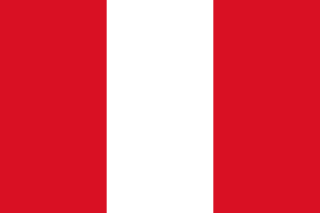
Peru
Republic of Peru
Population: UN WPP 2024, revision 1, projection for 1 July 2026. Sources and methodology.
Geography and territory
Peru stretches along the western coast of South America, covering 1,285,216 square kilometers that make it the third-largest country in the subcontinent by area, after Brazil and Argentina. Its territory splits into three sharply distinct regions: a narrow desert coast fronting the Pacific Ocean, the high Andean sierra where peaks soar past 6,000 meters, and the Amazon rainforest, which covers well over 60 percent of the national territory.
The Andes mountains run the length of the country from north to south, shaping Peru’s climate, economy, and way of life more than any other geographic feature. Huascarán, at 6,768 meters, is the country’s highest peak and the fourth-tallest in the Americas. Nestled high in the Andes, Lake Titicaca, shared with Bolivia, is the highest navigable lake in the world at 3,812 meters above sea level. Fertile highland valleys, including the famed Sacred Valley of the Incas, have supported organized civilization for thousands of years.
East of the mountains, the Andes drop sharply into the Amazon basin, creating a transitional cloud-forest zone of extraordinary biodiversity before flattening into lowland jungle that stretches toward the borders with Brazil and Colombia. Peru ranks among the world’s megadiverse countries, home to more than 1,800 bird species, some 500 mammal species, and an estimated 25,000 plant species, many of them still being cataloged by scientists. Along the coast, the cold, nutrient-rich Humboldt Current sustains one of the most productive fisheries on Earth, a resource that has shaped Peruvian life since pre-Columbian times and continues to define entire coastal economies today.
History
Peru is the cradle of some of the oldest civilizations in the Americas. Caral, in the Supe Valley north of Lima, is considered the oldest city in the Americas, dating back roughly 5,000 years. Long before the Inca rose to power, the Chavín, Moche, Nazca, Wari, and Chimú cultures achieved remarkable advances in ceramics, metallurgy, textiles, terrace farming, and hydraulic engineering.
The Inca Empire, known as Tahuantinsuyo, became the largest pre-Columbian state in the Americas, stretching from present-day Colombia to Chile and Argentina. Ruling from their capital at Cusco, the Inca built a road network exceeding 30,000 kilometers, engineered agricultural terraces across steep Andean slopes, and raised stone citadels such as Machu Picchu, whose architectural precision still astonishes visitors today. Francisco Pizarro’s Spanish expedition, arriving in 1532, toppled this vast empire within a matter of years.
For nearly three centuries afterward, the Viceroyalty of Peru, centered on Lima, served as the seat of Spanish power in South America, overseeing territory that at times stretched from Panama to Argentina. Lima became home to the first university in the New World, San Marcos, founded in 1551, and flourished as a center of Baroque art, silverwork, and colonial administration. Independence, proclaimed by José de San Martín on July 28, 1821, and secured by Simón Bolívar’s forces at the Battle of Ayacucho in 1824, brought Spanish colonial rule in South America to a close and set Peru on the long path toward building a modern republic.
Culture and society
Peruvian culture is one of the richest and most layered in Latin America, built from the fusion of ancient indigenous traditions, Spanish colonial heritage, and African, Chinese, and Japanese influences brought by later waves of immigration. Major festivals reflect this blend: Inti Raymi in Cusco celebrates the Inca festival of the sun, the Virgen de la Candelaria in Puno combines Andean and Catholic devotion in a riot of costume and dance, and the Señor de los Milagros procession in Lima draws immense crowds each October.
Music and dance vary strikingly by region. The huayno dominates the highlands, while the marinera is the emblematic dance of the coast. In Lima, criollo music, waltzes and polkas performed at lively peñas, provides the soundtrack to social life. Andean textile traditions, some techniques thousands of years old, produce weavings of extraordinary complexity and color, particularly among Quechua and Aymara communities in the southern highlands.
Peru’s literary tradition carries global weight. Mario Vargas Llosa, winner of the Nobel Prize in Literature, authored landmark novels such as The Time of the Hero, Conversation in the Cathedral, and The Feast of the Goat, cementing Peru’s place in the Latin American literary boom of the 1960s and 1970s. César Vallejo is regarded as one of the great poets of the 20th century in any language, while José María Arguedas gave voice to the Andean world in Spanish-language fiction like no writer before him, drawing on his own bilingual Quechua-Spanish upbringing.
Economy
With a GDP of roughly $334.9 billion, Peru’s economy has grown substantially in recent decades. Mining anchors the country’s export earnings: Peru is the world’s second-largest producer of copper, silver, and zinc, and a significant producer of gold, lead, and tin. Mineral wealth accounts for a large share of both exports and government revenue.
Fishing is another strategic industry, made possible by the nutrient-rich Humboldt Current; Peru is the world’s leading producer of fishmeal. Agriculture has also become a major export earner, with asparagus, grapes, blueberries, quinoa, coffee, and cacao shipped worldwide. Large-scale irrigation projects like Chavimochic have turned stretches of northern coastal desert into some of the country’s most productive farmland.
Tourism has become a vital source of foreign income, anchored by Machu Picchu but extending to Lima’s culinary scene, Lake Titicaca, the Nazca Lines, and the Amazon rainforest. Manufacturing and construction have also expanded alongside urban growth in Lima and other major cities, while a growing services sector supports the country’s emerging middle class. Peru still faces challenges from labor informality, regional inequality, and dependence on commodity exports, but its record of macroeconomic stability and steady growth has made it one of the more resilient economies in the region.
Food and cuisine
Peruvian cuisine has earned global recognition as one of the most diverse and sophisticated in the world. Lima is regularly named Latin America’s culinary capital, and Peruvian restaurants such as Central and Maido rank consistently among the best on Earth. This reputation rests on the fusion of Andean, Spanish, African, Chinese (chifa), and Japanese (nikkei) traditions, layered onto an extraordinary pantry of native ingredients.
Ceviche, fresh fish cured in lime juice with red onion, chili, and cilantro, is Peru’s flagship dish and a symbol of Latin American gastronomy far beyond its borders. Lomo saltado, causa limeña, ají de gallina, papa a la huancaína, anticuchos, and rocoto relleno round out the classic repertoire. Peru is the birthplace of the potato and grows more than 3,000 native varieties, alongside a dazzling array of chili peppers that season nearly every regional dish.
Regional cooking reveals still more variety: the north offers cabrito a la norteña and arroz con pato, Arequipa is famous for chupe de camarones and rocoto relleno, the Amazon contributes juane and tacacho con cecina, and chifa cuisine has produced beloved hybrids like arroz chaufa. Pisco, the country’s signature grape brandy, forms the base of the pisco sour, celebrated nationwide each first Saturday of February.
Tourism and landmarks
Machu Picchu, the Inca citadel perched at 2,430 meters amid jungle-clad peaks, is one of the New Seven Wonders of the World and South America’s most iconic destination. The four-day trek along the Inca Trail, following original stone-paved routes, ranks among the world’s most celebrated hikes. Cusco, the former Inca capital, layers colonial Spanish architecture atop massive Inca stone walls in a historic center recognized as a UNESCO World Heritage Site.
Lima itself is a gastronomic and cultural powerhouse, its colonial historic center, bohemian Barranco district, and Miraflores clifftops forming the backdrop to an unmatched dining scene. The Nazca Lines, immense geoglyphs etched into the coastal desert whose purpose remains debated, are likewise a World Heritage Site. Colca Canyon, twice as deep as the Grand Canyon, is prime territory for spotting the Andean condor soaring on thermal currents.
Lake Titicaca offers a rare cultural encounter on the floating reed islands built by the Uros people. Peru’s Amazon, accessible from Iquitos or Puerto Maldonado, opens onto some of the planet’s richest tropical biodiversity. The Paracas National Reserve, the Huacachina desert oasis, the mountaintop fortress of Kuélap, the vast adobe city of Chan Chan, and the glaciated peaks of the Cordillera Blanca round out a country of near-endless travel possibilities.
Fun facts about Peru
- Peru is the birthplace of the potato, with more than 3,000 native varieties still cultivated, along with over 50 types of native corn.
- The Amazon River’s source lies high in the mountains of Arequipa, Peru, the starting point of the longest and largest river on Earth.
- The Nazca Lines, enormous figures visible only from the air, were created between roughly 500 BCE and 500 CE, and their exact purpose is still debated by researchers.
- Cuy, or guinea pig, has been eaten in the Andes for more than 5,000 years and was a staple food of the Inca Empire.
- Peru has more recorded bird species than any other country on Earth, with over 1,800 species, many found nowhere else.
- Lake Titicaca, shared with Bolivia, is the highest navigable lake in the world, sitting at nearly 3,812 meters above sea level.
Peru in numbers
Latest World Bank and UNDP observations, each with its own year. “World median” is the middle value among the countries that report the same indicator; “#” ranks from the highest value.
Population since 1960
Peru had 10.2 million people in 1960 and 34.6 million in 2025 — 3.4 times as many.
People
85.6% of people live in towns and cities (world median 63.4%). 23.6% are under 15 and 9.5% are 65 or older — a middle-aged population. Women have 1.97 children on average, below the replacement level of about 2.1 needed to keep a population stable in the long run without migration.
Economy
The economy grew by 3.4% in real terms in 2025. Consumer prices rose by 1.5% in 2025. Services make up the largest share of output (50.9% of GDP); agriculture contributes 7.5%.
Development and environment
UNDP rates human development in Peru as high, with an index of 0.794 in 2023 (rank 79 of 193). 82.0% of people use the internet and 96.5% have access to electricity. Forest covers 52.7% of the land (world median 32.8%).
Sources: World Bank, World Development Indicators (CC BY 4.0), most recent observation from 2015 onward; UNDP Human Development Report 2025. Retrieved 2026-10-10. Sector shares need not add up to 100% because taxes and subsidies on products are excluded. Missing values are left blank rather than estimated. Sources and methodology.
Climate of Peru
Averaged across Peru, the mean temperature stays between 18.3 °C (July) and 20.4 °C (January) — a swing of only 2.1 °C, so seasons are marked by rainfall rather than by heat.
About 1,611 mm of precipitation falls in a typical year. March is the wettest month (206 mm) and August the driest (72 mm). The wettest stretch is January to March, with 36% of the year's total.
Show monthly values as a table
| Month | Mean °C | Low °C | High °C | Precipitation, mm |
|---|---|---|---|---|
| January | 20.4 | 15.0 | 25.9 | 177 |
| February | 20.4 | 15.0 | 25.8 | 196 |
| March | 20.4 | 14.9 | 26.0 | 206 |
| April | 20.1 | 14.2 | 26.0 | 151 |
| May | 19.4 | 13.2 | 25.6 | 117 |
| June | 18.5 | 11.9 | 25.2 | 90 |
| July | 18.3 | 11.4 | 25.2 | 76 |
| August | 18.7 | 11.8 | 25.7 | 72 |
| September | 19.4 | 12.9 | 26.0 | 93 |
| October | 19.9 | 13.8 | 25.9 | 125 |
| November | 20.2 | 14.4 | 26.0 | 144 |
| December | 20.3 | 14.7 | 26.0 | 166 |
Figures are 1991–2020 averages across the whole land area of Peru, from the World Bank Climate Change Knowledge Portal, CRU TS 4.08 (CC BY 4.0). They are not readings from one weather station: the capital, the coast and high ground can be much warmer, cooler, wetter or drier.
Travel essentials for Peru
The practical details visitors ask about first. Traffic in Peru drives on the right, like most of the world. Mains electricity is 220 V at 60 Hz, so devices made only for 110–120 V (common in North America) need a converter unless they are dual-voltage — most phone and laptop chargers are.
- Emergency number
- 911
- Driving side
- Right
- Plug types
- Type A, Type B, Type CA: two flat parallel pins; B: two flat pins plus a round earth pin; C: two round pins (Europlug)
- Voltage
- 220 V60 Hz
- Dialling code
- +51From abroad: your exit code, then 51 and the number
- Currency
- Peruvian Sol (PEN)
- Time zone
- UTC-5Current local time in Peru
Compiled from IEC plug and voltage standards, national emergency-service listings and the UN road-traffic conventions. Emergency numbers and local coverage can change — confirm them locally on arrival. Peru's internet domain is .pe.
Where Peru ranks in the world
Each position counts only the countries with data in that ranking guide. First place is the highest value — for price levels, the most expensive. Select a card to see the full table.
- Population48th of 19634.9 millionUN projection, July 2026
- Land area19th of 1951,280,000 km²World Bank, 2023
- Population density158th of 19426 per km²World Bank, 2023
- GDP (nominal)47th of 187$291.8BWorld Bank, 2024, current US$
- GDP per capita86th of 187$8,526World Bank, 2024, current US$
- Life expectancy57th of 19477.9 yearsWorld Bank, 2024
- Price level71st of 16549 (US = 100)ICP 2021, household consumption
Bordering countries of Peru


Compare Peru with another country
Frequently asked questions about Peru
What is the capital of Peru?
The capital of Peru is Lima.
What is the population of Peru?
The UN World Population Prospects projection for Peru is 34,922,148 people (34.9 million) on 1 July 2026. National statistical offices may publish different estimates.
What language is spoken in Peru?
The official language of Peru is Spanish, Quechua, Aymara.
What currency is used in Peru?
The currency of Peru is the Peruvian Sol (PEN).
How big is Peru?
Peru covers an area of 1,285,216 km².
What type of government does Peru have?
Peru is a unitary presidential republic.
Which countries border Peru?
Peru shares land borders with Ecuador, Colombia, Brazil, Bolivia, Chile.
What is the highest point in Peru?
The highest point in Peru is Huascarán (6,768 m).


