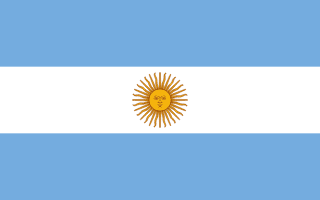
Argentina
Argentine Republic
Population: UN WPP 2024, revision 1, projection for 1 July 2026. Sources and methodology.
Geography and territory
Argentina is the eighth-largest country in the world and the second largest in South America, covering 2,780,400 square kilometers that stretch from the subtropics in the north to the edge of Antarctic waters in the south. This enormous span of latitude, more than 2,100 miles from top to bottom, produces an extraordinary range of geography and climate, from scorching northern deserts to ancient southern glaciers.
The Andes mountains run the length of the country’s western flank, forming a natural border with Chile. There stands Aconcagua, which at 6,962 meters is the highest peak in the Americas and the entire Southern Hemisphere. East of the Andes lies the Pampas, a vast fertile plain that forms the agricultural and ranching heartland of the country. The Argentine Mesopotamia, sandwiched between the Paraná and Uruguay rivers, is defined by subtropical forest and wetlands teeming with wildlife.
Patagonia, occupying the southern third of the country, is a land of windswept plateaus, glacial lakes of startling clarity, and forests of lenga and araucaria trees. Ushuaia, in Tierra del Fuego, holds the distinction of being the southernmost city in the world. The north presents its own sharp contrasts: the semi-arid Chaco to the west, subtropical Misiones forest to the east, and the Puna, a high-altitude plateau above 3,000 meters marked by salt flats, volcanoes, and extreme aridity. Argentina borders Chile, Bolivia, Paraguay, Brazil, and Uruguay, giving it frontiers with nearly every major country in the southern half of the continent.
Home to a population of about 46.0 million, Argentina is one of the most urbanized countries on earth, with roughly nine in ten residents living in cities and towns. Greater Buenos Aires alone accounts for a substantial share of that total, while vast stretches of Patagonia and the Puna remain sparsely populated, underscoring the stark contrast between Argentina’s crowded urban centers and its wide-open rural expanses.
History
The Argentine territory was long home to numerous indigenous peoples, including the Diaguita and Guaraní in the north and the Mapuche and Tehuelche farther south. Spanish colonization began with the founding of Buenos Aires by Pedro de Mendoza in 1536, though the settlement was later abandoned and permanently refounded in 1580. During the colonial era the territory belonged first to the Viceroyalty of Peru and then to the Viceroyalty of the Río de la Plata, established in 1776 with its capital at Buenos Aires.
The independence movement began with the May Revolution of 1810 and was formally declared on 9 July 1816 at the Congress of Tucumán. Figures such as José de San Martín, a towering hero of South American independence, along with Manuel Belgrano and Mariano Moreno, dominated this founding era. The following decades were marked by civil wars between Unitarians and Federalists, until national organization was finally consolidated with the constitution of 1853.
The period between 1880 and 1930 was one of extraordinary prosperity, as millions of European immigrants, chiefly Italian and Spanish, transformed the country’s demographic and cultural makeup. Argentina rose to become one of the wealthiest nations on earth. The twentieth century brought a turbulent political history, dominated by Peronism, punctuated by military coups, and scarred by the brutal 1976–1983 dictatorship and its disappeared victims, followed by a restoration of democracy that has endured to the present day.
Culture and society
Argentine culture ranks among the most sophisticated and cosmopolitan in Latin America, deeply shaped by waves of European immigration. Tango, born in the tenement neighborhoods of Buenos Aires in the late nineteenth century as an expression of the working classes, was later inscribed by UNESCO as Intangible Cultural Heritage of Humanity. Carlos Gardel, Astor Piazzolla, and the milongas of Buenos Aires have made tango one of the most recognized musical genres in the world.
Argentine literature has produced writers of universal stature. Jorge Luis Borges, with his metaphysical labyrinths, is regarded as one of the most influential writers of the twentieth century. Julio Cortázar revolutionized narrative fiction with Hopscotch, Ernesto Sábato probed the darker recesses of the human psyche, and Adolfo Bioy Casares dazzled readers with The Invention of Morel. Psychoanalysis occupies a singular place in Argentine life, and Buenos Aires is often cited as having the highest concentration of psychologists per capita of any city in the world.
Football is an overwhelming national passion, and Argentina has given the world Diego Maradona and Lionel Messi, both counted among the greatest players in the history of the sport. The rivalry between Boca Juniors and River Plate, known as the Superclásico, ranks among the fiercest derbies in world football. Argentine society is distinguished by its intellectual vitality, its café culture, its abundance of bookstores, and a nightlife that routinely stretches into the early hours of the morning.
Economy
Argentina’s economy, one of the largest in Latin America, rests on a powerful agricultural base combined with a diversified industrial sector. The country is among the world’s leading producers and exporters of soybeans, corn, wheat, beef, and wine. The humid Pampas, with its exceptionally fertile soil, drives an agribusiness sector that generates a substantial share of national exports.
Argentine industry, concentrated mainly around greater Buenos Aires, Córdoba, and Rosario, spans automobile manufacturing, food processing, petrochemicals, steel, and pharmaceuticals. Vaca Muerta, in Neuquén province, holds one of the largest unconventional oil and gas reserves on the planet, an energy resource with the potential to transform the national economy in the coming decades.
Argentina’s economic history, however, has long been marked by recurring crises, chronic inflation, and repeated currency devaluations. Macroeconomic instability, a heavy tax burden, and regulatory uncertainty have constrained the country from fully realizing its considerable potential. Despite these persistent challenges, Argentina maintains a high level of human development, with an educated middle class, excellent public universities, and a cultural output that continues to command international respect.
Food and cuisine
Argentine cuisine is inseparable from beef, considered among the finest in the world thanks to extensive cattle grazing on the Pampas. The Argentine asado is far more than a cooking method; it is a social ritual that brings families and friends together around the grill for hours at a time. Cuts such as vacío, entraña, asado de tira, chorizo, and morcilla sausages are slow-cooked over open coals and served with chimichurri sauce and simple salads.
Empanadas, whose fillings vary by province, from hand-chopped beef in Salta to corn-based humita in the northwest to ham and cheese in Buenos Aires, form another pillar of the national diet. Milanesas, a legacy of Italian immigration, are served in generous portions across the country, especially the breaded, cheese-topped milanesa napolitana. Pasta dishes, including the tradition of eating gnocchi on the 29th of each month, along with ravioli and tagliatelle, reflect the deep imprint of Italian immigration on Argentine tables.
Dulce de leche is the quintessential national flavor, found in alfajores, ice cream, pastries, and cakes. Alfajores, particularly those from Havanna and the city of Córdoba, are a beloved culinary icon. Argentine wine, led by the emblematic Malbec grape, has earned international acclaim, with Mendoza standing as the country’s premier wine region. Mate, an infusion of yerba mate shared in a circle of friends, is the true symbol of Argentine sociability and is consumed daily by millions.
Tourism and landmarks
Buenos Aires, often called the Paris of South America, captivates visitors with its European architecture, distinctive neighborhoods such as San Telmo, La Boca, Palermo, and Recoleta, and a cultural scene anchored by the Teatro Colón, regarded as one of the finest opera houses in the world. The city’s milongas, storied cafés, and tireless energy draw millions of visitors every year.
Argentine Patagonia offers landscapes of breathtaking beauty. The Perito Moreno Glacier, within Los Glaciares National Park, is one of the few glaciers in the world still advancing, and the thunderous calving of its ice is an unforgettable natural spectacle. Bariloche and the Seven Lakes Route showcase turquoise lakes framed by Andean-Patagonian forest. Ushuaia, the gateway to Antarctica, and the Valdés Peninsula, where southern right whales can be observed, round out the region’s appeal.
In the north, the Iguazu Falls, a horseshoe-shaped arrangement of 275 individual cascades, form a UNESCO World Heritage Site and one of the natural wonders of the planet. The Quebrada de Humahuaca, with its multicolored hillsides, and the high-altitude vineyards of the Calchaquí Valleys in Salta offer distinctive cultural and scenic experiences. Mendoza, at the foot of the Andes, serves as Argentina’s wine capital and the starting point for expeditions to Aconcagua.
Fun facts about Argentina
- Aconcagua, at 6,962 meters, is the highest mountain outside Asia and draws mountaineers from around the world each climbing season.
- Buenos Aires’s Avenida 9 de Julio, roughly 140 meters wide, is often cited as the widest avenue in the world.
- Argentina became the first country in Latin America to legalize same-sex marriage, in 2010.
- Tango was inscribed by UNESCO as Intangible Cultural Heritage of Humanity in 2009, an honor shared jointly with Uruguay.
- Argentina’s national football team has won three World Cups, in 1978, 1986, and 2022, making it one of the most successful sides in the sport’s history.
Argentina in numbers
Latest World Bank and UNDP observations, each with its own year. “World median” is the middle value among the countries that report the same indicator; “#” ranks from the highest value.
Population since 1960
Argentina had 20.4 million people in 1960 and 45.9 million in 2025 — 2.2 times as many.
People
92.4% of people live in towns and cities (world median 63.4%). 21.0% are under 15 and 12.6% are 65 or older — a middle-aged population. Women have 1.50 children on average, below the replacement level of about 2.1 needed to keep a population stable in the long run without migration.
Economy
The economy grew by 4.4% in real terms in 2025. Consumer prices rose by 219.9% in 2024 — very high inflation. Services make up the largest share of output (56.2% of GDP); agriculture contributes 5.5%.
Development and environment
UNDP rates human development in Argentina as very high, with an index of 0.865 in 2023 (rank 47 of 193). 89.7% of people use the internet and 98.4% have access to electricity. Forest covers 17.1% of the land (world median 32.8%).
Sources: World Bank, World Development Indicators (CC BY 4.0), most recent observation from 2015 onward; UNDP Human Development Report 2025. Retrieved 2026-10-10. Sector shares need not add up to 100% because taxes and subsidies on products are excluded. Missing values are left blank rather than estimated. Sources and methodology.
Climate of Argentina
Averaged across Argentina, the warmest month is January (21.7 °C) and the coolest is July (8.0 °C), a seasonal swing of 13.7 °C. The annual mean is 15.2 °C.
About 616 mm of precipitation falls in a typical year. January is the wettest month (75 mm) and July the driest (24 mm). The wettest stretch is December to February, with 36% of the year's total.
Show monthly values as a table
| Month | Mean °C | Low °C | High °C | Precipitation, mm |
|---|---|---|---|---|
| January | 21.7 | 14.9 | 28.4 | 75 |
| February | 20.6 | 14.1 | 27.2 | 73 |
| March | 18.8 | 12.5 | 25.1 | 71 |
| April | 15.1 | 9.0 | 21.2 | 57 |
| May | 11.5 | 5.8 | 17.1 | 40 |
| June | 8.7 | 3.0 | 14.4 | 33 |
| July | 8.0 | 1.9 | 14.0 | 24 |
| August | 10.1 | 3.5 | 16.9 | 25 |
| September | 12.7 | 5.9 | 19.5 | 31 |
| October | 15.8 | 9.2 | 22.5 | 56 |
| November | 18.5 | 11.7 | 25.4 | 60 |
| December | 20.7 | 13.9 | 27.6 | 72 |
Figures are 1991–2020 averages across the whole land area of Argentina, from the World Bank Climate Change Knowledge Portal, CRU TS 4.08 (CC BY 4.0). They are not readings from one weather station: the capital, the coast and high ground can be much warmer, cooler, wetter or drier.
Travel essentials for Argentina
The practical details visitors ask about first. Traffic in Argentina drives on the right, like most of the world. Mains electricity is 220 V at 50 Hz, so devices made only for 110–120 V (common in North America) need a converter unless they are dual-voltage — most phone and laptop chargers are.
- Emergency number
- 911Ambulance 107 · Fire 100
- Driving side
- Right
- Plug types
- Type C, Type IC: two round pins (Europlug); I: two angled flat pins plus earth
- Voltage
- 220 V50 Hz
- Dialling code
- +54From abroad: your exit code, then 54 and the number
- Currency
- Argentine Peso (ARS)
- Time zone
- UTC-3Current local time in Argentina
Compiled from IEC plug and voltage standards, national emergency-service listings and the UN road-traffic conventions. Emergency numbers and local coverage can change — confirm them locally on arrival. Argentina's internet domain is .ar.
Where Argentina ranks in the world
Each position counts only the countries with data in that ranking guide. First place is the highest value — for price levels, the most expensive. Select a card to see the full table.
- Population35th of 19646.0 millionUN projection, July 2026
- Land area8th of 1952,736,690 km²World Bank, 2023
- Population density174th of 19417 per km²World Bank, 2023
- GDP (nominal)23rd of 187$638.4BWorld Bank, 2024, current US$
- GDP per capita68th of 187$13,970World Bank, 2024, current US$
- Life expectancy64th of 19477.5 yearsWorld Bank, 2024
- Price level95th of 16544 (US = 100)ICP 2021, household consumption
Bordering countries of Argentina


Compare Argentina with another country
Frequently asked questions about Argentina
What is the capital of Argentina?
The capital of Argentina is Buenos Aires.
What is the population of Argentina?
The UN World Population Prospects projection for Argentina is 46,003,734 people (46.0 million) on 1 July 2026. National statistical offices may publish different estimates.
What language is spoken in Argentina?
The official language of Argentina is Spanish.
What currency is used in Argentina?
The currency of Argentina is the Argentine Peso (ARS).
How big is Argentina?
Argentina covers an area of 2,780,400 km².
What type of government does Argentina have?
Argentina is a federal presidential republic.
Which countries border Argentina?
Argentina shares land borders with Chile, Bolivia, Paraguay, Brazil, Uruguay.
What is the highest point in Argentina?
The highest point in Argentina is Aconcagua (6,962 m).


