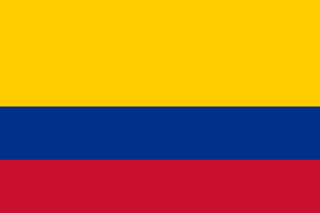
Colombia
Republic of Colombia
Population: UN WPP 2024, revision 1, projection for 1 July 2026. Sources and methodology.
Geography and territory
Colombia occupies the northwestern corner of South America in a uniquely favorable position: it is the only country on the continent with coastlines on both the Pacific Ocean and the Caribbean Sea. Covering 1,141,748 square kilometers, it ranks among the largest nations in the region, and its territory extends offshore to include island groups in both oceans, most notably the San Andres and Providencia archipelago in the Caribbean. To the east, Colombia shares borders with Venezuela and Brazil, and to the south and west with Peru, Ecuador, and Panama, making it the only South American nation to border both Central America and the Caribbean basin.
The Andes mountains split into three parallel ranges as they enter Colombian territory — the Western, Central, and Eastern cordilleras — cradling fertile valleys such as the Cauca and Magdalena. Pico Cristobal Colon, part of the isolated Sierra Nevada de Santa Marta massif near the Caribbean coast, rises to 5,775 meters and is recognized as the highest coastal peak on Earth. East of the Andes, the landscape gives way to the vast grasslands of the Llanos Orientales and to the Colombian Amazon, which alone accounts for roughly a third of the nation’s land area.
Few places on the planet pack as much biological diversity into so compact a space. Colombia is home to close to a tenth of all known species worldwide, ranks first globally in bird and orchid diversity, and places second in plants, butterflies, freshwater fish, and amphibians. Because the country sits so near the equator, climate is governed far more by elevation than by season, producing a striking range of conditions — from steamy tropical coastlines to the cold, misty paramo ecosystems found above 3,000 meters. This layering of climates within short horizontal distances, often called a vertical geography, allows farmers to grow everything from bananas to potatoes within a single day’s drive.
History
Long before European contact, the territory that is now Colombia supported numerous indigenous societies. The Muisca people of the high plains around modern Bogota developed a sophisticated political confederation whose legend of El Dorado, a ruler said to cover himself in gold dust, drew Spanish conquistadors deep into the Andes. In the Sierra Nevada de Santa Marta, the Tayrona built the Lost City, an extensive complex of stone terraces and paved roads that predates Peru’s Machu Picchu by centuries. Further west, the Quimbaya and Zenu peoples produced goldwork of extraordinary craftsmanship, much of which is now displayed at Bogota’s Gold Museum.
Spanish colonization began in the early sixteenth century and eventually produced the Viceroyalty of New Granada. The independence movement, whose founding cry rang out on 20 July 1810, was led to victory by Simon Bolivar, who followed the decisive Battle of Boyaca in 1819 by proclaiming Gran Colombia, a short-lived federation joining the present-day territories of Colombia, Venezuela, Ecuador, and Panama. That union dissolved in 1830, giving rise to separate independent republics.
The following two centuries brought recurring turmoil, from nineteenth-century civil wars to a protracted twentieth-century armed conflict involving guerrilla insurgencies, paramilitary groups, and the drug trade. A landmark peace accord signed with the FARC in 2016 opened a new chapter for the country. In the decades since, Colombia has undergone a remarkable transformation, marked by improved security, sustained economic growth, and a rising international profile, as cities once defined by violence have reinvented themselves as centers of culture, business, and tourism.
Culture and society
Colombian culture is a vibrant fusion of indigenous, African, and Spanish heritage, animated by an exceptionally rich contemporary creative scene. Gabriel Garcia Marquez, winner of the Nobel Prize in Literature and the father of magical realism, remains the country’s most internationally celebrated writer; his novel One Hundred Years of Solitude reshaped world literature. Colombia’s literary tradition also includes the poet Jose Asuncion Silva and the novelist Alvaro Mutis.
Colombian music is extraordinarily varied and influential. Cumbia and vallenato, both born on the Caribbean coast, are danced throughout Latin America, and global stars such as Shakira and Juanes have carried Colombian rhythms to international audiences. Regional traditions add further texture: salsa thrives in Cali, currulao defines the Pacific coast, and bambuco reflects Andean heritage. The Barranquilla Carnival, recognized by UNESCO as an Intangible Cultural Heritage of Humanity, ranks as one of the largest carnival celebrations in the world.
Colombian society is known for its warmth, resilience, and infectious optimism. The population is ethnically diverse, encompassing indigenous communities, Afro-Colombian groups, the Raizal people of the Caribbean islands, and a large mestizo majority. Coffee, grown on the slopes of the Andes, functions as more than an export crop — it is a defining symbol of national identity, and the Coffee Cultural Landscape has earned its own UNESCO World Heritage designation. Football, too, unites the nation across regional and class lines, with the national team’s yellow jersey serving as a shared symbol of pride during international tournaments.
Economy
Colombia possesses one of the largest and most diversified economies in Latin America, built on mining, agriculture, manufacturing, services, and tourism. It is one of the world’s leading coffee producers and the top exporter of mild-washed arabica coffee, and it dominates global emerald production, supplying more than half the world’s output. Petroleum remains central to public finances, with the state-linked company Ecopetrol serving as the flagship of the sector.
Agriculture extends well beyond coffee. Cut flowers, bananas, palm oil, cacao, sugar, and tropical fruit are all significant exports, and Colombia ranks as the world’s second-largest flower exporter, with the high savanna around Bogota serving as the industry’s main production hub. Manufacturing is concentrated in Bogota, Medellin, Cali, and Barranquilla, producing textiles, processed foods, chemicals, automobiles, and construction materials.
Medellin, once notorious for violence, has undergone an internationally recognized urban revival and is now a growing hub for technology and entrepreneurship. Tourism has expanded rapidly over the past decade, with Cartagena’s colonial old town, the coffee-growing region, Bogota, and the country’s natural attractions drawing steadily increasing numbers of international visitors. Foreign investment and a growing network of free trade agreements have further woven Colombia into the global economy, which today generates a gross domestic product of about $457.41 billion, making it the fourth-largest economy in Latin America.
Food and cuisine
Colombian food changes dramatically from one region to the next. Bandeja paisa, native to Antioquia, is arguably the country’s signature dish: a hearty platter combining beans, rice, ground beef, pork crackling, chorizo, a fried egg, sweet plantain, avocado, and a corn arepa. In Bogota, the emblematic dish is ajiaco santafereno, a thick chicken soup made with three varieties of potato, corn on the cob, the herb guascas, and capers.
Arepas, flat cornmeal cakes eaten nationwide, take on regional personalities of their own — stuffed with cheese in Antioquia, filled with egg on the Caribbean coast, or grilled with butter in Boyaca. Sancocho, a substantial stew made with chicken, ribs, or fish depending on the region, functions as the classic dish for family gatherings. The Caribbean coast contributes coconut rice, seafood casseroles, fried plantain patacones, and fermented suero costeno, while the Pacific coast offers coconut-based encocado stews and shrimp ceviche.
Colombia’s tropical fruit is a world unto itself, including lulo, soursop, banana passionfruit, golden berries, feijoa, sapote, and passion fruit, most commonly enjoyed fresh or blended into juices. Coffee is consumed constantly throughout the day, typically as tinto, a small, sweetened black coffee. Aguardiente, an anise-flavored sugarcane spirit, is the country’s signature liquor and an essential companion at celebrations and social gatherings.
Tourism and landmarks
Cartagena de Indias, its walled colonial center recognized as a UNESCO World Heritage Site, is Colombia’s most celebrated destination. Cobblestone streets, flower-draped balconies, colonial plazas, and centuries-old fortifications transport visitors back to the colonial era. A short boat ride away, the Rosario Islands offer clear water and coral reefs well suited to diving, while San Andres and Providencia, with their famous “sea of seven colors,” provide another exceptional Caribbean escape.
The interior offers equally compelling experiences. Bogota, sitting at 2,640 meters above sea level, pairs the colonial charm of its La Candelaria district with a lively food and cultural scene. The coffee-growing region, dotted with farms set among green mountains, lets visitors experience coffee culture firsthand. The Lost City of the Tayrona, reachable only after a demanding four-day trek through the jungle, ranks among the most authentic archaeological experiences in the Americas.
Tayrona National Natural Park, where tropical forest tumbles down to white-sand beaches framed by massive boulders, is one of the most visited natural parks on the continent. Cano Cristales, known as the river of five colors, produces a striking display of red, yellow, green, blue, and black hues between roughly July and November. The Sierra Nevada del Cocuy, the Tatacoa Desert, and the Colombian Amazon round out a world-class portfolio of nature tourism.
Fun facts about Colombia
- Colombia is the only South American country with coastlines on both the Pacific Ocean and the Caribbean Sea.
- Bogota’s Gold Museum holds the world’s largest collection of pre-Hispanic goldwork, with tens of thousands of pieces on display.
- Colombia supplies more than half of the world’s emeralds, with the mines of Muzo producing some of the finest and purest stones on Earth.
- Cano Cristales, nicknamed the river of five colors, owes its extraordinary hues to an endemic aquatic plant.
- The sombrero vueltiao, hand-woven by the indigenous Zenu people, has been officially declared a national cultural symbol.
- Pico Cristobal Colon, at 5,775 meters, is considered the highest coastal mountain peak in the world.
Colombia in numbers
Latest World Bank and UNDP observations, each with its own year. “World median” is the middle value among the countries that report the same indicator; “#” ranks from the highest value.
Population since 1960
Colombia had 15.6 million people in 1960 and 53.4 million in 2025 — 3.4 times as many.
People
78.8% of people live in towns and cities (world median 63.4%). 20.0% are under 15 and 10.2% are 65 or older — a middle-aged population. Women have 1.63 children on average, below the replacement level of about 2.1 needed to keep a population stable in the long run without migration.
Economy
The economy grew by 2.6% in real terms in 2025. Consumer prices rose by 5.1% in 2025. Services make up the largest share of output (58.5% of GDP); agriculture contributes 9.9%.
Development and environment
UNDP rates human development in Colombia as high, with an index of 0.788 in 2023 (rank 83 of 193). 79.3% of people use the internet and 98.9% have access to electricity. Forest covers 53.7% of the land (world median 32.8%).
Sources: World Bank, World Development Indicators (CC BY 4.0), most recent observation from 2015 onward; UNDP Human Development Report 2025. Retrieved 2026-10-10. Sector shares need not add up to 100% because taxes and subsidies on products are excluded. Missing values are left blank rather than estimated. Sources and methodology.
Climate of Colombia
Averaged across Colombia, the mean temperature stays between 24.5 °C (July) and 25.6 °C (March) — a swing of only 1.1 °C, so seasons are marked by rainfall rather than by heat.
About 2,567 mm of precipitation falls in a typical year. May is the wettest month (300 mm) and January the driest (103 mm).
Show monthly values as a table
| Month | Mean °C | Low °C | High °C | Precipitation, mm |
|---|---|---|---|---|
| January | 25.2 | 20.2 | 30.3 | 103 |
| February | 25.5 | 20.4 | 30.6 | 117 |
| March | 25.6 | 20.8 | 30.4 | 182 |
| April | 25.4 | 21.0 | 29.9 | 245 |
| May | 25.0 | 20.8 | 29.2 | 300 |
| June | 24.6 | 20.5 | 28.8 | 281 |
| July | 24.5 | 20.2 | 28.8 | 264 |
| August | 24.7 | 20.3 | 29.2 | 233 |
| September | 25.0 | 20.5 | 29.5 | 233 |
| October | 25.1 | 20.6 | 29.6 | 238 |
| November | 25.1 | 20.9 | 29.4 | 220 |
| December | 25.1 | 20.7 | 29.6 | 152 |
Figures are 1991–2020 averages across the whole land area of Colombia, from the World Bank Climate Change Knowledge Portal, CRU TS 4.08 (CC BY 4.0). They are not readings from one weather station: the capital, the coast and high ground can be much warmer, cooler, wetter or drier.
Travel essentials for Colombia
The practical details visitors ask about first. Traffic in Colombia drives on the right, like most of the world. Mains electricity is 110 V at 60 Hz, so appliances built only for 220–240 V need a voltage converter.
- Emergency number
- 123
- Driving side
- Right
- Plug types
- Type A, Type BA: two flat parallel pins; B: two flat pins plus a round earth pin
- Voltage
- 110 V60 Hz
- Dialling code
- +57From abroad: your exit code, then 57 and the number
- Currency
- Colombian Peso (COP)
- Time zone
- UTC-5Current local time in Colombia
Compiled from IEC plug and voltage standards, national emergency-service listings and the UN road-traffic conventions. Emergency numbers and local coverage can change — confirm them locally on arrival. Colombia's internet domain is .co.
Where Colombia ranks in the world
Each position counts only the countries with data in that ranking guide. First place is the highest value — for price levels, the most expensive. Select a card to see the full table.
- Population28th of 19653.9 millionUN projection, July 2026
- Land area26th of 1951,109,500 km²World Bank, 2023
- Population density136th of 19447 per km²World Bank, 2023
- GDP (nominal)38th of 187$420.5BWorld Bank, 2024, current US$
- GDP per capita88th of 187$7,951World Bank, 2024, current US$
- Life expectancy58th of 19477.9 yearsWorld Bank, 2024
- Price level105th of 16540 (US = 100)ICP 2021, household consumption
Bordering countries of Colombia


Compare Colombia with another country
Frequently asked questions about Colombia
What is the capital of Colombia?
The capital of Colombia is Bogota.
What is the population of Colombia?
The UN World Population Prospects projection for Colombia is 53,936,226 people (53.9 million) on 1 July 2026. National statistical offices may publish different estimates.
What language is spoken in Colombia?
The official language of Colombia is Spanish.
What currency is used in Colombia?
The currency of Colombia is the Colombian Peso (COP).
How big is Colombia?
Colombia covers an area of 1,141,748 km².
What type of government does Colombia have?
Colombia is a unitary presidential republic.
Which countries border Colombia?
Colombia shares land borders with Venezuela, Brazil, Peru, Ecuador, Panama.
What is the highest point in Colombia?
The highest point in Colombia is Pico Cristobal Colon (5,775 m).


