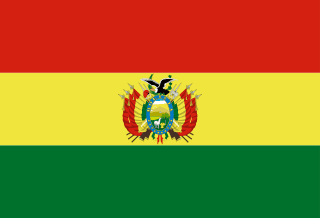
Bolivia
Plurinational State of Bolivia
Population: UN WPP 2024, revision 1, projection for 1 July 2026. Sources and methodology.
Geography and territory
Bolivia covers 1,098,581 square kilometers, making it the fifth-largest country in South America and one of only two landlocked nations on the continent, having lost its access to the Pacific Ocean following the War of the Pacific against Chile (1879-1884). Its territory divides into three broad regions of striking contrast: the Andean Altiplano in the west, intermediate valleys in the center, and tropical lowlands stretching across the east and north.
The Bolivian Altiplano, a high plateau above 3,600 meters wedged between the Western and Eastern Andean cordilleras, holds cities such as La Paz, El Alto, and Oruro, along with Lake Titicaca, shared with Peru. Sitting at 3,812 meters, Titicaca is the highest navigable lake in the world and covers an area larger than Puerto Rico. The Salar de Uyuni, spanning more than 10,000 square kilometers, is the largest salt flat on the planet and sits atop the world’s largest known lithium reserves.
The eastern lowlands, which make up roughly two-thirds of the country, include the tropical plains of Santa Cruz and Beni, dense Amazonian rainforest, and the dry Chiquitano forests. The Chapare, the Yungas, and northern La Paz form a transitional zone between the Andes and the Amazon basin, home to exceptional biodiversity. Bolivia contains parts of six distinct major ecosystems, ranging from Andean glaciers to humid tropical rainforest, making it one of the most biologically diverse countries in the world.
History
Bolivian territory was home to some of the oldest civilizations in the Americas. Tiwanaku, near Lake Titicaca, was a ceremonial and political center that flourished between roughly 300 and 1000 CE, leaving behind striking monuments such as the Gate of the Sun and the Kalasasaya temple. This civilization deeply influenced later Andean peoples, including the Inca, who incorporated the Bolivian Altiplano into the Tahuantinsuyo empire during the fifteenth century.
Spanish colonization transformed the region dramatically after the discovery of silver at Cerro Rico in Potosí in 1545. Potosí grew into one of the largest and wealthiest cities in the world, financing much of the Spanish empire, but at a devastating human cost, with millions of indigenous laborers and enslaved Africans estimated to have perished in the mines. The Real Audiencia of Charcas, seated in Sucre, developed into an intellectual center of the viceroyalty.
Bolivia declared independence on August 6, 1825, taking its name from Simón Bolívar. Its republican history has been turbulent, marked by more coups than any other country in the Western Hemisphere. The War of the Pacific against Chile resulted in the loss of its coastline, the Chaco War against Paraguay (1932-1935) proved devastating, and the National Revolution of 1952 reshaped Bolivian society through land reform, the nationalization of mines, and the introduction of universal suffrage.
Culture and society
Bolivia is arguably the most pluricultural country in South America, with indigenous communities forming a significant share of the population. The 2009 constitution recognizes 36 indigenous nations and peoples along with their languages, formally establishing Bolivia as a Plurinational State. The Quechua and Aymara are the largest indigenous groups, keeping alive distinct traditions, worldviews, and forms of communal organization.
The Carnival of Oruro, designated a Masterpiece of the Oral and Intangible Heritage of Humanity by UNESCO, stands as Bolivia’s most spectacular cultural event. The Diablada, the Morenada, the Caporales, and the Tinkus are dances that fuse pre-Hispanic tradition with Catholic elements in a days-long display of color, music, and religious fervor. The Gran Poder festival in La Paz and the Urkupiña celebration in Cochabamba are similarly grand affairs.
The coca leaf holds a central place in Bolivian culture. Chewed since ancient times to combat altitude sickness and used widely in ceremony, coca is considered sacred among Andean peoples. Its traditional use is constitutionally protected and stands in stark contrast to its illicit processing into cocaine. Andean textile traditions, rituals honoring Pachamama, or Mother Earth, and the colonial architecture of cities such as Sucre and Potosí round out a cultural heritage of extraordinary depth.
Economy
Bolivia’s economy rests heavily on the extraction of natural resources, with natural gas as the leading export. Gas reserves, concentrated in the department of Tarija, have financed social programs and infrastructure investment. Mining remains a historic pillar, producing zinc, tin, silver, and gold, alongside the increasingly significant lithium deposits of the Salar de Uyuni, whose reserves are the largest in the world and represent a strategic opportunity in the era of electric vehicle batteries.
Agriculture employs a substantial share of the population, with soybeans as the leading export crop, grown extensively across the lowlands of Santa Cruz. Bolivia is also a major global producer of quinoa, the Andean grain that has seen surging international demand for its nutritional value. Coffee, cacao, Amazonian Brazil nuts, and coca grown for legal purposes round out the country’s agricultural output.
Despite economic growth over recent decades, Bolivia remains one of the lower-income countries in South America on a per capita basis. Labor informality, development gaps between the western and eastern regions, and reliance on raw material exports remain persistent challenges. Even so, the country has made meaningful progress in reducing extreme poverty and expanding basic social coverage. Regional trade blocs and growing infrastructure links to Brazilian and Chilean ports have also opened new export corridors for a country that must otherwise move its goods across the territory of its neighbors.
Food and cuisine
Bolivian cuisine is hearty and comforting, shaped by the demands of life on the Altiplano and enriched by strong regional variety. The salteña, a juicy pastry filled with meat, potato, olives, egg, and a sweet, spiced broth, is arguably the country’s most beloved bite, eaten as a mid-morning meal nationwide. The pique macho, a generous plate of beef, sausage, French fries, tomato, onion, and hot locoto pepper, is a signature dish of Cochabamba.
The Altiplano contributes hearty dishes such as thimpu, a lamb stew; charque, dried llama meat; llajua, a fiery sauce of locoto pepper and tomato; and api con pastel, a hot purple-corn drink served alongside a fried pastry. In the valleys, chicharrón cochabambino, humintas, and silpancho, a breaded cutlet served over rice, potato, and salad, are local favorites. The eastern lowlands offer majao cruceño, locro, and rice-based dishes distinct from highland fare.
Potatoes, grown in hundreds of Bolivian varieties, form the backbone of Andean diets. Chuño, potato preserved through an ancient process of freezing and sun-drying, remains widely eaten today. Traditional drinks include chicha, a fermented corn beverage served in dedicated chicherías, coca leaf tea, common throughout the Altiplano, and garapiña, a cinnamon-spiced chicha enjoyed on warm Cochabamba evenings.
Tourism and landmarks
The Salar de Uyuni is Bolivia’s most iconic destination and one of the most surreal landscapes on Earth. During the dry season, the vast white salt plain stretches to the horizon, producing extraordinary optical illusions; during the rainy season, a thin sheet of water transforms it into the largest mirror in the world, perfectly reflecting the sky above. Incahuasi Island, covered in giant cacti at the heart of the salt flat, and the nearby Train Cemetery round out the experience.
La Paz, the highest seat of government in the world at more than 3,600 meters, offers a distinctive urban experience with its street markets, the Witches’ Market and its charms and offerings, colonial museums along Calle Jaén, and a cable car system that offers sweeping views of the city hemmed in by mountains. The Valley of the Moon, on the outskirts of the city, presents eroded rock formations that evoke a lunar landscape. Sucre, the constitutional capital, dazzles with white colonial architecture that has earned it the nickname the White City.
Lake Titicaca draws visitors to Isla del Sol, regarded in mythology as the birthplace of Inca civilization. The ruins of Tiwanaku, an hour from La Paz, represent one of the most enigmatic civilizations of the Americas. The Jesuit Missions of Chiquitos, a World Heritage Site, preserve wooden churches of remarkable beauty in the eastern lowlands. Madidi National Park, one of the most biodiverse places on the planet, and the Death Road between La Paz and the Yungas, now reborn as an adventure cycling route, attract intrepid travelers from around the world. Further south, the mining city of Potosí, once among the richest urban centers on Earth, preserves its colonial mint and the tunnels of Cerro Rico, while the surrounding highland villages still weave textiles using techniques passed down since pre-Columbian times.
Fun facts about Bolivia
- Bolivia has two capitals: Sucre is the constitutional capital and seat of the judiciary, while La Paz houses the executive and legislative branches and is the highest seat of government in the world.
- The Salar de Uyuni holds an estimated large share of the world’s known lithium reserves, a mineral essential to electric vehicle batteries and electronic devices.
- Bolivia has experienced more coups and attempted coups than any other country in the Western Hemisphere since gaining independence in 1825.
- Cerro Rico in Potosí produced so much colonial-era silver that, according to legend, it could have financed a silver bridge stretching all the way to Madrid.
- The coca leaf is legal in Bolivia and constitutionally protected; it is chewed, brewed as tea, and used in ritual ceremonies that date back thousands of years.
Bolivia in numbers
Latest World Bank and UNDP observations, each with its own year. “World median” is the middle value among the countries that report the same indicator; “#” ranks from the highest value.
Population since 1960
Bolivia had 3.7 million people in 1960 and 12.6 million in 2025 — 3.4 times as many.
People
71.6% of people live in towns and cities (world median 63.4%). 29.4% are under 15 and 5.7% are 65 or older — a middle-aged population. Women have 2.52 children on average, above the replacement level of about 2.1.
Economy
The economy shrank by 1.6% in real terms in 2025. Consumer prices rose by 19.5% in 2025. Services make up the largest share of output (53.4% of GDP); agriculture contributes 8.8%.
Development and environment
UNDP rates human development in Bolivia as high, with an index of 0.733 in 2023 (rank 108 of 193). 79.7% of people use the internet and 96.6% have access to electricity. Forest covers 50.2% of the land (world median 32.8%).
Sources: World Bank, World Development Indicators (CC BY 4.0), most recent observation from 2015 onward; UNDP Human Development Report 2025. Retrieved 2026-10-10. Sector shares need not add up to 100% because taxes and subsidies on products are excluded. Missing values are left blank rather than estimated. Sources and methodology.
Climate of Bolivia
Averaged across Bolivia, the warmest month is January (22.5 °C) and the coolest is June (17.7 °C), a seasonal swing of 4.8 °C. The annual mean is 20.8 °C.
About 1,101 mm of precipitation falls in a typical year. January is the wettest month (183 mm) and July the driest (20 mm). The wettest stretch is December to February, with 47% of the year's total.
Show monthly values as a table
| Month | Mean °C | Low °C | High °C | Precipitation, mm |
|---|---|---|---|---|
| January | 22.5 | 17.5 | 27.6 | 183 |
| February | 22.2 | 17.2 | 27.3 | 176 |
| March | 22.1 | 16.8 | 27.3 | 147 |
| April | 21.3 | 15.2 | 27.4 | 81 |
| May | 19.1 | 12.6 | 25.6 | 49 |
| June | 17.7 | 10.9 | 24.5 | 28 |
| July | 17.8 | 10.4 | 25.3 | 20 |
| August | 19.0 | 11.2 | 26.8 | 25 |
| September | 20.8 | 13.5 | 28.1 | 43 |
| October | 22.3 | 15.7 | 28.8 | 83 |
| November | 22.5 | 16.4 | 28.6 | 109 |
| December | 22.5 | 17.0 | 28.1 | 158 |
Figures are 1991–2020 averages across the whole land area of Bolivia, from the World Bank Climate Change Knowledge Portal, CRU TS 4.08 (CC BY 4.0). They are not readings from one weather station: the capital, the coast and high ground can be much warmer, cooler, wetter or drier.
Travel essentials for Bolivia
The practical details visitors ask about first. Traffic in Bolivia drives on the right, like most of the world. Mains electricity is 230 V at 50 Hz, so devices made only for 110–120 V (common in North America) need a converter unless they are dual-voltage — most phone and laptop chargers are.
- Emergency number
- 911
- Driving side
- Right
- Plug types
- Type A, Type CA: two flat parallel pins; C: two round pins (Europlug)
- Voltage
- 230 V50 Hz
- Dialling code
- +591From abroad: your exit code, then 591 and the number
- Currency
- Boliviano (BOB)
- Time zone
- UTC-4Current local time in Bolivia
Compiled from IEC plug and voltage standards, national emergency-service listings and the UN road-traffic conventions. Emergency numbers and local coverage can change — confirm them locally on arrival. Bolivia's internet domain is .bo.
Where Bolivia ranks in the world
Each position counts only the countries with data in that ranking guide. First place is the highest value — for price levels, the most expensive. Select a card to see the full table.
- Population79th of 19612.7 millionUN projection, July 2026
- Land area27th of 1951,083,300 km²World Bank, 2023
- Population density180th of 19411 per km²World Bank, 2023
- GDP (nominal)87th of 187$54.9BWorld Bank, 2024, current US$
- GDP per capita121st of 187$4,421World Bank, 2024, current US$
- Life expectancy140th of 19468.7 yearsWorld Bank, 2024
- Price level127th of 16535 (US = 100)ICP 2021, household consumption
Bordering countries of Bolivia


Compare Bolivia with another country
Frequently asked questions about Bolivia
What is the capital of Bolivia?
The capital of Bolivia is Sucre (constitutional) and La Paz (seat of government).
What is the population of Bolivia?
The UN World Population Prospects projection for Bolivia is 12,749,291 people (12.7 million) on 1 July 2026. National statistical offices may publish different estimates.
What language is spoken in Bolivia?
The official language of Bolivia is Spanish and 36 indigenous languages.
What currency is used in Bolivia?
The currency of Bolivia is the Boliviano (BOB).
How big is Bolivia?
Bolivia covers an area of 1,098,581 km².
What type of government does Bolivia have?
Bolivia is a unitary presidential republic.
Which countries border Bolivia?
Bolivia shares land borders with Brazil, Paraguay, Argentina, Chile, Peru.
What is the highest point in Bolivia?
The highest point in Bolivia is Nevado Sajama (6,542 m).


