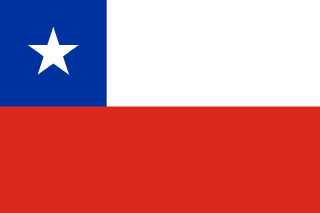
Chile
Republic of Chile
Population: UN WPP 2024, revision 1, projection for 1 July 2026. Sources and methodology.
Geography and territory
Few countries on Earth have a shape as distinctive as Chile’s: a narrow ribbon of land stretching more than 4,300 kilometers from north to south while averaging just 180 kilometers in width, wedged between the towering Andes and the Pacific Ocean. Covering 756,102 square kilometers, the country runs from the Tropic of Capricorn nearly to the edge of Antarctica, packing an almost unmatched range of climates and landscapes into its long, slender frame.
Northern Chile contains the Atacama Desert, the driest place on Earth, where some weather stations have never recorded a drop of rain. The region also ranks among the best places in the world for astronomical observation, its exceptionally clear skies having drawn some of the most advanced observatories in the Southern Hemisphere, including ALMA and Paranal. Central Chile enjoys a Mediterranean climate of wet winters and dry summers, ideal conditions for winemaking and agriculture.
Southern Chile presents an altogether different landscape of temperate rainforest, snow-capped volcanoes, crystalline lakes, and fjords reminiscent of Norway. Chilean Patagonia and Tierra del Fuego are defined by fierce winds, glaciers, and rugged, dramatic terrain. Chile also holds sovereignty over Easter Island in Polynesia and the Juan Fernández Archipelago, and it maintains a territorial claim in Antarctica. Its highest peak, Ojos del Salado, rises to 6,893 meters and ranks as the tallest active volcano on the planet. The country borders Peru, Bolivia, and Argentina.
History
The earliest inhabitants of what is now Chile included the Atacameño peoples in the north, the Mapuche in the center-south, and the Selk’nam in Tierra del Fuego. The Mapuche, known to the Spanish as Araucanians, mounted one of the longest sustained resistances to European colonization anywhere in the Americas, preserving their independence south of the Biobío River for more than three centuries — a fierce resistance that neither Pedro de Valdivia nor his successors ever fully overcame.
Chilean independence took shape under the leadership of Bernardo O’Higgins and José de San Martín, who sealed the break from Spain after the decisive victories at Chacabuco in 1817 and Maipú in 1818. The nineteenth century was later shaped by the War of the Pacific (1879-1883) against Peru and Bolivia, which ended with Chile annexing the mineral-rich nitrate provinces of the north, including Antofagasta and Tarapacá, and left Bolivia without access to the sea.
Chile’s twentieth century was defined by the government of Salvador Allende, the world’s first democratically elected Marxist president, who took office in 1970; by Augusto Pinochet’s 1973 coup; and by the military dictatorship that followed until 1990. A negotiated, peaceful transition to democracy ushered in a long period of political stability and economic growth that has made Chile one of the most developed nations in Latin America.
Culture and society
Chilean culture boasts a literary tradition of the highest order. Pablo Neruda, whose Canto General and Twenty Love Poems rank among the towering achievements of Spanish-language poetry, and Gabriela Mistral, the first Latin American to win the Nobel Prize in Literature, are the two great luminaries of Chilean letters. Isabel Allende, with The House of the Spirits, Roberto Bolaño, with The Savage Detectives and 2666, and Nicanor Parra, with his irreverent “antipoetry,” have carried that literary tradition forward into the present.
Chilean popular music finds its most traditional expression in the cueca, a courtship dance performed with handkerchiefs during the Fiestas Patrias in September. The Nueva Canción Chilena movement of the 1960s and 1970s, led by figures such as Víctor Jara, Violeta Parra, Inti-Illimani, and Quilapayún, fused folk roots with social commitment and left a lasting mark across Latin America. The Viña del Mar International Song Festival remains the most important music competition in the Ibero-American world.
Chilean society blends formality with warmth, anchored by strong family traditions and a national identity that comes into sharpest focus during the Fiestas Patrias on September 18, celebrated with fondas, empanadas, anticuchos, chicha, and cueca dancing. Chile records one of the highest levels of human development in the region, with an educated middle class and access to services that compares favorably with member states of the OECD, which Chile joined in 2010.
Economy
Chile is regarded as one of the most stable and open economies in Latin America, with a gross domestic product of approximately $357.37 billion. The country is the world’s largest producer of copper, a mineral that accounts for a substantial share of its exports and whose extraction is managed in part by the state-owned Codelco, the largest copper company on Earth. Mining as a whole — including lithium, molybdenum, and iron ore — forms the backbone of the Chilean economy.
Chile’s agricultural and forestry sectors benefit enormously from the favorable climate of the central zone. The country ranks among the world’s leading exporters of fruit, including grapes, cherries, blueberries, apples, and kiwis, much of it shipped to Northern Hemisphere markets during their winter months. The salmon farming industry has made Chile the world’s second-largest producer of salmon, while its wine industry has earned international acclaim, particularly from the Colchagua, Maipo, Casablanca, and Maule valleys.
Chile has pursued an aggressive free-trade strategy, signing agreements with more than 60 countries that together account for roughly 90 percent of global GDP. Its pioneering private pension system, established in the 1980s, and the strength of its financial institutions have helped build investor confidence. Santiago has emerged as a regional hub for business and innovation, drawing regional headquarters for multinational companies along with a growing technology startup scene.
Food and cuisine
Chilean cuisine, though less internationally known than some of its Latin American counterparts, has a distinct character rooted in seafood, farm produce, and country traditions. Empanadas de pino, filled with minced beef, onion, hard-boiled egg, olives, and raisins, are the country’s signature dish and the undisputed star of national holiday celebrations. Pastel de choclo, layers of meat, chicken, egg, and olives topped with a sweet corn crust, is another essential classic.
Cazuela, a hearty broth loaded with meat, potato, squash, corn, and vegetables, is the comfort food of choice in Chilean homes. Curanto, an ancestral dish from the island of Chiloé in which shellfish, meats, and potatoes are slow-cooked in a pit dug into the ground and covered with hot stones, represents the oldest culinary tradition of southern Chile. Fresh seafood, including king crab, sea urchin, razor clams, abalone-like locos, and reineta fish, reflects the bounty of the country’s long Pacific coastline.
Chilean wine has undergone a remarkable rise over the past few decades, with Carménère as its signature grape, a variety that found a new home in Chile after nearly disappearing from France. The country’s wine valleys also produce excellent Cabernet Sauvignon, Sauvignon Blanc, and Pinot Noir. Pisco, a grape brandy whose origins Chile disputes with Peru, forms the base of the pisco sour. Mote con huesillos, a refreshing drink of cooked wheat and dried peaches, and sopaipillas served with pebre sauce round out Chile’s beloved street food repertoire.
Tourism and landmarks
Torres del Paine, in Chilean Patagonia, is widely considered one of the most spectacular national parks on the planet. Its granite towers, glaciers, turquoise lakes, and grasslands roamed by guanacos draw hikers from around the world to legendary routes such as the W and O circuits. The Atacama Desert in the far north dazzles visitors with the Valley of the Moon, the El Tatio geysers, high-altitude lagoons, and some of the starriest night skies found anywhere.
Easter Island, some 3,700 kilometers off the Chilean mainland, remains one of the most enigmatic places on Earth. Its moai — massive stone figures carved by the Rapa Nui civilization — stand scattered across the island and remain one of archaeology’s great unsolved puzzles. Valparaíso, with its colorfully painted hillsides, historic funiculars, and bohemian character, has been designated a UNESCO World Heritage Site and is widely regarded as Chile’s cultural capital.
Santiago, the capital, blends modern skyscrapers with historic neighborhoods such as Lastarria and Bellavista, traditional markets like La Vega, and a thriving food scene. The Lake District, where volcanoes such as Osorno reflect in crystal-clear waters, Chiloé, with its UNESCO-listed wooden churches and stilted houses, and the Carretera Austral, one of the most scenic roads in the Americas, round out a country whose tourism offerings span nearly every imaginable extreme.
Fun facts about Chile
- The ALMA observatory, perched at 5,000 meters in the Atacama Desert, is the most expensive ground-based astronomy project in the world and operates 66 high-precision antennas.
- Chile is home to Chuquicamata, the largest open-pit copper mine on Earth, and El Teniente, the deepest underground mine in the Americas.
- Easter Island is the most remote inhabited place in the world, situated more than 2,000 kilometers from the nearest inhabited island.
- A telescope in the Atacama Desert contributed to capturing the first-ever direct image of a black hole in 2019.
- Chile is so narrow that from certain points it is possible to watch the sun rise over the Andes and set over the Pacific from the very same spot.
Chile in numbers
Latest World Bank and UNDP observations, each with its own year. “World median” is the middle value among the countries that report the same indicator; “#” ranks from the highest value.
Population since 1960
Chile had 8.2 million people in 1960 and 19.9 million in 2025 — 2.4 times as many.
People
89.2% of people live in towns and cities (world median 63.4%). 16.5% are under 15 and 14.6% are 65 or older — an ageing population. Women have 1.14 children on average, below the replacement level of about 2.1 needed to keep a population stable in the long run without migration.
Economy
The economy grew by 2.5% in real terms in 2025. Consumer prices rose by 4.2% in 2025. Services make up the largest share of output (55.5% of GDP); agriculture contributes 3.5%.
Development and environment
UNDP rates human development in Chile as very high, with an index of 0.878 in 2023 (rank 45 of 193). 95.6% of people use the internet and 99.0% have access to electricity. Forest covers 24.5% of the land (world median 32.8%).
Sources: World Bank, World Development Indicators (CC BY 4.0), most recent observation from 2015 onward; UNDP Human Development Report 2025. Retrieved 2026-10-10. Sector shares need not add up to 100% because taxes and subsidies on products are excluded. Missing values are left blank rather than estimated. Sources and methodology.
Climate of Chile
Averaged across Chile, the warmest month is January (13.7 °C) and the coolest is July (5.0 °C), a seasonal swing of 8.7 °C. The annual mean is 9.4 °C.
About 936 mm of precipitation falls in a typical year. June is the wettest month (127 mm) and January the driest (50 mm).
Show monthly values as a table
| Month | Mean °C | Low °C | High °C | Precipitation, mm |
|---|---|---|---|---|
| January | 13.7 | 8.7 | 18.7 | 50 |
| February | 13.3 | 8.4 | 18.3 | 63 |
| March | 12.1 | 7.2 | 17.0 | 76 |
| April | 9.7 | 5.0 | 14.4 | 79 |
| May | 7.4 | 3.0 | 11.8 | 98 |
| June | 5.5 | 1.2 | 9.9 | 127 |
| July | 5.0 | 0.5 | 9.5 | 99 |
| August | 5.9 | 1.2 | 10.7 | 97 |
| September | 7.5 | 2.6 | 12.4 | 68 |
| October | 9.2 | 4.3 | 14.2 | 63 |
| November | 11.0 | 6.0 | 16.1 | 59 |
| December | 12.6 | 7.6 | 17.7 | 59 |
Figures are 1991–2020 averages across the whole land area of Chile, from the World Bank Climate Change Knowledge Portal, CRU TS 4.08 (CC BY 4.0). They are not readings from one weather station: the capital, the coast and high ground can be much warmer, cooler, wetter or drier.
Travel essentials for Chile
The practical details visitors ask about first. Traffic in Chile drives on the right, like most of the world. Mains electricity is 220 V at 50 Hz, so devices made only for 110–120 V (common in North America) need a converter unless they are dual-voltage — most phone and laptop chargers are.
- Emergency number
- 133Ambulance 131 · Fire 132
- Driving side
- Right
- Plug types
- Type C, Type LC: two round pins (Europlug); L: three round pins in a row (Italian)
- Voltage
- 220 V50 Hz
- Dialling code
- +56From abroad: your exit code, then 56 and the number
- Currency
- Chilean Peso (CLP)
- Time zone
- UTC-4 (UTC-3 in summer)Current local time in Chile
Compiled from IEC plug and voltage standards, national emergency-service listings and the UN road-traffic conventions. Emergency numbers and local coverage can change — confirm them locally on arrival. Chile's internet domain is .cl.
Where Chile ranks in the world
Each position counts only the countries with data in that ranking guide. First place is the highest value — for price levels, the most expensive. Select a card to see the full table.
- Population67th of 19619.9 millionUN projection, July 2026
- Land area38th of 195742,832 km²World Bank, 2023
- Population density157th of 19426 per km²World Bank, 2023
- GDP (nominal)44th of 187$329.3BWorld Bank, 2024, current US$
- GDP per capita61st of 187$16,659World Bank, 2024, current US$
- Life expectancy36th of 19481.4 yearsWorld Bank, 2024
- Price level44th of 16562 (US = 100)ICP 2021, household consumption
Bordering countries of Chile


Compare Chile with another country
Frequently asked questions about Chile
What is the capital of Chile?
The capital of Chile is Santiago.
What is the population of Chile?
The UN World Population Prospects projection for Chile is 19,945,850 people (19.9 million) on 1 July 2026. National statistical offices may publish different estimates.
What language is spoken in Chile?
The official language of Chile is Spanish.
What currency is used in Chile?
The currency of Chile is the Chilean Peso (CLP).
How big is Chile?
Chile covers an area of 756,102 km².
What type of government does Chile have?
Chile is a unitary presidential republic.
Which countries border Chile?
Chile shares land borders with Peru, Bolivia, Argentina.
What is the highest point in Chile?
The highest point in Chile is Ojos del Salado (6,893 m).


