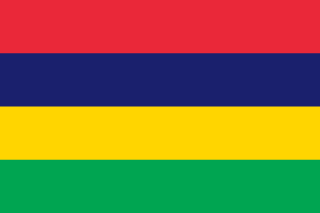
Mauritius
Republic of Mauritius
Population: UN WPP 2024, revision 1, projection for 1 July 2026. Sources and methodology.
Geography and territory
Mauritius is an island nation in the southwestern Indian Ocean, roughly 900 kilometers east of Madagascar and about 2,000 kilometers from the southeastern coast of the African mainland. Its land area totals just 2,040 square kilometers, encompassing the main island of Mauritius along with Rodrigues, the Agalega Islands, and the Cargados Carajos archipelago, yet its exclusive economic zone spans more than 2.3 million square kilometers of ocean, a maritime footprint vastly larger than its land base.
The main island, of volcanic origin, features a varied terrain built around an elevated central plateau ringed by mountains and distinctive peaks, including Piton de la Petite Rivière Noire, which at 828 meters is the country’s highest point. Le Morne Brabant, a dramatic rocky peninsula recognized as a UNESCO World Heritage Site, juts out over the southwestern coastline. Coral reefs encircle the island, enclosing turquoise lagoons and sheltering the white-sand beaches that have given Mauritius its worldwide reputation as a tropical paradise.
Mauritius enjoys a tropical maritime climate with pleasant temperatures year-round: a warm, humid summer runs from November to April, followed by a mild, drier winter from May to October. Much of the island’s native vegetation, including endemic species like the tambalacoque tree, has given way to sugarcane plantations that still blanket large stretches of land. The Pamplemousses Botanical Garden, founded in 1770, preserves an exceptional collection of tropical plants, including the giant Victoria amazonica water lily.
History
The story of Mauritius is one of discovery, colonization, and the convergence of cultures from three continents. Arab and Malay sailors knew of the island as early as the Middle Ages, but it was Portuguese navigators who first sighted it for Europe in the early sixteenth century, without founding any lasting settlement. The Dutch claimed the island in 1598, naming it after Prince Maurice of Nassau, and introduced sugarcane and deer, but their tenure also brought about the extinction of the dodo bird around 1681.
The French took possession in 1715, renaming the island Isle de France, and built it into a thriving naval and commercial outpost. Under Governor Mahé de Labourdonnais, Port Louis grew into a strategic port along the route to India, while the French period also brought the mass importation of enslaved Africans to labor on sugar plantations. In 1810, the British seized the island following the Battle of Grand Port, the only French naval victory ever inscribed on the Arc de Triomphe in Paris.
Under British rule, the abolition of slavery in 1835 triggered the arrival of indentured laborers from India, who reshaped the island’s demography and culture in profound and lasting ways. Mauritius achieved independence on March 12, 1968, under the leadership of Seewoosagur Ramgoolam, and became a republic in 1992. In the decades since, the country has undergone a remarkable transformation from a sugar-dependent economy into one of Africa’s most prosperous and stable nations.
Culture and society
Mauritian society is an extraordinary cultural mosaic, home to communities of Indian, African, Chinese, and European descent living side by side in relative harmony. This diversity is visible everywhere, with Hindu temples, mosques, Christian churches, and Buddhist pagodas often standing within sight of one another. Religious holidays from every community, including Hindu Diwali, Muslim Eid, Chinese New Year, and Christian Christmas, are all observed as national public holidays.
Sega music, born from the experience of enslaved Africans and Malagasy people, is the country’s most emblematic cultural expression and has been recognized on UNESCO’s list of Intangible Cultural Heritage. Played on instruments such as the ravanne, a goatskin drum, and the maravanne, a seed-filled rattle, sega fuses African rhythms with Creole melodies in songs about love, labor, and endurance. Seggae, a fusion of sega with Jamaican reggae, has found a wide following among younger generations.
Mauritian Creole, a French-based creole language, serves as the country’s lingua franca and a unifying symbol of national identity across all communities. Mauritian literature has earned international acclaim, most notably through Jean-Marie Gustave Le Clézio, a writer of Mauritian family heritage who won the Nobel Prize in Literature in 2008. Education and intercultural coexistence are highly valued throughout Mauritian society, forming the bedrock of the country’s stability and steady progress.
Economy
Mauritius stands as one of Africa’s most remarkable economic success stories, having transformed itself from near-total dependence on sugarcane into an upper-middle-income nation with one of the highest human development scores on the continent, reflected in its HDI of 0.806, classified as very high. The financial services sector has become a central economic pillar, with Mauritius positioning itself as a banking and investment hub that draws international capital, particularly from India and other parts of Africa.
Tourism is another major engine of the economy, drawing more than a million visitors a year to its beaches, luxury resorts, and famously warm hospitality. The textile and garment industry, built up in export-processing zones established during the 1980s, employs thousands of workers and ships goods to markets in Europe and the Americas. Sugar production, though diminished in relative importance, remains significant and has diversified into ethanol and bagasse-derived energy.
In recent decades, Mauritius has pushed decisively into the knowledge economy, developing information technology, business process outsourcing, and ocean-based industries. With an economy valued at roughly $16.2 billion, the country aims to become a regional technology hub, leveraging its position between Africa and Asia, its bilingual workforce, and a business-friendly regulatory environment. The blue economy, centered on sustainable use of its vast marine resources, represents a further strategic priority for the years ahead.
Food and cuisine
Mauritian cuisine perfectly mirrors the island’s cultural diversity, blending flavors and techniques from Indian, Chinese, African, French, and Creole culinary traditions. Curries of every kind, built on hand-ground spice blends, form the backbone of everyday eating: chicken, fish, octopus, venison, or vegetable curry, each prepared with a distinct combination of spices that varies from family to family and community to community.
Biryani, Chinese-style fried rice, vindaye, a fish dish marinated in mustard and turmeric, and dholl puri, split-pea flatbreads served with tomato rougaille and chutney, appear constantly in daily Mauritian life. Gâteau piment, fried spiced lentil balls, ranks as the island’s most popular street snack. Fresh seafood, including lobster, crab, and prawns, is prepared in countless ways, from simple grilling to elaborate French-inspired sauces.
Mauritian pastry blends French and Indian influences, with treats like napolitaine, a pink-glazed colonial-era sponge cookie, alongside Indian sweets such as ladoo and barfi. Locally distilled agricultural rum, made from fresh cane juice, and Phoenix beer are the island’s most popular alcoholic drinks. Alouda, a refreshing beverage made from milk, basil seeds, agar agar, and rose syrup, is the quintessential non-alcoholic drink and a favorite on hot days. Roadside vendors selling fresh fruit dusted with chili salt, grilled corn, and boiled peanuts add another everyday layer to the island’s food culture, one shaped as much by improvisation as by heritage.
Tourism and landmarks
The beaches of Mauritius rank among the most beautiful anywhere, with powdery white sand, crystalline turquoise water, and lagoons sheltered by coral reefs. The north coast, home to beaches like Grand Baie, Trou aux Biches, and Péreybère, offers the warmest, calmest waters, ideal for swimming and watersports. Flic en Flac and Belle Mare, on the west and east coasts respectively, are favorite destinations for diving and snorkeling amid coral gardens and tropical fish.
Le Morne Brabant, the southwestern rocky peninsula recognized as a UNESCO World Heritage Site, carries deep historical significance as a former refuge for escaped slaves and offers hiking trails with sweeping panoramic views. Black River Gorges National Park protects the island’s last remaining native forest, with trails winding past waterfalls, scenic overlooks, and habitats for endemic species such as the Mauritius kestrel, brought back from the brink of extinction through a successful captive-breeding program.
The Seven Colored Earths of Chamarel, a striking geological formation where volcanic dunes display bands of color ranging from red to blue, is one of the island’s most unusual natural sights. The Pamplemousses Botanical Garden, the oldest in the Southern Hemisphere, showcases plant species from across the tropical world. Port Louis, the capital, offers a lively central market, the historic Champ de Mars racecourse, the oldest in the Southern Hemisphere, and the Aapravasi Ghat, a UNESCO World Heritage Site commemorating the arrival of indentured Indian laborers.
Fun facts about Mauritius
- Mauritius was the only known home of the dodo, the flightless bird that went extinct around 1681, barely 80 years after Dutch colonizers first arrived
- The country is one of the most densely populated in the world, with more than 600 people per square kilometer
- Mauritian rupee banknotes feature the portrait of Seewoosagur Ramgoolam, the father of independence, often referred to as the Gandhi of Mauritius
- Mauritius regularly ranks first in Africa on indices of democracy and economic freedom
- The Champ de Mars racecourse in Port Louis, founded in 1812, is the second-oldest horseracing track in the world, after Newmarket in England
- Off the coast of Le Morne, an underwater optical illusion appears to show a waterfall cascading beneath the sea, actually created by currents sweeping sand and sediment off the shelf
Mauritius in numbers
Latest World Bank and UNDP observations, each with its own year. “World median” is the middle value among the countries that report the same indicator; “#” ranks from the highest value.
Population since 1960
Mauritius had 680,331 people in 1960 and 1.2 million in 2025 — 83% more.
People
39.0% of people live in towns and cities (world median 63.4%). 14.5% are under 15 and 14.1% are 65 or older — an ageing population. Women have 1.44 children on average, below the replacement level of about 2.1 needed to keep a population stable in the long run without migration.
Economy
The economy grew by 3.2% in real terms in 2025. Consumer prices rose by 3.7% in 2025. Services make up the largest share of output (63.9% of GDP); agriculture contributes 4.6%.
Development and environment
UNDP rates human development in Mauritius as very high, with an index of 0.806 in 2023 (rank 73 of 193). 73.3% of people use the internet and 100.0% have access to electricity. Forest covers 19.1% of the land (world median 32.8%).
Sources: World Bank, World Development Indicators (CC BY 4.0), most recent observation from 2015 onward; UNDP Human Development Report 2025. Retrieved 2026-10-10. Sector shares need not add up to 100% because taxes and subsidies on products are excluded. Missing values are left blank rather than estimated. Sources and methodology.
Climate of Mauritius
Averaged across Mauritius, the warmest month is February (26.1 °C) and the coolest is July (20.4 °C), a seasonal swing of 5.7 °C. The annual mean is 23.3 °C.
About 2,017 mm of precipitation falls in a typical year. February is the wettest month (344 mm) and October the driest (73 mm). The wettest stretch is January to March, with 47% of the year's total.
Show monthly values as a table
| Month | Mean °C | Low °C | High °C | Precipitation, mm |
|---|---|---|---|---|
| January | 25.9 | 22.2 | 29.7 | 293 |
| February | 26.1 | 22.6 | 29.6 | 344 |
| March | 25.7 | 22.3 | 29.2 | 303 |
| April | 24.8 | 21.5 | 28.2 | 192 |
| May | 23.1 | 19.4 | 26.7 | 141 |
| June | 21.4 | 17.9 | 25.0 | 112 |
| July | 20.4 | 17.1 | 23.8 | 104 |
| August | 20.5 | 17.0 | 24.0 | 118 |
| September | 21.1 | 17.4 | 24.8 | 88 |
| October | 22.2 | 18.4 | 26.1 | 73 |
| November | 23.7 | 19.7 | 27.7 | 79 |
| December | 25.1 | 21.2 | 28.9 | 170 |
Figures are 1991–2020 averages across the whole land area of Mauritius, from the World Bank Climate Change Knowledge Portal, CRU TS 4.08 (CC BY 4.0). They are not readings from one weather station: the capital, the coast and high ground can be much warmer, cooler, wetter or drier.
Travel essentials for Mauritius
The practical details visitors ask about first. Traffic in Mauritius drives on the left, one of 54 of the 196 countries profiled here that do — see the full list. Mains electricity is 230 V at 50 Hz, so devices made only for 110–120 V (common in North America) need a converter unless they are dual-voltage — most phone and laptop chargers are.
- Emergency number
- 999Ambulance 114 · Fire 115
- Driving side
- Left
- Plug types
- Type C, Type GC: two round pins (Europlug); G: three rectangular pins (British)
- Voltage
- 230 V50 Hz
- Dialling code
- +230From abroad: your exit code, then 230 and the number
- Currency
- Mauritian Rupee (MUR)
- Time zone
- MUT (UTC+4)Current local time in Mauritius
Compiled from IEC plug and voltage standards, national emergency-service listings and the UN road-traffic conventions. Emergency numbers and local coverage can change — confirm them locally on arrival. Mauritius's internet domain is .mu.
Where Mauritius ranks in the world
Each position counts only the countries with data in that ranking guide. First place is the highest value — for price levels, the most expensive. Select a card to see the full table.
- Population157th of 1961.3 millionUN projection, July 2026
- Land area169th of 1951,997 km²World Bank, 2023
- Population density9th of 194625 per km²World Bank, 2023
- GDP (nominal)140th of 187$14.9BWorld Bank, 2024, current US$
- GDP per capita73rd of 187$11,991World Bank, 2024, current US$
- Life expectancy96th of 19473.8 yearsWorld Bank, 2024
- Price level93rd of 16545 (US = 100)ICP 2021, household consumption
Compare Mauritius with another country
Frequently asked questions about Mauritius
What is the capital of Mauritius?
The capital of Mauritius is Port Louis.
What is the population of Mauritius?
The UN World Population Prospects projection for Mauritius is 1,265,059 people (1.3 million) on 1 July 2026. National statistical offices may publish different estimates.
What language is spoken in Mauritius?
The official language of Mauritius is English (official), French, Mauritian Creole.
What currency is used in Mauritius?
The currency of Mauritius is the Mauritian Rupee (MUR).
How big is Mauritius?
Mauritius covers an area of 2,040 km².
What type of government does Mauritius have?
Mauritius is a parliamentary republic.
What is the highest point in Mauritius?
The highest point in Mauritius is Piton de la Petite Rivière Noire (828 m).


