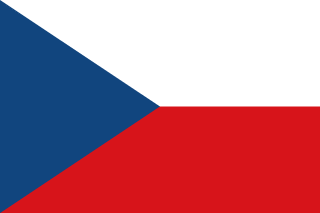
Czech Republic
Czech Republic
Population: UN WPP 2024, revision 1, projection for 1 July 2026. Sources and methodology.
Geography and territory
The Czech Republic is a landlocked nation at the heart of Central Europe, covering 78,867 km² and home to a population of about 10.5 million, bordering Germany, Poland, Slovakia, and Austria. The country is traditionally divided into three historic regions: Bohemia in the west, a broad basin ringed by mountains and home to Prague; Moravia in the east, known for its rolling vineyards; and a small slice of Silesia in the northeast. This layered geography has given the country a strong sense of regional identity that predates its modern borders.
The Czech landscape is framed by mountain chains that double as natural frontiers: the Ore Mountains along the German border, the Sudetes to the north, and the Bohemian-Moravian Highlands in the center. The country’s highest point, Snežka, rises to 1,603 meters in the Giant Mountains along the Polish border. Two major rivers, the Vltava and the Elbe, cut through the interior, and the country sits on a continental watershed where waters flow toward the North Sea, the Baltic, and the Black Sea.
The climate is continental, with cold, snowy winters and warm, humid summers. Roughly a third of the territory remains forested, sustaining a forestry and agricultural tradition that stretches back centuries, while the mountainous borderlands support popular ski resorts in winter and extensive hiking trails in summer. Fertile lowlands along the rivers support hop and grain cultivation, and South Moravia’s gentle hills have long nurtured one of Central Europe’s most respected winemaking traditions.
Having no coastline of its own, the Czech Republic relies on its river network and dense rail and highway links with neighboring Germany, Austria, Poland, and Slovakia to connect with the wider continent. The compact size of the country, combined with excellent infrastructure, means that even remote mountain regions and historic towns are within easy reach of Prague, making the whole territory unusually accessible to travelers.
History
Bohemia takes its name from the Celtic Boii tribe, who were later displaced by Slavic peoples arriving around the sixth century. The Duchy of Bohemia, founded in the ninth century under the Přemyslid dynasty, grew into a major European power, reaching its zenith under Charles IV in the fourteenth century. As king of Bohemia and Holy Roman Emperor, Charles made Prague an imperial capital, founded Central Europe’s first university in 1348, and commissioned the Charles Bridge and St. Vitus Cathedral.
The fifteenth-century Hussite movement, led by the reformer Jan Hus, who was burned at the stake in 1415, anticipated the Protestant Reformation by a century and demonstrated the fiercely independent streak of the Czech lands. Defeat at the Battle of White Mountain in 1620 ushered in three centuries of Habsburg rule and the suppression of Czech language and culture, reversed only by a nineteenth-century national revival that paved the way for political independence.
Czechoslovakia emerged in 1918 from the ruins of the Austro-Hungarian Empire under Tomáš Garrigue Masaryk, only to be dismembered by the 1938 Munich Agreement and occupied by Nazi Germany. Decades of Soviet-imposed communist rule followed, interrupted by the crushed reforms of the 1968 Prague Spring and ended by the 1989 Velvet Revolution led by playwright Václav Havel. On January 1, 1993, Czechoslovakia split peacefully into the Czech Republic and Slovakia; the Czech Republic joined the European Union in 2004.
The peaceful nature of the 1993 split, often called the “Velvet Divorce,” stood in sharp contrast to the violent breakups occurring elsewhere in the former communist bloc at the time, and it left the two successor nations on cordial terms that endure today. Since regaining full sovereignty, the Czech Republic has anchored itself firmly within Western institutions, joining NATO in 1999 and the European Union five years later, while continuing to grapple with the legacies of its turbulent twentieth century.
Culture and society
Czech culture has shaped European intellectual life far beyond what the country’s size would suggest. Prague was for centuries a crossroads where Czech, German, and Jewish cultures intermingled, producing figures such as Franz Kafka, whose unsettling visions gave the world the adjective “Kafkaesque.” Milan Kundera and Bohumil Hrabal carried that literary tradition into the twentieth century, cementing the country’s reputation for penetrating, ironic storytelling.
Czech classical music holds a place of world importance through composers such as Bedřich Smetana, whose symphonic poem “The Moldau” remains one of the most beloved orchestral works, and Antonín Dvořák, composer of the “New World Symphony.” The Prague Spring International Music Festival draws performers and audiences from across the globe, while the country’s centuries-old marionette tradition is recognized by UNESCO as intangible cultural heritage.
Czech society today is among the most secular in Europe, and a dry, self-deprecating sense of humor runs through the national character, embodied in the classic literary figure of the Good Soldier Švejk. Pub culture is central to social life, closely bound up with a brewing tradition that ranks among the world’s finest, while Bohemian glassmaking, refined over centuries, continues to produce work prized internationally.
Education and reading enjoy high social prestige, a legacy of the national revival movement that rebuilt Czech-language schooling and publishing in the nineteenth century. Folk traditions, from Moravian wine-harvest festivals to elaborately embroidered regional costumes, remain vibrant in rural areas even as Prague has become a thoroughly cosmopolitan European capital, and the country’s film industry, once home to Barrandov Studios’ golden age, continues to attract major international productions thanks to its skilled crews and historic backdrops.
Economy
With a GDP of approximately $391.0 billion and a Human Development Index of 0.915, ranked as very high, the Czech Republic has one of the most developed and stable economies in Central Europe. Its transition from a centrally planned system after 1989 is widely regarded as one of the region’s most successful, driven by privatization, foreign investment, and deep integration into European, especially German, manufacturing supply chains. Unemployment has consistently ranked among the lowest in the European Union.
Manufacturing forms the backbone of the economy, led decisively by the automotive sector. Škoda Auto, founded in 1895 and now part of the Volkswagen Group, is the country’s largest company, and major plants operated by other global automakers reinforce the Czech Republic’s status as an automotive manufacturing hub. Machinery, electronics, chemicals, and Bohemian glass production round out a diversified industrial base.
Services, particularly information technology, finance, and tourism, have grown rapidly in recent decades. Prague alone attracts millions of international visitors annually, making it one of Europe’s most visited cities. The country has retained the koruna rather than adopting the euro, even as its economy remains tightly interwoven with the eurozone through trade and investment.
Food and cuisine
Czech cuisine is hearty and savory, built to accompany the country’s most celebrated export: beer. The Czech Republic has the highest per-capita beer consumption in the world, and Pilsner Urquell, brewed in Plzeň since 1842, gave the world the pilsner style that now dominates global beer production. Budweiser Budvar and a thriving craft brewing scene round out a drinking culture considered central to national identity.
The national dish, vepřo-knedlo-zelo, pairs roast pork with stewed cabbage and knedlíky, the bread dumplings that accompany nearly every sauced dish on a Czech table. Svíčková, marinated beef sirloin served in a creamy sauce with cranberries and dumplings, is often regarded as the country’s culinary masterpiece, alongside goulash soup and breaded fried cheese.
Czech pastry traditions are equally rich, from the charcoal-roasted trdelník to poppy-seed and fruit-filled koláče and thin palačinky crepes. The country’s Christmas markets, with roasted sausages, mulled wine, and fresh trdelník, rank among Europe’s most atmospheric seasonal traditions and draw visitors from across the continent every winter.
Tourism and landmarks
Prague, nicknamed the “City of a Hundred Spires,” is one of the most visually striking cities in the world, its skyline a blend of Gothic, Baroque, and Renaissance architecture. Prague Castle, the largest ancient castle complex on Earth, dominates the city from Hradčany hill, while the Charles Bridge, lined with Baroque statues, and the astronomical clock in the Old Town Square draw visitors year-round.
Beyond the capital, the country boasts an extraordinary density of historic architecture, with more than two thousand castles and fortresses, the highest concentration in Europe. Český Krumlov, wrapped around a bend in the Vltava beneath a Renaissance castle, and Kutná Hora, home to the Gothic St. Barbara’s Cathedral, are both UNESCO World Heritage Sites, as is the perfectly preserved Renaissance square of Telč.
The spa towns of western Bohemia, including Karlovy Vary, have drawn visitors seeking their mineral waters since the eighteenth century, while the Giant Mountains offer hiking in summer and skiing in winter, and the vineyard-covered hills of South Moravia have become a growing wine tourism destination in their own right.
Fun facts about Czech Republic
- The Czech Republic has the highest beer consumption per capita in the world, at roughly 140 liters per person annually.
- The word “robot” was coined by Czech writer Karel Čapek in his 1920 play “R.U.R.,” derived from the Czech word for forced labor.
- The country has more than 2,000 castles and châteaux, the densest concentration in Europe.
- Bohemian glass has been crafted since the thirteenth century and remains prized worldwide for its clarity.
- Soft contact lenses were invented by Czech chemist Otto Wichterle in 1959.
- Prague’s astronomical clock, installed in 1410, is the oldest still-operating clock of its kind in the world.
The Czech Republic in numbers
Latest World Bank and UNDP observations, each with its own year. “World median” is the middle value among the countries that report the same indicator; “#” ranks from the highest value.
Population since 1960
The Czech Republic had 9.6 million people in 1960 and 10.9 million in 2025 — 13% more.
People
72.9% of people live in towns and cities (world median 63.4%). 15.1% are under 15 and 21.2% are 65 or older — one of the oldest age structures in the world. Women have 1.36 children on average, below the replacement level of about 2.1 needed to keep a population stable in the long run without migration.
Economy
The economy grew by 2.6% in real terms in 2025. Consumer prices rose by 2.5% in 2025. Services make up the largest share of output (60.8% of GDP); agriculture contributes 1.9%.
Development and environment
UNDP rates human development in the Czech Republic as very high, with an index of 0.915 in 2023 (rank 29 of 193). 87.7% of people use the internet and 100.0% have access to electricity. Forest covers 38.4% of the land (world median 32.8%).
Sources: World Bank, World Development Indicators (CC BY 4.0), most recent observation from 2015 onward; UNDP Human Development Report 2025. Retrieved 2026-10-10. Sector shares need not add up to 100% because taxes and subsidies on products are excluded. Missing values are left blank rather than estimated. Sources and methodology.
Climate of the Czech Republic
Averaged across the Czech Republic, the warmest month is July (18.5 °C) and the coolest is January (−1.3 °C), a seasonal swing of 19.8 °C. The annual mean is 8.6 °C.
2 months have a national mean temperature below freezing.
About 677 mm of precipitation falls in a typical year. July is the wettest month (94 mm) and February the driest (33 mm). The wettest stretch is June to August, with 37% of the year's total.
Show monthly values as a table
| Month | Mean °C | Low °C | High °C | Precipitation, mm |
|---|---|---|---|---|
| January | −1.3 | −3.6 | 1.0 | 41 |
| February | 0.0 | −3.0 | 2.9 | 33 |
| March | 3.6 | −0.2 | 7.5 | 44 |
| April | 8.8 | 3.8 | 13.8 | 38 |
| May | 13.2 | 8.2 | 18.3 | 73 |
| June | 16.6 | 11.5 | 21.7 | 80 |
| July | 18.5 | 13.2 | 23.8 | 94 |
| August | 18.1 | 12.9 | 23.5 | 79 |
| September | 13.5 | 8.9 | 18.1 | 61 |
| October | 8.5 | 4.8 | 12.2 | 47 |
| November | 3.6 | 1.3 | 6.0 | 44 |
| December | −0.2 | −2.2 | 1.8 | 44 |
Figures are 1991–2020 averages across the whole land area of the Czech Republic, from the World Bank Climate Change Knowledge Portal, CRU TS 4.08 (CC BY 4.0). They are not readings from one weather station: the capital, the coast and high ground can be much warmer, cooler, wetter or drier.
Travel essentials for the Czech Republic
The practical details visitors ask about first. Traffic in the Czech Republic drives on the right, like most of the world. Mains electricity is 230 V at 50 Hz, so devices made only for 110–120 V (common in North America) need a converter unless they are dual-voltage — most phone and laptop chargers are.
- Emergency number
- 112
- Driving side
- Right
- Plug types
- Type C, Type EC: two round pins (Europlug); E: two round pins, earth pin in the socket
- Voltage
- 230 V50 Hz
- Dialling code
- +420From abroad: your exit code, then 420 and the number
- Currency
- Czech Koruna (CZK)
- Time zone
- CET (UTC+1)Current local time in the Czech Republic
Compiled from IEC plug and voltage standards, national emergency-service listings and the UN road-traffic conventions. Emergency numbers and local coverage can change — confirm them locally on arrival. The Czech Republic's internet domain is .cz.
Where the Czech Republic ranks in the world
Each position counts only the countries with data in that ranking guide. First place is the highest value — for price levels, the most expensive. Select a card to see the full table.
- Population92nd of 19610.5 millionUN projection, July 2026
- Land area114th of 19577,167 km²World Bank, 2023
- Population density66th of 194141 per km²World Bank, 2023
- GDP (nominal)43rd of 187$347.1BWorld Bank, 2024, current US$
- GDP per capita37th of 187$31,828World Bank, 2024, current US$
- Life expectancy41st of 19480.0 yearsWorld Bank, 2024
- Price level43rd of 16563 (US = 100)ICP 2021, household consumption
Bordering countries of the Czech Republic


Compare the Czech Republic with another country
Frequently asked questions about the Czech Republic
What is the capital of the Czech Republic?
The capital of the Czech Republic is Prague.
What is the population of the Czech Republic?
The UN World Population Prospects projection for the Czech Republic is 10,527,781 people (10.5 million) on 1 July 2026. National statistical offices may publish different estimates.
What language is spoken in the Czech Republic?
The official language of the Czech Republic is Czech.
What currency is used in the Czech Republic?
The currency of the Czech Republic is the Czech Koruna (CZK).
How big is the Czech Republic?
The Czech Republic covers an area of 78,867 km².
What type of government does the Czech Republic have?
The Czech Republic is a parliamentary republic.
Which countries border the Czech Republic?
The Czech Republic shares land borders with Germany, Poland, Slovakia, Austria.
What is the highest point in the Czech Republic?
The highest point in the Czech Republic is Snežka (1,603 m).


