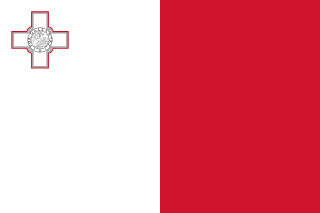
Malta
Republic of Malta
Population: UN WPP 2024, revision 1, projection for 1 July 2026. Sources and methodology.
Geography and territory
Malta is a small archipelago at the center of the Mediterranean Sea, lying 93 kilometers south of Sicily and 288 kilometers north of the African coast. With a total land area of just 316 km² and a population of 579,704, it ranks among the smallest and most densely populated countries anywhere in the world. The archipelago comprises three main islands: Malta itself, the largest and most populous; Gozo, quieter and more rural; and Comino, nearly uninhabited and famous for the crystalline waters of its Blue Lagoon.
The Maltese landscape has no permanent rivers and no real mountains. Its coastline is defined by dramatic cliffs, particularly along the western shore, interspersed with small coves and beaches of sand and rock. The archipelago’s highest point, Ta’ Dmejrek, reaches only 253 meters near the Dingli Cliffs. Limestone dominates the geology of the islands, producing a karst landscape riddled with caves, sea grottoes, and rock formations sculpted by wind and water over millennia.
The climate is classically Mediterranean, with long, hot, dry summers and mild, moderately wet winters. Malta enjoys more than 300 days of sunshine a year, making it one of the sunniest destinations in Europe. Fresh water has always been scarce on the islands, a challenge Malta has addressed through desalination plants and careful management of its limited natural water resources. As an island nation, Malta shares no land borders with any other country, and its entire economy, ecology, and daily life are shaped by its relationship with the sea that surrounds it.
History
For such a tiny territory, Malta’s history is extraordinarily deep, spanning more than 7,000 years of continuous civilization. The megalithic temples of Ġgantija, Ħaġar Qim, and Mnajdra, built between roughly 3600 and 2500 BCE, are the oldest known freestanding stone structures in the world, predating both the pyramids of Egypt and Stonehenge. Now a UNESCO World Heritage Site, these temples testify to a remarkably sophisticated Neolithic society.
Over the centuries, Malta was successively settled and ruled by Phoenicians, Carthaginians, Romans, Arabs, and Normans, each leaving a mark on the islands’ language, architecture, and culture. The most transformative arrival came in 1530, when the Knights of the Order of St. John took control and turned Malta into a formidable fortress. Their successful defense against the Ottoman Great Siege of 1565 stands as one of the most celebrated episodes in European military history, and it led directly to the construction of Valletta, one of the first planned cities in Europe.
Under British rule from 1800, Malta played a pivotal role as an Allied naval base in the Mediterranean during the Second World War. Italian and German bombing raids were so relentless that King George VI awarded the George Cross to the entire island, a unique honor never given to a whole nation before or since. Malta achieved independence in 1964, became a republic in 1974, and later joined the European Union in 2004 and the eurozone in 2008.
Culture and society
Maltese culture is a striking blend of Mediterranean, Arab, Italian, and British influences layered over centuries. Maltese, the co-official language alongside English, is the only language of Semitic origin written in the Latin alphabet and the only Semitic language with official status in the European Union. Derived from medieval Siculo-Arabic with heavy borrowing from Italian and English, it stands as a living linguistic record of the archipelago’s multicultural past.
Village feasts, known as festas, sit at the heart of Maltese social life. Each town and village honors its patron saint with solemn processions, spectacular fireworks, marching bands, and streets strung with elaborate lights. Held mainly between May and September, these celebrations generate a good-natured rivalry between neighboring parishes. The traditional, if hazardous, craft of homemade fireworks-making remains deeply embedded in local culture.
Maltese society remains predominantly Catholic and relatively traditional, though it has undergone notable social modernization in recent years. Family life is central, and Sunday gatherings built around a large shared meal are treated as something close to sacred. Local craftsmanship includes Gozo lace, silver and gold filigree work, and the brightly painted fishing boats known as luzzu, distinguished by the eyes painted on their bows as protection against misfortune.
Economy
The Maltese economy has undergone a remarkable transformation over the past several decades, shifting away from dependence on shipyards and the British military presence toward a diversified, service-driven model. The financial sector and business services now make up a growing share of GDP, with Malta positioning itself as a hub for international banking, insurance, and, more recently, blockchain and cryptocurrency-related enterprises.
Tourism remains a fundamental pillar, drawing more than two million visitors a year to enjoy the islands’ historical heritage, sunny climate, and clear Mediterranean waters. Online gaming has grown explosively, turning Malta into something of a European capital for digital betting thanks to an early and comprehensive regulatory framework. A film industry has also taken root, with the water tanks at Malta’s Mediterranean Film Studios serving as the backdrop for numerous major international productions.
Manufacturing includes electronics, pharmaceuticals, and aviation components, while English-language schools attract thousands of international students every year. Malta’s small size brings distinct challenges, including intense pressure on housing and land, waste management difficulties, and heavy dependence on imported energy. A sustained construction boom in recent years has visibly reshaped the urban landscape of the islands. Membership in the European Union and the eurozone has also brought Malta closer into the economic mainstream of the continent, easing trade and investment with its European neighbors while still preserving the island’s own regulatory advantages in niche sectors.
Food and cuisine
Maltese cuisine reflects the archipelago’s position at a Mediterranean crossroads, drawing on Sicilian, North African, and British influences to produce a hearty, rustic style of cooking. Fenek, rabbit prepared in various ways such as stewed, fried, or roasted, is widely considered the national dish. Rabbit stewed in wine and garlic, served alongside spaghetti in the same sauce, is the centerpiece of many Sunday family meals.
Pastizzi, flaky pastries filled with ricotta or mushy peas, are the most popular street snack, sold for just a few cents at pastizzerias found in nearly every town. Bragioli, beef olives stuffed with ham, hard-boiled egg, and herbs and slow-cooked in tomato sauce, and timpana, a baked pasta pie of macaroni, meat, and egg wrapped in pastry, represent the heartier side of home cooking passed down through generations. Ħobż biż-żejt, crusty bread rubbed with tomato and topped with capers, tuna, olives, and olive oil, is a classic summer lunch.
Seafood also plays a starring role, with lampuki, or dolphinfish, especially prized and often baked into a pie with olives, tomatoes, and capers. Artisanal Gozitan cheeses, particularly ġbejniet, small peppered goat cheeses, and local wines made from native grape varieties such as Gellewza and Għirgentina round out a food and drink scene that is far more varied and distinctive than its small scale might suggest.
Tourism and landmarks
Valletta, built by the Knights of St. John following their victory in the Great Siege of 1565, is a fortified city of remarkable beauty and, in its entirety, a UNESCO World Heritage Site. St. John’s Co-Cathedral houses Caravaggio’s masterpiece The Beheading of Saint John the Baptist, the only painting the artist ever signed. The Grand Master’s Palace, the Upper Barrakka Gardens overlooking the Grand Harbour, and immersive historical experiences let visitors step directly into the islands’ layered past.
The Three Cities of Vittoriosa, Senglea, and Cospicua, facing Valletta across the Grand Harbour, preserve fortifications, churches, and palaces dating from the era of the Knights. Mdina, the old medieval capital known as the Silent City, captivates visitors with its walls, narrow lanes, and Norman and Baroque palaces. The megalithic temples of Ħaġar Qim and Mnajdra, perched on a coastal cliff, along with Ġgantija on Gozo, rank among the most extraordinary prehistoric monuments anywhere in the Mediterranean.
Gozo offers a slower pace of life, with the Citadel of Victoria, the Marsalforn salt pans, and rural scenery dotted with Baroque churches. Comino’s Blue Lagoon is a haven of turquoise water ideal for swimming and snorkeling. Malta is also a top-tier diving destination in its own right, with sunken wrecks, underwater caves, and visibility that can exceed 30 meters in the clear waters surrounding the islands.
Fun facts about Malta
- Malta’s megalithic temples are the oldest freestanding stone structures on Earth, predating the pyramids of Egypt by more than 1,000 years.
- Maltese is the only officially recognized Semitic language in the European Union and the only one written in the Latin alphabet.
- Malta received the George Cross from Britain’s King George VI during the Second World War, a unique honor awarded to an entire country.
- With a population of 579,704 packed into 316 km², the archipelago has one of the highest population densities in Europe.
- Malta has served as a filming location for numerous major productions, including Game of Thrones, Gladiator, and Troy.
- Traditional Maltese fishing boats called luzzu are painted with eyes on their bows, a custom believed to trace back to the Phoenicians.
Malta in numbers
Latest World Bank and UNDP observations, each with its own year. “World median” is the middle value among the countries that report the same indicator; “#” ranks from the highest value.
Population since 1960
Malta had 326,550 people in 1960 and 579,704 in 2025 — 78% more.
People
95.7% of people live in towns and cities (world median 63.4%). 12.9% are under 15 and 20.5% are 65 or older — one of the oldest age structures in the world. Women have 1.01 children on average, below the replacement level of about 2.1 needed to keep a population stable in the long run without migration.
Economy
The economy grew by 4.0% in real terms in 2025. Consumer prices rose by 2.4% in 2025. Services make up the largest share of output (81.3% of GDP); agriculture contributes 0.5%.
Development and environment
UNDP rates human development in Malta as very high, with an index of 0.924 in 2023 (rank 24 of 193). 93.9% of people use the internet and 100.0% have access to electricity. Forest covers 1.5% of the land (world median 32.8%).
Sources: World Bank, World Development Indicators (CC BY 4.0), most recent observation from 2015 onward; UNDP Human Development Report 2025. Retrieved 2026-10-10. Sector shares need not add up to 100% because taxes and subsidies on products are excluded. Missing values are left blank rather than estimated. Sources and methodology.
Climate of Malta
Averaged across Malta, the warmest month is August (27.5 °C) and the coolest is February (12.6 °C), a seasonal swing of 14.9 °C. The annual mean is 19.5 °C.
About 473 mm of precipitation falls in a typical year. December is the wettest month (90 mm) and July the driest (0 mm). The three wettest consecutive months, October to December, bring 50% of the year's total — a pronounced rainy season.
Show monthly values as a table
| Month | Mean °C | Low °C | High °C | Precipitation, mm |
|---|---|---|---|---|
| January | 12.8 | 9.8 | 15.8 | 77 |
| February | 12.6 | 9.5 | 15.7 | 54 |
| March | 14.2 | 11.1 | 17.5 | 36 |
| April | 16.6 | 13.2 | 20.1 | 19 |
| May | 20.0 | 16.2 | 23.8 | 8 |
| June | 24.2 | 20.1 | 28.4 | 2 |
| July | 26.9 | 22.6 | 31.2 | 0 |
| August | 27.5 | 23.5 | 31.5 | 6 |
| September | 25.0 | 21.6 | 28.5 | 36 |
| October | 22.0 | 18.8 | 25.2 | 78 |
| November | 18.0 | 15.2 | 20.9 | 66 |
| December | 14.5 | 11.8 | 17.3 | 90 |
Figures are 1991–2020 averages across the whole land area of Malta, from the World Bank Climate Change Knowledge Portal, CRU TS 4.08 (CC BY 4.0). They are not readings from one weather station: the capital, the coast and high ground can be much warmer, cooler, wetter or drier.
Travel essentials for Malta
The practical details visitors ask about first. Traffic in Malta drives on the left, one of 54 of the 196 countries profiled here that do — see the full list. Mains electricity is 230 V at 50 Hz, so devices made only for 110–120 V (common in North America) need a converter unless they are dual-voltage — most phone and laptop chargers are.
- Emergency number
- 112
- Driving side
- Left
- Plug types
- Type GG: three rectangular pins (British)
- Voltage
- 230 V50 Hz
- Dialling code
- +356From abroad: your exit code, then 356 and the number
- Currency
- Euro (EUR)
- Time zone
- CET (UTC+1)Current local time in Malta
Compiled from IEC plug and voltage standards, national emergency-service listings and the UN road-traffic conventions. Emergency numbers and local coverage can change — confirm them locally on arrival. Malta's internet domain is .mt.
Where Malta ranks in the world
Each position counts only the countries with data in that ranking guide. First place is the highest value — for price levels, the most expensive. Select a card to see the full table.
- Population167th of 196549,011UN projection, July 2026
- Land area186th of 195320 km²World Bank, 2023
- Population density5th of 1941,727 per km²World Bank, 2023
- GDP (nominal)115th of 187$25.0BWorld Bank, 2024, current US$
- GDP per capita26th of 187$44,024World Bank, 2024, current US$
- Life expectancy20th of 19483.0 yearsWorld Bank, 2024
- Price level31st of 16572 (US = 100)ICP 2021, household consumption
Compare Malta with another country
Frequently asked questions about Malta
What is the capital of Malta?
The capital of Malta is Valletta.
What is the population of Malta?
The UN World Population Prospects projection for Malta is 549,011 people (549,011) on 1 July 2026. National statistical offices may publish different estimates.
What language is spoken in Malta?
The official language of Malta is Maltese and English.
What currency is used in Malta?
The currency of Malta is the Euro (EUR).
How big is Malta?
Malta covers an area of 316 km².
What type of government does Malta have?
Malta is a parliamentary republic.
What is the highest point in Malta?
The highest point in Malta is Ta' Dmejrek (253 m).


