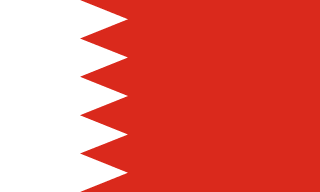
Bahrain
Kingdom of Bahrain
Population: UN WPP 2024, revision 1, projection for 1 July 2026. Sources and methodology.
Geography and territory
Bahrain is the smallest country in the Middle East and the only fully island-based nation in the Arab world. The kingdom is an archipelago of some 33 islands set in the Persian Gulf, wedged between the eastern coast of Saudi Arabia and the Qatari peninsula, covering a total land area of just 765 km². Only a handful of these islands are inhabited, and Bahrain Island, by far the largest, is home to the capital, Manama, along with the bulk of the population.
The terrain is overwhelmingly flat and low-lying. Its highest natural point, Jabal ad Dukhan (the “Mountain of Smoke”), rises to a modest 134 meters near the center of the main island. The coastline mixes sandy beaches with mangrove stands and coral reefs that rank among the most varied in the Gulf. Because the natural land base is so limited, extensive land reclamation projects have steadily expanded Bahrain’s shoreline and overall footprint over the past several decades, reshaping the map in the process.
Since 1986, the 25-kilometer King Fahd Causeway has physically linked Bahrain to Saudi Arabia, functioning as a crucial artery for trade and for the steady flow of visitors between the two countries. The climate is hot and desert-like, with brutal, humid summers in which temperatures regularly climb past 40 degrees Celsius, followed by mild, pleasant winters. Rainfall is sparse, averaging only around 70 millimeters a year, yet the islands have long been known for abundant underground freshwater springs. That contrast between salt water and sweet water is thought to be the source of the country’s name, which translates roughly as “two seas.”
History
Bahrain occupies an outsized place in the story of early civilization. The archipelago was the heart of ancient Dilmun, a trading power that flourished between roughly the third and second millennia BCE as a commercial link between Mesopotamia and the Indus Valley. Sumerian texts describe Dilmun as a land of paradise, and some scholars have even connected it to the biblical Garden of Eden. The burial mounds left behind by the Dilmun civilization spread across large tracts of the main island and form one of the largest prehistoric cemeteries in the world.
Over the following centuries, control of the islands passed through the hands of Assyrians, Babylonians, Persians, the Portuguese, who built the fortress now known as Qal’at al-Bahrain in the sixteenth century, and the Ottomans. The Al Khalifa dynasty, which still rules today, established its authority in 1783, and Bahrain became a British protectorate in 1861, remaining under that arrangement until it gained full independence on 15 August 1971. The discovery of oil in 1932 made Bahrain the first country in the Persian Gulf to tap into petroleum wealth, ushering in the region’s oil era.
Because Bahrain was first to strike oil, it was also the first Gulf state to see its reserves thin out, a reality that pushed it to diversify its economy earlier than its neighbors. That early necessity turned the kingdom into a regional pioneer in financial services and trade. More recent history has been shaped by sectarian tension between the country’s Shia majority and its Sunni-led monarchy, tensions that culminated in significant protests during the Arab Spring of 2011 and continue to influence domestic politics today.
Culture and society
Bahraini culture is among the most open and cosmopolitan in the Gulf, a legacy of the archipelago’s long history as a trading crossroads. Society is genuinely multiethnic, with Arab, Persian, South Asian, and other communities that have lived side by side for generations. The islands’ pearling heritage runs deep through local identity: for centuries, pearl diving defined what it meant to be Bahraini, and the songs, rituals, and customs of that trade are still preserved in museums and celebrated at festivals.
Music holds a special place in this heritage, particularly fijiri, the haunting work songs once sung by pearl divers to accompany their grueling days at sea, which UNESCO has recognized as part of the Intangible Cultural Heritage of Humanity. The ardah sword dance, along with local textile arts and pottery, round out an artistic tradition that the government actively promotes. Bahrain was also a pioneer of modern education in the Gulf, opening the region’s first public school in 1919, and its population is widely regarded as among the most educated and worldly in the Arab world.
Religious coexistence is a notable feature of Bahraini life: Sunni and Shia mosques, Hindu temples, Christian churches, and a synagogue all share space across the islands. The country is home to the oldest Jewish community in the Gulf, and a member of that community has served as Bahrain’s ambassador to the United States. Social life tends to be more relaxed than in many neighboring Gulf states, with a lively dining, arts, and entertainment scene that draws visitors from across the region, especially Saudis crossing the King Fahd Causeway for the weekend.
Economy
Bahrain built the Gulf’s first sophisticated financial sector, establishing itself as the region’s banking hub well before Dubai or Doha rose to prominence. Today it hosts more than 400 financial institutions and is recognized worldwide as a leading center for Islamic banking. Financial services, alongside tourism, manufacturing, and trade, now form the pillars of an economy that has reduced its reliance on oil more successfully than any of its Gulf neighbors.
Although Bahrain’s own oil reserves are modest next to those of its neighbors, the country operates one of the region’s oldest refineries, processing both domestic crude and oil piped in from Saudi Arabia. Aluminum production is another strategic sector, anchored by the ALBA smelter, one of the largest of its kind anywhere in the world. Bahrain has also built a tourism industry around motorsport, hosting the Formula One Bahrain Grand Prix at the Bahrain International Circuit every year since 2004, alongside a broader push into sports, culture, and entertainment.
Bahrain’s Economic Vision 2030 aims to cement the country’s status as a global financial center, expand cultural and business tourism, and attract investment in technology and advanced manufacturing. With a gross domestic product of roughly $48.97 billion and a human development index of 0.899, placing it in the very high category, Bahrain ranks among the more prosperous and developed nations in the region. The Bahraini dinar is one of the most highly valued currencies in the world and is pegged to the U.S. dollar. Luxury developments such as Durrat Al Bahrain and Bahrain Bay, together with planned infrastructure like a future causeway to Qatar, point toward continued growth and regional connectivity.
Food and cuisine
Bahraini cuisine reflects centuries of crossover between Arab, Persian, and Indian culinary traditions, producing a flavor profile distinct from that of its Gulf neighbors. The signature dish is machboos, a spiced rice preparation made with lamb, chicken, or fish and seasoned with a blend that typically includes bezar spice mix, dried lemon, and loomi, or dried black lime. For major family celebrations, cooks often prepare quzi, a whole roasted lamb stuffed with spiced rice, eggs, and onions.
Seafood is central to island life, and dishes built around hammour, shrimp, safi, and channad, a type of tuna, appear grilled, fried, or simmered in curries with clear Indian influence. Muhammar, a sweetened rice dish flavored with sugar and cinnamon and typically served alongside fish, is a distinctly Bahraini pairing of sweet and savory. Balaleet, sweet vermicelli noodles topped with an omelet, and harees, a slow-cooked wheat and meat porridge, remain traditional breakfast staples in many households.
Bahraini sweets tend to be delicate and fragrant. Halwa showaithar, a specialty associated with a well-known local family and passed down through generations, is a translucent confection made with saffron, nuts, and rosewater. Lugaimat, small dumplings soaked in date syrup, along with samboosa pastries and tahini-based sweets, round out the dessert table. Karak chai, milky tea spiced with cardamom, is the everyday drink of choice, while Arabic coffee flavored with cardamom is reserved for more ceremonial occasions and hospitality.
Tourism and landmarks
Bahrain offers visitors a striking combination of ancient history and cosmopolitan modernity. The Bahrain Fort, or Qal’at al-Bahrain, a UNESCO World Heritage Site, is an archaeological mound revealing layers of settlement stretching from the Dilmun era through the Portuguese period, with sweeping views out over the sea. The Dilmun Burial Mounds, also a World Heritage Site, form one of the largest prehistoric cemeteries anywhere, with thousands of mounds scattered across the landscape.
The Bahrain National Museum offers a thorough walk through the country’s history, from Dilmun to the present, with galleries devoted to the pearling tradition and the marine life of the Gulf. Beit Al Quran houses one of the world’s most significant collections of Quranic manuscripts and Islamic art. The Manama Souq, winding and lively, sells gold, spices, fabrics, and handicrafts in an atmospheric old-town setting. Muharraq, the former capital, preserves restored pearl merchants’ houses along the Pearling Trail, itself another UNESCO World Heritage listing.
The Bahrain International Circuit, home of the Formula One Grand Prix, draws thousands of motorsport fans every year. The Tree of Life, a lone acacia that has survived for more than 400 years in open desert with no obvious water source, is a curious and much-photographed landmark. The beaches along the island’s southern coast, the mangroves of Tubli Bay for bird-watching, and the seafront restaurants and cafés of the Adliya district complete a compact but genuinely varied travel destination.
Fun facts about Bahrain
- Bahrain was the first country in the Persian Gulf to discover oil, striking it in 1932 and setting off the region’s oil era.
- The name Bahrain means “two seas” in Arabic, a reference to the freshwater springs that once bubbled up beneath the salt water of the Gulf, a phenomenon that astonished ancient observers.
- The Tree of Life is a solitary acacia that has endured more than 400 years in the open desert with no visible water source, inspiring theories that its roots reach deep underground aquifers.
- Bahrain is home to one of the largest prehistoric cemeteries in the world, with tens of thousands of Dilmun-era burial mounds scattered across the main island.
- The Bahrain International Circuit was the first purpose-built Formula One track in the Middle East and hosted the sport’s first-ever night race.
- Bahrain has no land borders with any country, since it is composed entirely of islands, and is connected to the Arabian mainland only by the King Fahd Causeway.
Bahrain in numbers
Latest World Bank and UNDP observations, each with its own year. “World median” is the middle value among the countries that report the same indicator; “#” ranks from the highest value.
Population since 1960
Bahrain had 165,477 people in 1960 and 1.6 million in 2025 — 9.7 times as many.
People
100.0% of people live in towns and cities (world median 63.4%). 18.4% are under 15 and 4.0% are 65 or older — a middle-aged population. Women have 1.80 children on average, below the replacement level of about 2.1 needed to keep a population stable in the long run without migration.
Economy
The economy grew by 3.5% in real terms in 2025. Consumer prices fell by 0.1% in 2025. Services make up the largest share of output (54.3% of GDP); agriculture contributes 0.2%.
Development and environment
UNDP rates human development in Bahrain as very high, with an index of 0.899 in 2023 (rank 38 of 193). 100.0% of people use the internet and 100.0% have access to electricity. Forest covers 4.9% of the land (world median 32.8%).
Sources: World Bank, World Development Indicators (CC BY 4.0), most recent observation from 2015 onward; UNDP Human Development Report 2025. Retrieved 2026-10-10. Sector shares need not add up to 100% because taxes and subsidies on products are excluded. Missing values are left blank rather than estimated. Sources and methodology.
Climate of Bahrain
Averaged across Bahrain, the warmest month is July (36.2 °C) and the coolest is January (17.3 °C), a seasonal swing of 18.9 °C. The annual mean is 27.7 °C.
About 80 mm of precipitation falls in a typical year. January is the wettest month (19 mm) and June the driest (0 mm). What little rain there is falls mostly from January to March (63% of the total).
Less than 250 mm a year is typical of desert climates.
Show monthly values as a table
| Month | Mean °C | Low °C | High °C | Precipitation, mm |
|---|---|---|---|---|
| January | 17.3 | 13.7 | 20.9 | 19 |
| February | 18.6 | 14.7 | 22.6 | 14 |
| March | 22.0 | 17.6 | 26.3 | 18 |
| April | 26.9 | 22.2 | 31.6 | 7 |
| May | 32.0 | 26.8 | 37.3 | 1 |
| June | 34.9 | 29.8 | 40.1 | 0 |
| July | 36.2 | 31.3 | 41.1 | 0 |
| August | 36.0 | 31.2 | 40.8 | 0 |
| September | 33.8 | 28.9 | 38.8 | 0 |
| October | 30.2 | 25.6 | 34.8 | 0 |
| November | 24.4 | 20.4 | 28.4 | 7 |
| December | 19.5 | 15.7 | 23.3 | 15 |
Figures are 1991–2020 averages across the whole land area of Bahrain, from the World Bank Climate Change Knowledge Portal, CRU TS 4.08 (CC BY 4.0). They are not readings from one weather station: the capital, the coast and high ground can be much warmer, cooler, wetter or drier.
Travel essentials for Bahrain
The practical details visitors ask about first. Traffic in Bahrain drives on the right, like most of the world. Mains electricity is 230 V at 50 Hz, so devices made only for 110–120 V (common in North America) need a converter unless they are dual-voltage — most phone and laptop chargers are.
- Emergency number
- 999
- Driving side
- Right
- Plug types
- Type GG: three rectangular pins (British)
- Voltage
- 230 V50 Hz
- Dialling code
- +973From abroad: your exit code, then 973 and the number
- Currency
- Bahraini Dinar (BHD)
- Time zone
- AST (UTC+3)Current local time in Bahrain
Compiled from IEC plug and voltage standards, national emergency-service listings and the UN road-traffic conventions. Emergency numbers and local coverage can change — confirm them locally on arrival. Bahrain's internet domain is .bh.
Where Bahrain ranks in the world
Each position counts only the countries with data in that ranking guide. First place is the highest value — for price levels, the most expensive. Select a card to see the full table.
- Population151st of 1961.7 millionUN projection, July 2026
- Land area173rd of 195800 km²World Bank, 2023
- Population density3rd of 1941,971 per km²World Bank, 2023
- GDP (nominal)93rd of 187$47.2BWorld Bank, 2024, current US$
- GDP per capita39th of 187$29,717World Bank, 2024, current US$
- Life expectancy34th of 19481.4 yearsWorld Bank, 2024
- Price level59th of 16556 (US = 100)ICP 2021, household consumption
Compare Bahrain with another country
Frequently asked questions about Bahrain
What is the capital of Bahrain?
The capital of Bahrain is Manama.
What is the population of Bahrain?
The UN World Population Prospects projection for Bahrain is 1,675,572 people (1.7 million) on 1 July 2026. National statistical offices may publish different estimates.
What language is spoken in Bahrain?
The official language of Bahrain is Arabic.
What currency is used in Bahrain?
The currency of Bahrain is the Bahraini Dinar (BHD).
How big is Bahrain?
Bahrain covers an area of 765 km².
What type of government does Bahrain have?
Bahrain is a constitutional monarchy.
What is the highest point in Bahrain?
The highest point in Bahrain is Jabal ad Dukhan (134 m).


