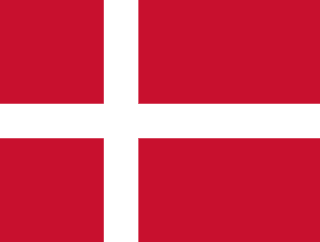
Denmark
Kingdom of Denmark
Population: UN WPP 2024, revision 1, projection for 1 July 2026. Sources and methodology.
Geography and territory
Denmark is the southernmost of the Scandinavian countries, occupying the Jutland Peninsula north of Germany along with an archipelago of hundreds of named islands, roughly 70 of which are inhabited. The largest are Zealand, home to Copenhagen, and Funen, along with Lolland further south. Denmark’s European territory covers 42,951 km², making it one of the more compact countries in Western Europe, though the wider Kingdom of Denmark also encompasses the vast, largely autonomous territory of Greenland and the North Atlantic archipelago of the Faroe Islands.
The Danish landscape is famously flat, with a national high point, Møllehøj, of just 170.86 meters, making the country one of the least mountainous on Earth. The terrain was shaped by retreating glaciers, leaving behind gentle hills, lakes, and fertile plains well suited to farming. The coastline stretches for thousands of kilometers, threaded with fjords, white sand beaches, and dunes along Jutland’s North Sea-facing western shore.
The climate is temperate and oceanic, with mild winters and cool summers, and rain falls fairly evenly throughout the year under near-constant westerly winds, particularly along the west coast. These steady winds have made Denmark a world leader in wind power generation, and a national cycling culture, supported by an extensive network of dedicated bike lanes, reflects a broader Danish instinct for weaving nature into everyday life.
With a population of about 6.0 million concentrated mainly on Zealand and Funen, Denmark is one of the more densely settled parts of Scandinavia, yet its landscape retains large stretches of farmland, forest, and protected coastline. The absence of significant elevation change makes the country exceptionally easy to traverse by bicycle or on foot, and its position between the North Sea and the Baltic has long made it a natural crossroads for trade and travel across Northern Europe.
History
Danish history is deeply tied to the Viking Age, spanning roughly the eighth to eleventh centuries, when Danes launched trading and military expeditions across much of Europe. King Harald Bluetooth unified Denmark and converted the country to Christianity around 965, an event commemorated on the Jelling runestones, now a UNESCO World Heritage Site. During the Middle Ages, Denmark grew into a dominant Nordic power, leading the Kalmar Union that joined Denmark, Norway, and Sweden under a single crown between 1397 and 1523.
The seventeenth century brought decline following wars with Sweden that cost Denmark the provinces of Scania, Halland, and Blekinge. Even so, Denmark retained its union with Norway until 1814 and continued to rule Iceland until 1944. War with Prussia and Austria in 1864 stripped Denmark of the duchies of Schleswig and Holstein, a traumatic loss that redirected national identity toward internal development and social welfare rather than continental power.
Nazi Germany occupied Denmark in 1940 during World War II, yet the Danish resistance managed to smuggle nearly the country’s entire Jewish population to safety in neutral Sweden, saving roughly 7,000 lives. After the war, Denmark became a founding member of NATO and the United Nations, joined the European Economic Community in 1973, and built one of the world’s most advanced welfare states, all while retaining its own currency rather than adopting the euro. The formation of the unified Danish kingdom around the tenth century is generally regarded as the country’s founding, making Denmark’s monarchy among the oldest continuous institutions in Europe.
Greenland and the Faroe Islands, both settled in part by Norse voyagers during the Viking Age, remained under Danish sovereignty as the rest of Scandinavia fragmented into separate nations, and both territories were granted extensive home rule during the twentieth century while remaining formally part of the Kingdom of Denmark. This long Atlantic reach gives modern Denmark a geopolitical footprint far larger than its compact European territory would suggest.
Culture and society
Danish culture is deeply infused with the concept of hygge, a philosophy of life centered on coziness, warmth, and the simple pleasure of shared, unhurried moments. Difficult to translate precisely, hygge reflects a society that prioritizes quality of life, work-life balance, and close interpersonal relationships, and Denmark consistently ranks among the happiest countries in the world.
Danish literature has produced globally beloved figures, above all Hans Christian Andersen, whose fairy tales, including “The Ugly Duckling,” “The Little Mermaid,” and “The Snow Queen,” are part of the world’s shared imagination. Philosopher Søren Kierkegaard, regarded as the father of existentialism, and writer Karen Blixen, author of “Out of Africa,” are further pillars of Danish letters, while the Dogme 95 film movement and directors such as Lars von Trier have shaped contemporary world cinema.
Danish design enjoys worldwide renown for its functional, minimalist elegance. Figures such as Arne Jacobsen, Verner Panton, and Finn Juhl transformed furniture design in the twentieth century, and brands including Bang & Olufsen, Georg Jensen, and Royal Copenhagen continue that tradition of understated excellence, echoed today in the internationally celebrated architecture of firms such as Bjarke Ingels Group.
Economy
Denmark’s economy is highly developed and diversified, with a GDP of approximately $462.53 billion and one of the highest Human Development Index scores in the world, at 0.962, ranked very high. Its economic model, known as “flexicurity,” combines a flexible labor market with a robust social safety net funded by high taxation, producing a society of low inequality, high living standards, and exceptional public services in education, health care, and social protection.
The pharmaceutical and biotechnology sectors form pillars of the Danish economy, anchored by global companies such as Novo Nordisk, the world leader in diabetes treatments, and Lundbeck, a specialist in neuroscience. Shipping is another major strength, with Maersk standing as the world’s largest container shipping company. Highly mechanized agriculture exports pork and dairy products worldwide, and Denmark is the world’s leading producer of mink fur.
Wind energy is a strategic sector in which Denmark has been a global pioneer. Vestas, the world’s largest wind turbine manufacturer, is Danish, and the country regularly generates more than half of its electricity from wind. Copenhagen has set its sights on becoming the world’s first carbon-neutral capital, and green technology and sustainability remain central pillars of national economic strategy.
Food and cuisine
Danish cuisine has undergone a remarkable transformation in recent decades, propelling the country to the forefront of world gastronomy. The Copenhagen restaurant Noma, founded by chef René Redzepi, was repeatedly named the world’s best restaurant and helped popularize New Nordic cuisine, a movement that champions local ingredients, fermentation techniques, and a close connection to nature and the seasons.
Traditional Danish cooking centers on smørrebrød, an open-faced rye bread sandwich topped with elaborate combinations of fish, meat, cheese, and vegetables. Pickled herring in its many preparations, frikadeller (Danish meatballs), stegt flæsk (crispy pork with parsley sauce), and dense rugbrød rye bread are enduring classics, while Danish pastries, known internationally simply as “danishes,” represent a rich and varied baking tradition in their own right.
Denmark’s beer culture runs deep, with Carlsberg and Tuborg as historic names alongside a flourishing craft beer movement led by breweries such as Mikkeller. Food markets like Torvehallerne in Copenhagen showcase exceptional local produce, and traditions such as the Friday lunch of smørrebrød and beer, along with festive Christmas meals of roast duck and rice pudding with almonds and cherry sauce, remain cherished culinary touchstones.
Tourism and landmarks
Copenhagen is the heart of Danish tourism, a city that blends history, design, and quality of life in equal measure. Nyhavn, with its colorful seventeenth-century townhouses reflected in the canal, is the capital’s most iconic image. The Tivoli Gardens, one of the world’s oldest amusement parks, opened in 1843 and later inspired Walt Disney in creating Disneyland, while the Amalienborg Palace, home to the Danish royal family, and the famous Little Mermaid statue round out the capital’s essential sights.
The Øresund Bridge, connecting Copenhagen with Malmö in Sweden, is an engineering marvel spanning 16 kilometers of bridge and undersea tunnel. Outside the capital, Kronborg Castle in Helsingør, immortalized by Shakespeare as the setting of “Hamlet,” is a UNESCO World Heritage Site, as are Roskilde Cathedral, burial site of Danish monarchs, and the Viking-era monuments at Jelling.
Denmark’s coastline offers wide, bright beaches, especially in northern Jutland, where the town of Skagen has attracted painters for centuries thanks to its unique light and the striking natural spectacle of the North Sea and the Baltic meeting offshore. The Baltic island of Bornholm combines nature, craftsmanship, and food, while Legoland in Billund, birthplace of the iconic toy brand, remains a favorite for family travelers.
Fun facts about Denmark
- The Danish flag, the Dannebrog, is the oldest continuously used national flag in the world, dating to 1219.
- Denmark has more bicycles than people, and 62 percent of commutes in Copenhagen are made by bike.
- The word “hygge” was added to the Oxford English Dictionary’s shortlist and named a word of the year in 2017.
- Christiania, in Copenhagen, is a self-governing community founded in 1971 on a former military base, with its own rules and informal government.
- Bluetooth technology takes its name from King Harald Bluetooth, and its logo merges the runic initials of his name.
- Greenland and the Faroe Islands are autonomous territories within the Kingdom of Denmark, giving the kingdom a footprint stretching from the North Atlantic to the Arctic.
Denmark in numbers
Latest World Bank and UNDP observations, each with its own year. “World median” is the middle value among the countries that report the same indicator; “#” ranks from the highest value.
Population since 1960
Denmark had 4.6 million people in 1960 and 6.0 million in 2025 — 31% more.
People
88.8% of people live in towns and cities (world median 63.4%). 15.6% are under 15 and 21.1% are 65 or older — one of the oldest age structures in the world. Women have 1.47 children on average, below the replacement level of about 2.1 needed to keep a population stable in the long run without migration.
Economy
The economy grew by 2.9% in real terms in 2025. Consumer prices rose by 1.9% in 2025. Services make up the largest share of output (62.7% of GDP); agriculture contributes 1.2%.
Development and environment
UNDP rates human development in Denmark as very high, with an index of 0.962 in 2023 (rank 4 of 193). 99.8% of people use the internet and 100.0% have access to electricity. Forest covers 16.0% of the land (world median 32.8%).
Sources: World Bank, World Development Indicators (CC BY 4.0), most recent observation from 2015 onward; UNDP Human Development Report 2025. Retrieved 2026-10-10. Sector shares need not add up to 100% because taxes and subsidies on products are excluded. Missing values are left blank rather than estimated. Sources and methodology.
Climate of Denmark
Averaged across Denmark, the warmest month is July (17.1 °C) and the coolest is January (1.5 °C), a seasonal swing of 15.6 °C. The annual mean is 8.8 °C.
About 735 mm of precipitation falls in a typical year. October is the wettest month (81 mm) and April the driest (37 mm).
Show monthly values as a table
| Month | Mean °C | Low °C | High °C | Precipitation, mm |
|---|---|---|---|---|
| January | 1.5 | −0.5 | 3.6 | 61 |
| February | 1.6 | −0.6 | 3.8 | 47 |
| March | 3.5 | 0.6 | 6.4 | 43 |
| April | 7.5 | 3.6 | 11.5 | 37 |
| May | 11.4 | 7.2 | 15.7 | 49 |
| June | 14.7 | 10.5 | 18.8 | 63 |
| July | 17.1 | 13.0 | 21.1 | 68 |
| August | 17.0 | 13.0 | 21.0 | 79 |
| September | 13.9 | 10.5 | 17.4 | 70 |
| October | 9.6 | 6.8 | 12.4 | 81 |
| November | 5.6 | 3.4 | 7.9 | 69 |
| December | 2.6 | 0.5 | 4.7 | 67 |
Figures are 1991–2020 averages across the whole land area of Denmark, from the World Bank Climate Change Knowledge Portal, CRU TS 4.08 (CC BY 4.0). They are not readings from one weather station: the capital, the coast and high ground can be much warmer, cooler, wetter or drier.
Travel essentials for Denmark
The practical details visitors ask about first. Traffic in Denmark drives on the right, like most of the world. Mains electricity is 230 V at 50 Hz, so devices made only for 110–120 V (common in North America) need a converter unless they are dual-voltage — most phone and laptop chargers are.
- Emergency number
- 112
- Driving side
- Right
- Plug types
- Type C, Type E, Type F, Type KC: two round pins (Europlug); E: two round pins, earth pin in the socket; F: two round pins with side earth clips (Schuko); K: three round pins (Danish)
- Voltage
- 230 V50 Hz
- Dialling code
- +45From abroad: your exit code, then 45 and the number
- Currency
- Danish Krone (DKK)
- Time zone
- CET (UTC+1)Current local time in Denmark
Compiled from IEC plug and voltage standards, national emergency-service listings and the UN road-traffic conventions. Emergency numbers and local coverage can change — confirm them locally on arrival. Denmark's internet domain is .dk.
Where Denmark ranks in the world
Each position counts only the countries with data in that ranking guide. First place is the highest value — for price levels, the most expensive. Select a card to see the full table.
- Population113th of 1966.0 millionUN projection, July 2026
- Land area130th of 19540,000 km²World Bank, 2023
- Population density60th of 194149 per km²World Bank, 2023
- GDP (nominal)36th of 187$424.5BWorld Bank, 2024, current US$
- GDP per capita11th of 187$71,026World Bank, 2024, current US$
- Life expectancy27th of 19482.3 yearsWorld Bank, 2024
- Price level6th of 165115 (US = 100)ICP 2021, household consumption
Bordering countries of Denmark

Compare Denmark with another country
Frequently asked questions about Denmark
What is the capital of Denmark?
The capital of Denmark is Copenhagen.
What is the population of Denmark?
The UN World Population Prospects projection for Denmark is 6,023,520 people (6.0 million) on 1 July 2026. National statistical offices may publish different estimates.
What language is spoken in Denmark?
The official language of Denmark is Danish.
What currency is used in Denmark?
The currency of Denmark is the Danish Krone (DKK).
How big is Denmark?
Denmark covers an area of 42,951 km².
What type of government does Denmark have?
Denmark is a parliamentary constitutional monarchy.
Which countries border Denmark?
Denmark shares land borders with Germany.
What is the highest point in Denmark?
The highest point in Denmark is Mollehoj (170.86 m).


