Papua New Guinea
Independent State of Papua New Guinea
Population: UN WPP 2024, revision 1, projection for 1 July 2026. Sources and methodology.
Geography and territory
Papua New Guinea occupies the eastern half of the island of New Guinea, the second-largest island on Earth, along with more than 600 smaller islands and atolls scattered across the western Pacific. With a total area of 462,840 square kilometers, it is the largest country in Oceania after Australia. Its western land border with Indonesia divides the island of New Guinea into two politically distinct halves.
The country’s terrain is extraordinarily rugged and mountainous, dominated by the Central Range, which runs the length of the island from east to west with peaks rising above 4,000 meters. Mount Wilhelm, at 4,509 meters, is the highest point in the country and in all of insular Oceania. The isolated highland valleys, cut off from the outside world for millennia by impassable mountains, sheltered societies that remained uncontacted by outsiders well into the twentieth century.
Coastal lowlands and alluvial plains in the north and south stand in sharp contrast to the mountainous interior, both blanketed in dense rainforest and mangrove swamp. Papua New Guinea holds some of the richest biodiversity on the planet, with more than 20,000 plant species, 700 bird species including the spectacular birds of paradise, and thousands of insect species still uncatalogued. The coral reefs ringing its coasts and islands rank among the most pristine marine ecosystems in the world. The country also sits along the Pacific Ring of Fire, giving it frequent seismic activity and a number of active volcanoes, including those near Rabaul on the island of New Britain, one of more than 600 islands that make up the wider archipelago beyond the New Guinea mainland.
History
Human history in Papua New Guinea stretches back at least 50,000 years, when the first settlers arrived from Southeast Asia during the last ice age. The central highlands were the site of one of the world’s earliest agricultural revolutions, with evidence of farming at Kuk dating back 10,000 years, predating agriculture in Mesopotamia. Over millennia, hundreds of distinct ethnic groups developed independently within isolated valleys, producing a level of cultural diversity unmatched anywhere else on Earth.
The first European contact came in the sixteenth century with Portuguese and Spanish explorers. By the nineteenth century, the island had been divided among three colonial powers: the Netherlands in the west, Germany in the northeast, and Great Britain in the southeast. After the First World War, Australia assumed control of the former German territory, and during the Second World War the island became a brutal battleground between Japanese and Allied forces, most notably along the Kokoda Track and around Rabaul.
Papua New Guinea achieved independence on September 16, 1975, inheriting an extraordinarily diverse nation of more than 800 ethnic groups, and it retains the British monarch as ceremonial head of state under a parliamentary constitutional monarchy, represented locally by a governor-general. The country has faced significant challenges of governance and development, including the decade-long Bougainville secessionist conflict, which was resolved through a peace agreement and an autonomous regional government with a pathway toward eventual independence. Despite these difficulties, Papua New Guinea maintains a functioning parliamentary democracy and continues to navigate a balance between modern development and the preservation of its ancestral cultures.
Culture and society
Papua New Guinea is the most culturally and linguistically diverse country on Earth, home to more than 800 living languages spoken among its roughly 10.8 million people. Each ethnic group maintains its own traditions, rituals, belief systems, and artistic expressions. Tok Pisin, an English-based pidgin, functions as the country’s lingua franca, allowing communication across its many distinct communities alongside English and Hiri Motu.
The cultural festivals known as sing-sings offer the most spectacular showcase of this diversity. At these gatherings, tribal groups from across the country come together wearing elaborate headdresses of bird-of-paradise feathers, intricate body paint, and ornaments of shell and boar tusk. The Goroka Show and the Mount Hagen Cultural Show draw dozens of tribes competing in dance, song, and traditional dress in a dazzling display of color and energy.
Papuan society is traditionally organized around clans and lineages, governed by a system of “big men” who earn leadership through generosity, oratory skill, and the ability to mediate disputes rather than through inherited rank. Ceremonial gift exchange remains fundamental to social and political relationships. The spirit houses, or haus tambaran, of the Sepik region hold sacred carvings of extraordinary artistic complexity, and ceremonial masks from various regions are highly sought after by collectors and museums worldwide. Most of the population still lives in rural villages rather than cities, and this rootedness in customary land, which remains communally owned across most of the country, continues to anchor social identity even as urban centers like Port Moresby and Lae grow.
Economy
Papua New Guinea’s economy, with a gross domestic product of roughly $32.5 billion, relies heavily on the extraction of natural resources. Mining of gold, copper, and nickel, together with natural gas and oil production, accounts for a substantial share of exports and government revenue. The PNG LNG natural gas project, operated by ExxonMobil, has become a pillar of the economy since coming online in 2014.
The vast majority of the population, an estimated 85 percent, nonetheless depends on subsistence agriculture in rural areas, growing sweet potato, taro, cassava, banana, and sugarcane. Commercial crops include coffee, cocoa, palm oil, tea, and copra. Highland-grown coffee, cultivated at high altitude in volcanic soils, has gained increasing recognition among specialty coffee tasters for its distinctive aromatic profile.
Papua New Guinea faces considerable economic challenges, including limited infrastructure, difficult transportation across mountainous terrain, and a persistent gap between the modern extractive economy and the traditional rural economy. Tourism, despite enormous potential given the country’s natural and cultural wealth, remains in an early stage of development, constrained by infrastructure limits and security concerns in certain urban areas. The national currency, the kina, takes its name from a type of traditional shell once used as currency in some coastal regions, reflecting the enduring imprint of custom on the modern economy.
Food and cuisine
Papua New Guinean cuisine is closely tied to land and sea, drawing on fresh ingredients from subsistence farming, fishing, and foraging. The mumu, similar to the New Zealand hangi, is the most important traditional cooking method: an underground oven of heated stones in which pork, sweet potato, taro, banana, and vegetables are wrapped in banana leaves and slow-cooked, producing smoky flavors and tender textures.
Sweet potato, known locally as kaukau, is the staple food of the highlands, where dozens of varieties are grown in a range of colors, textures, and flavors. In coastal areas, fish, shellfish, coconut crab, and giant clams round out the diet. Sago, a starch extracted from the trunk of the sago palm, is the principal food source in the swampy lowlands of the Sepik and Gulf regions, processed into pancakes or puddings.
Tropical fruit is abundant across the country: mango, papaya, pineapple, passion fruit, and marita, a rich red fruit used as a sauce and condiment in the highlands. Betel nut, chewed with coral lime and mustard leaves, is a ubiquitous social stimulant comparable to tea or coffee elsewhere. SP Lager beer and highland-grown coffee are the most widely consumed commercial beverages.
Tourism and landmarks
Papua New Guinea offers travel experiences found nowhere else, for adventurers willing to explore one of the last truly wild regions on the planet. The Kokoda Track, a 96-kilometer route through the Owen Stanley Range, is a historic pilgrimage that retraces the steps of Australian soldiers who fought the Japanese there in 1942. Completing the trek requires between four and ten grueling days on foot.
The Sepik River, one of the world’s great waterways at more than 1,100 kilometers long, offers canoe expeditions through villages where life has changed little in centuries. Spirit houses along the Sepik hold some of the most striking wood carvings in Oceanic art. Underwater, Kimbe Bay and Milne Bay are diving paradises with more than 900 fish species, pristine coral, and Second World War shipwrecks.
The highlands offer mist-shrouded mountain scenery and the chance to witness extraordinary tribal festivals. Rabaul, the former capital of East New Britain province, sits dramatically within an active volcanic caldera. The Trobriand Islands, known as the “islands of love” for the liberal customs studied by anthropologist Bronislaw Malinowski, fascinate visitors with the kula, a unique ceremonial exchange tradition. Port Moresby, the capital, offers national institutions such as the National Museum and Art Gallery and the Parliament Haus, whose architecture draws directly on the design of a traditional haus tambaran, making it a striking gateway to the country’s cultural treasures.
Fun facts about Papua New Guinea
- With more than 800 living languages, Papua New Guinea is the most linguistically diverse country on Earth, home to roughly 12 percent of all languages spoken worldwide.
- The Kuk early agricultural site in the western highlands shows evidence of farming dating back 10,000 years, making it one of the oldest agricultural sites in the world and a UNESCO World Heritage listing.
- Some highland tribes remained uncontacted by the outside world until the 1930s, when Australian explorers discovered densely populated valleys previously believed to be uninhabited.
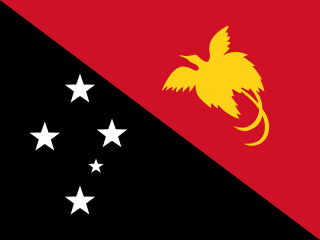
- The bird of paradise, represented by more than 30 species in the country, appears on the national flag and is considered sacred by many tribal groups.
- Papua New Guinea is one of the few places on Earth where poisonous birds have been documented, including the hooded pitohui, whose feathers contain a potent neurotoxin.
Papua New Guinea in numbers
Latest World Bank and UNDP observations, each with its own year. “World median” is the middle value among the countries that report the same indicator; “#” ranks from the highest value.
Population since 1960
Papua New Guinea had 2.0 million people in 1960 and 10.8 million in 2025 — 5.4 times as many.
People
15.8% of people live in towns and cities (world median 63.4%). 33.1% are under 15 and 3.6% are 65 or older — a young population. Women have 3.07 children on average, above the replacement level of about 2.1.
Economy
The economy grew by 5.6% in real terms in 2025. Consumer prices rose by 4.4% in 2025. Services make up the largest share of output (42.0% of GDP); agriculture contributes 17.0%.
Development and environment
UNDP rates human development in Papua New Guinea as medium, with an index of 0.576 in 2023 (rank 160 of 193). 18.8% of people use the internet and 43.3% have access to electricity. Forest covers 75.2% of the land (world median 32.8%).
Sources: World Bank, World Development Indicators (CC BY 4.0), most recent observation from 2015 onward; UNDP Human Development Report 2025. Retrieved 2026-10-10. Sector shares need not add up to 100% because taxes and subsidies on products are excluded. Missing values are left blank rather than estimated. Sources and methodology.
Climate of Papua New Guinea
Averaged across Papua New Guinea, the mean temperature stays between 23.8 °C (July) and 25.2 °C (January) — a swing of only 1.4 °C, so seasons are marked by rainfall rather than by heat.
About 3,075 mm of precipitation falls in a typical year. March is the wettest month (325 mm) and September the driest (205 mm).
Show monthly values as a table
| Month | Mean °C | Low °C | High °C | Precipitation, mm |
|---|---|---|---|---|
| January | 25.2 | 20.0 | 30.6 | 305 |
| February | 25.2 | 20.0 | 30.4 | 314 |
| March | 25.1 | 20.0 | 30.3 | 325 |
| April | 25.0 | 19.8 | 30.3 | 297 |
| May | 24.8 | 20.1 | 29.6 | 252 |
| June | 24.3 | 19.3 | 29.4 | 206 |
| July | 23.8 | 18.9 | 28.8 | 213 |
| August | 23.9 | 18.9 | 29.0 | 209 |
| September | 24.3 | 19.0 | 29.7 | 205 |
| October | 24.9 | 19.4 | 30.4 | 236 |
| November | 25.2 | 19.5 | 30.8 | 223 |
| December | 25.2 | 19.9 | 30.7 | 289 |
Figures are 1991–2020 averages across the whole land area of Papua New Guinea, from the World Bank Climate Change Knowledge Portal, CRU TS 4.08 (CC BY 4.0). They are not readings from one weather station: the capital, the coast and high ground can be much warmer, cooler, wetter or drier.
Travel essentials for Papua New Guinea
The practical details visitors ask about first. Traffic in Papua New Guinea drives on the left, one of 54 of the 196 countries profiled here that do — see the full list. Mains electricity is 240 V at 50 Hz, so devices made only for 110–120 V (common in North America) need a converter unless they are dual-voltage — most phone and laptop chargers are.
- Emergency number
- 000Police 112 · Ambulance 111 · Fire 110
- Driving side
- Left
- Plug types
- Type II: two angled flat pins plus earth
- Voltage
- 240 V50 Hz
- Dialling code
- +675From abroad: your exit code, then 675 and the number
- Currency
- Kina (PGK)
- Time zone
- PGT (UTC+10)Current local time in Papua New Guinea
Compiled from IEC plug and voltage standards, national emergency-service listings and the UN road-traffic conventions. Emergency numbers and local coverage can change — confirm them locally on arrival. Papua New Guinea's internet domain is .pg.
Where Papua New Guinea ranks in the world
Each position counts only the countries with data in that ranking guide. First place is the highest value — for price levels, the most expensive. Select a card to see the full table.
- Population89th of 19610.9 millionUN projection, July 2026
- Land area54th of 195452,860 km²World Bank, 2023
- Population density162nd of 19423 per km²World Bank, 2023
- GDP (nominal)107th of 187$30.8BWorld Bank, 2024, current US$
- GDP per capita136th of 187$2,912World Bank, 2024, current US$
- Life expectancy162nd of 19466.3 yearsWorld Bank, 2024
Bordering countries of Papua New Guinea

Compare Papua New Guinea with another country
Frequently asked questions about Papua New Guinea
What is the capital of Papua New Guinea?
The capital of Papua New Guinea is Port Moresby.
What is the population of Papua New Guinea?
The UN World Population Prospects projection for Papua New Guinea is 10,947,848 people (10.9 million) on 1 July 2026. National statistical offices may publish different estimates.
What language is spoken in Papua New Guinea?
The official language of Papua New Guinea is English, Tok Pisin, Hiri Motu.
What currency is used in Papua New Guinea?
The currency of Papua New Guinea is the Kina (PGK).
How big is Papua New Guinea?
Papua New Guinea covers an area of 462,840 km².
What type of government does Papua New Guinea have?
Papua New Guinea is a parliamentary constitutional monarchy.
Which countries border Papua New Guinea?
Papua New Guinea shares land borders with Indonesia.
What is the highest point in Papua New Guinea?
The highest point in Papua New Guinea is Mount Wilhelm (4,509 m).


