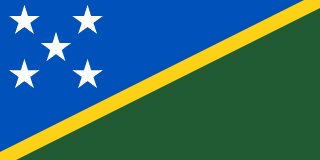
Solomon Islands
Solomon Islands
Population: UN WPP 2024, revision 1, projection for 1 July 2026. Sources and methodology.
Geography and territory
The Solomon Islands are a vast Melanesian archipelago made up of more than 900 islands scattered across the southwestern Pacific Ocean, east of Papua New Guinea. With a land area of 28,400 square kilometers and an exclusive economic zone covering more than a million square kilometers of ocean, the country stretches roughly 1,500 kilometers from northwest to southeast. The six main islands are Guadalcanal, Malaita, New Georgia, Santa Isabel, Choiseul, and Makira.
The terrain of the larger islands is mountainous and volcanic, with Mount Popomanaseu on Guadalcanal reaching 2,335 meters as the country’s highest point. The islands are blanketed in dense rainforest that harbors extraordinary biodiversity, including endemic species of birds, reptiles, and plants. Coastal lagoons, mangroves, and coral atolls ringing the islands form marine ecosystems of exceptional richness.
The climate is equatorial, warm and humid year-round, with temperatures ranging between 24 and 31 degrees Celsius. The rainy season runs from November to April, coinciding with cyclone season. The country sits within the Pacific Ring of Fire, making it prone to earthquakes and volcanic activity, with the submarine volcano Kavachi among the most active in the region.
With a population of roughly 838,645 spread across a territory of 28,400 square kilometers, the Solomon Islands remain thinly populated relative to their land area, and most communities live in small coastal or island villages rather than large towns, with Honiara, on Guadalcanal, as the only sizable urban center.
History
The Solomon Islands have been inhabited for at least 30,000 years, making them one of the earliest regions of Oceania settled by humans. The Melanesian peoples who established themselves there built complex societies based on farming, fishing, and inter-island trade. Traditional dolphin-tooth currency and the building of large war canoes were distinctive features of these cultures.
The Spanish explorer Álvaro de Mendaña was the first European to reach the islands, in 1568, naming them after the mythical mines of the biblical King Solomon, believing he had found a source of great riches. Europeans did not return until the late eighteenth century. In the nineteenth century, “blackbirding,” the forced recruitment of island laborers for plantations in Queensland and Fiji, devastated some communities. Britain established a protectorate in 1893.
The Second World War turned the Solomon Islands into one of the bloodiest theaters of the Pacific War. The Battle of Guadalcanal in 1942-1943 was a major turning point in the conflict, with thousands of Japanese and Allied casualties. Wartime remains, including sunken ships, downed aircraft, and fortified positions, still dot the islands today. Independence came on July 7, 1978, but ethnic tensions between people from Guadalcanal and Malaita sparked an armed conflict between 1998 and 2003 that required the intervention of a regional peacekeeping force.
The Regional Assistance Mission to Solomon Islands, led by Australia and made up of personnel from across the Pacific, helped restore order and rebuild police and judicial institutions before withdrawing in 2017. In the years since, the country has worked to strengthen its democratic institutions while navigating a delicate balance of regional and international partnerships, including growing engagement with China alongside its traditional ties to Australia and New Zealand.
Culture and society
Solomon Islands culture is deeply Melanesian, with oral traditions passing down creation myths, genealogies, and navigational knowledge from generation to generation. Each island and language group maintains its own customs and artistic expressions. Woodcarving stands out as one of the most notable art forms, with ancestor figures, ceremonial canoe prows, and ritual bowls crafted with extraordinary skill.
Music and dance hold a central place in community life. The panpipes of the Solomon Islands, played in polyphonic ensembles, produce complex harmonies recognized as one of the most sophisticated musical traditions in Oceania. Ceremonial dances accompany rites of passage, harvests, funerals, and reconciliations, performed in elaborate costumes of shells, feathers, and plant fiber.
Solomon Islands society is organized predominantly along matrilineal clan lines on many islands, meaning land and rights pass through the maternal line. The “wantok” system, a network of reciprocal obligations among people who share a language and kinship ties, forms the fundamental social fabric. Traditional red shell money, crafted on the island of Malaita, is still used in ceremonial transactions such as bride price payments and compensation. More than 70 distinct languages are spoken across the archipelago, one of the highest concentrations of linguistic diversity anywhere on Earth relative to population size, with Solomon Islands Pijin serving as the practical common tongue that bridges these many communities.
Economy
The Solomon Islands economy, with a GDP of roughly $1.75 billion, is one of the smallest and most vulnerable in the Pacific. Logging has historically been the leading source of export income, though unsustainable overcutting has sharply depleted timber resources. Fishing, particularly for tuna, is a growing sector, with fishing licenses sold to foreign fleets operating in the country’s vast territorial waters.
Subsistence farming employs the great majority of the population, growing sweet potato, taro, cassava, and banana. Copra, palm oil, and cocoa are the main cash crops. Gold mining at Gold Ridge and prospects for nickel extraction on Isabel Island represent potential avenues for economic diversification, though environmental impacts raise concern, particularly given the sensitivity of the coastal and reef ecosystems that many communities depend on for food and livelihood.
The country relies significantly on international aid, particularly from Australia, New Zealand, Japan, and the European Union. Remittances from Solomon Islanders working abroad supplement household income. Tourism, despite enormous potential given the country’s natural and wartime heritage, remains underdeveloped due to limited infrastructure, restricted air connectivity, and high domestic transport costs.
Food and cuisine
Solomon Islands cuisine is rooted in the products of the sea and the tropical land. Fresh fish, prepared in countless ways, takes center stage: grilled over coconut-husk embers, wrapped in banana leaves and steamed, or marinated raw in lime juice with coconut milk in a preparation similar to ceviche. Coconut crabs, lobsters, and giant clams round out the marine diet.
Root vegetables form the starchy backbone of the diet: taro, sweet potato, cassava, and yam are boiled, roasted, or mashed. Taro pudding, made from grated taro mixed with coconut milk and wrapped in leaves, is a beloved festive dish. Breadfruit, coconut in all its forms, and cooked green banana are near-constant accompaniments on the Solomon Islands table.
Ceremonial cooking relies on the earth oven method, in which meat and vegetables are slow-cooked over heated stones covered with leaves and earth. Pork is the most prized meat and is generally reserved for major celebrations such as weddings, funerals, and community feasts. Tropical fruits such as papaya, mango, guava, and pineapple are eaten in abundance. Betel nut, chewed with coral lime, is a widespread social habit across the archipelago.
Tourism and landmarks
The Solomon Islands offer authentic, largely unspoiled tourism ideal for adventurous travelers. The chief historical draw is the legacy of the Second World War, especially on Guadalcanal, where the Guadalcanal American Memorial, Bloody Ridge Memorial, and the war museum commemorate the fighting that turned the tide of the conflict in the Pacific. Iron Bottom Sound, the stretch of sea off Honiara, owes its name to the sheer number of sunken ships resting on the seabed.
Diving in the Solomon Islands is world-class, with sunken wartime wrecks turned into artificial reefs teeming with marine life. The waters of Marovo Lagoon, the largest saltwater lagoon in the world, offer exceptional visibility and pristine coral. Western Province holds some of the finest dive sites, with coral walls, underwater caves, and marine biodiversity that rivals any destination in the Coral Triangle.
For nature lovers, the interior rainforests hide waterfalls, clear rivers, and birdlife rich in endemic species. Coastal villages offer a chance to experience traditional Melanesian life, take part in ceremonies, and learn ancestral navigation and fishing techniques. Langa Langa Lagoon on Malaita, where families live on artificial islands built from coral and stone, offers a rare window into an extraordinary way of life, one that has endured for generations despite the pressures of a rapidly changing modern world.
Fun facts about Solomon Islands
- The Solomon Islands are one of the few places in the world where the giant humphead parrotfish can be found, growing over a meter long and weighing up to 75 kilograms
- On some islands, such as Malaita, dolphin teeth are still used as traditional currency for ceremonial transactions like marriages
- Marovo Lagoon is the largest saltwater lagoon in the world and has been nominated for UNESCO World Heritage status
- Solomon Islanders are among the few peoples outside Africa with a naturally high frequency of blond hair, caused by a genetic mutation distinct from the European one
- Spanish explorer Álvaro de Mendaña named the islands after King Solomon in 1568, believing he had found the land of the legendary biblical king and its fabled riches
The Solomon Islands in numbers
Latest World Bank and UNDP observations, each with its own year. “World median” is the middle value among the countries that report the same indicator; “#” ranks from the highest value.
Population since 1960
The Solomon Islands had 139,688 people in 1960 and 838,645 in 2025 — 6.0 times as many.
People
31.3% of people live in towns and cities (world median 63.4%). 36.6% are under 15 and 3.7% are 65 or older — a young population. Women have 3.51 children on average, above the replacement level of about 2.1.
Economy
The economy grew by 3.6% in real terms in 2025. Consumer prices rose by 3.4% in 2025. Services make up the largest share of output (46.9% of GDP); agriculture contributes 29.7%, a large share that points to a farming-based economy.
Development and environment
UNDP rates human development in the Solomon Islands as medium, with an index of 0.584 in 2023 (rank 156 of 193). 29.0% of people use the internet and 81.5% have access to electricity. Forest covers 89.8% of the land (world median 32.8%).
Sources: World Bank, World Development Indicators (CC BY 4.0), most recent observation from 2015 onward; UNDP Human Development Report 2025. Retrieved 2026-10-10. Sector shares need not add up to 100% because taxes and subsidies on products are excluded. Missing values are left blank rather than estimated. Sources and methodology.
Climate of the Solomon Islands
Averaged across the Solomon Islands, the mean temperature stays between 25.2 °C (July) and 26.4 °C (January) — a swing of only 1.2 °C, so seasons are marked by rainfall rather than by heat.
About 3,179 mm of precipitation falls in a typical year. March is the wettest month (362 mm) and June the driest (190 mm).
Show monthly values as a table
| Month | Mean °C | Low °C | High °C | Precipitation, mm |
|---|---|---|---|---|
| January | 26.4 | 22.6 | 30.4 | 351 |
| February | 26.2 | 22.4 | 30.0 | 341 |
| March | 26.1 | 22.6 | 29.7 | 362 |
| April | 26.1 | 22.4 | 29.9 | 272 |
| May | 25.9 | 22.4 | 29.4 | 230 |
| June | 25.5 | 22.0 | 29.1 | 190 |
| July | 25.2 | 21.6 | 28.9 | 260 |
| August | 25.3 | 21.5 | 29.2 | 231 |
| September | 25.7 | 21.7 | 29.8 | 224 |
| October | 26.1 | 22.3 | 30.0 | 223 |
| November | 26.2 | 22.4 | 30.1 | 223 |
| December | 26.3 | 22.6 | 30.1 | 272 |
Figures are 1991–2020 averages across the whole land area of the Solomon Islands, from the World Bank Climate Change Knowledge Portal, CRU TS 4.08 (CC BY 4.0). They are not readings from one weather station: the capital, the coast and high ground can be much warmer, cooler, wetter or drier.
Travel essentials for the Solomon Islands
The practical details visitors ask about first. Traffic in the Solomon Islands drives on the left, one of 54 of the 196 countries profiled here that do — see the full list. Mains electricity is 230 V at 50 Hz, so devices made only for 110–120 V (common in North America) need a converter unless they are dual-voltage — most phone and laptop chargers are.
- Emergency number
- 999
- Driving side
- Left
- Plug types
- Type G, Type IG: three rectangular pins (British); I: two angled flat pins plus earth
- Voltage
- 230 V50 Hz
- Dialling code
- +677From abroad: your exit code, then 677 and the number
- Currency
- Solomon Islands Dollar (SBD)
- Time zone
- SBT (UTC+11)Current local time in the Solomon Islands
Compiled from IEC plug and voltage standards, national emergency-service listings and the UN road-traffic conventions. Emergency numbers and local coverage can change — confirm them locally on arrival. The Solomon Islands's internet domain is .sb.
Where the Solomon Islands ranks in the world
Each position counts only the countries with data in that ranking guide. First place is the highest value — for price levels, the most expensive. Select a card to see the full table.
- Population161st of 196858,288UN projection, July 2026
- Land area140th of 19527,990 km²World Bank, 2023
- Population density154th of 19429 per km²World Bank, 2023
- GDP (nominal)173rd of 187$1.6BWorld Bank, 2024, current US$
- GDP per capita152nd of 187$1,934World Bank, 2024, current US$
- Life expectancy127th of 19470.7 yearsWorld Bank, 2024
Compare the Solomon Islands with another country
Frequently asked questions about the Solomon Islands
What is the capital of the Solomon Islands?
The capital of the Solomon Islands is Honiara.
What is the population of the Solomon Islands?
The UN World Population Prospects projection for the Solomon Islands is 858,288 people (858,288) on 1 July 2026. National statistical offices may publish different estimates.
What language is spoken in the Solomon Islands?
The official language of the Solomon Islands is English.
What currency is used in the Solomon Islands?
The currency of the Solomon Islands is the Solomon Islands Dollar (SBD).
How big is the Solomon Islands?
The Solomon Islands covers an area of 28,400 km².
What type of government does the Solomon Islands have?
The Solomon Islands is a parliamentary constitutional monarchy.
What is the highest point in the Solomon Islands?
The highest point in the Solomon Islands is Mount Popomanaseu (2,335 m).


