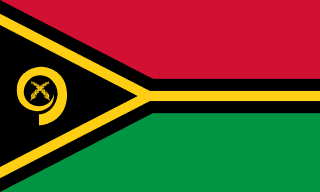
Vanuatu
Republic of Vanuatu
Population: UN WPP 2024, revision 1, projection for 1 July 2026. Sources and methodology.
Geography and territory
Vanuatu is an archipelago of more than 80 islands scattered across the southwestern Pacific Ocean, part of the Melanesian region. Its land area totals 12,189 square kilometers, with the islands strung out in a rough Y shape across roughly 1,300 kilometers, from the Torres Islands in the north to Aneityum in the south. About 65 of these islands are inhabited, and Efate, Espiritu Santo, Malakula, and Tanna rank as the most significant.
Vanuatu’s islands are volcanic in origin, rising into mountainous terrain draped in lush tropical vegetation. Mount Tabwemasana, on Espiritu Santo, is the country’s highest peak at 1,877 meters. Several active volcanoes punctuate the archipelago, and Mount Yasur on Tanna ranks among the most accessible volcanoes on Earth, producing near-continuous Strombolian eruptions that let visitors peer over the crater rim and watch molten lava firsthand.
The climate is tropical, warm, and humid, with a cyclone season running from November to April. The islands support rich biodiversity on land and at sea, with dense rainforest, coastal mangroves, and coral reefs that sustain abundant marine life. The waters surrounding the islands offer exceptional visibility, and the Blue Lagoon on Espiritu Santo is famous for its strikingly vivid turquoise color.
History
The first settlers reached Vanuatu roughly 3,300 years ago as part of the broader Austronesian expansion across the Pacific. The Lapita culture, identified by its distinctive pottery, left archaeological traces across several of the islands. Over time, local communities developed complex societies built around systems of prestige, ceremonial generosity, and the accumulation of curved pig tusks as symbols of wealth and status.
Portuguese navigator Pedro Fernández de Quirós reached the archipelago in 1606, naming its largest island Espiritu Santo. Systematic European exploration did not begin until the late eighteenth century, when Captain James Cook charted the islands in 1774 and named them the New Hebrides. Through the nineteenth century, the sandalwood trade, whaling, and the practice of “blackbirding” — the coercive recruitment of Pacific islanders as laborers — profoundly disrupted local populations.
In 1906, France and Britain established a joint condominium over the New Hebrides, a unique dual-administration arrangement in colonial history that produced duplicate legal systems, schools, hospitals, and police forces. This cumbersome parallel bureaucracy earned the sardonic nickname “the Pandemonium.” Vanuatu achieved independence on July 30, 1980, following a brief secessionist episode on Espiritu Santo. The country’s name means “our land” in several of its indigenous languages.
Culture and society
Vanuatu is one of the most linguistically diverse countries on Earth relative to its population, with more than 113 indigenous languages spoken by just over 300,000 people, giving it the highest linguistic density of any nation on the planet. Bislama, an English-based pidgin, serves as the lingua franca and shares official status with French and English, a direct legacy of the colonial condominium.
Cultural traditions vary tremendously from island to island. The nagol, or land dive, practiced on Pentecost Island is perhaps the most spectacular: men leap from wooden towers up to 30 meters tall with vines tied to their ankles, in a rite of passage and fertility ritual that later inspired modern bungee jumping. Grade-taking systems, in which men rise through the social hierarchy via ceremonies that include the sacrifice of curved-tusked pigs, remain alive on many islands.
Wood carving, ceremonial masks, and sculptures made from tree fern trunks are distinctive forms of ni-Vanuatu artistic expression. The biennial Vanuatu Arts Festival celebrates the country’s cultural diversity through dance, music, crafts, and customs drawn from across the islands. The John Frum cargo cult on Tanna, a messianic movement that emerged during the Second World War, remains a fascinating religious and social phenomenon that persists to this day.
Kinship and land remain the twin pillars of ni-Vanuatu life, with customary land tenure covering the overwhelming majority of the country’s territory and chiefs continuing to play an influential role alongside elected government at the village level. Christianity arrived with missionaries in the nineteenth century and today coexists comfortably with kastom, the broad term islanders use for ancestral custom and belief, producing a society that blends church attendance with traditional ceremony in ways that vary widely from one island to the next.
Economy
Vanuatu’s economy, with a gross domestic product of approximately $1.4 billion, rests primarily on agriculture, tourism, and offshore financial services. Tourism is the fastest-growing sector, drawing visitors with pristine beaches, world-class diving, and authentic cultural experiences. Cruise ships calling at Port Vila and Mystery Island represent a growing source of income for the country.
Subsistence farming employs most of the rural population, with staple crops including taro, yams, sweet potato, banana, and cassava. Leading export products include copra, cocoa, coffee, and beef. Kava, prepared from the root of the Piper methysticum plant, functions both as a ceremonial drink and a significant export commodity, with Vanuatu recognized as a producer of some of the most potent and highly regarded kava varieties in the Pacific.
Vanuatu has positioned itself as an offshore financial center offering tax advantages to foreign companies and investors, including the absence of income tax, corporate tax, and wealth tax. The country has also developed a citizenship-by-investment program that generates meaningful revenue. Vulnerability to natural disasters, such as the devastating Cyclone Pam in 2015, remains a persistent risk to the economy.
As a small island nation spread across a wide expanse of ocean, Vanuatu also depends heavily on foreign development assistance and remittances from citizens working abroad under seasonal labor programs in Australia and New Zealand. Inter-island shipping and a handful of domestic air routes are essential to moving goods and people across the archipelago, and improving this internal connectivity remains a continuing priority for economic development.
Food and cuisine
Vanuatu’s cuisine relies on fresh tropical ingredients prepared with traditional Melanesian techniques. Lap lap, the national dish, consists of grated yam, taro, or banana mixed with coconut milk and meat or fish, wrapped in banana leaves, and cooked over hot stones in an earth oven. Every island has its own variation on lap lap, making it a shared symbol of national culinary identity.
Pork is the most prestigious meat and is traditionally reserved for major celebrations and grade-taking ceremonies. Chicken, beef introduced during the colonial era, and especially fish and shellfish round out the protein-rich diet. Lobster, coconut crab, and trochus shellfish are typically prepared simply, grilled or cooked in coconut milk to let their natural flavors shine.
Kava holds a central place in Vanuatu’s social and culinary life. Nakamals, or kava bars, serve as the country’s primary social gathering spots, where men come together at dusk to drink and talk. Vanuatu’s kava, prepared by grinding the fresh root rather than drying it first, is considered among the most potent and purest in the Pacific. Tropical fruits such as papaya, mango, coconut, pineapple, and passion fruit are eaten in abundance, and coconut milk forms the base of countless local dishes.
Tourism and landmarks
Vanuatu offers a rare combination of natural adventure, living culture, and tropical relaxation. Mount Yasur on Tanna delivers an unforgettable experience: visitors can climb to the rim of the active crater and watch lava explosions from just meters away, a spectacle that grows even more dramatic after sunset when the glow lights up the night sky. It ranks among the most accessible and safest volcanoes in the world for close-up viewing.
The waters around Vanuatu are a diver’s paradise. The SS President Coolidge, a luxury ocean liner converted into a troop transport during the Second World War and sunk off Espiritu Santo in 1942, is one of the most spectacular and accessible wreck dives anywhere, stretching more than 200 meters in length. The Blue Holes of Espiritu Santo, freshwater pools of an almost otherworldly blue fed by underground springs, are unique natural wonders.
Port Vila, the capital, offers a pleasant waterfront, colorful markets, and a lively nightlife scene. Pentecost Island draws visitors between April and June to witness the nagol land-diving ritual, the ancestral rite that inspired modern bungee jumping. Champagne Beach on Espiritu Santo, considered one of the most beautiful beaches in the Pacific, and the waterfalls of inland Efate round out a diverse and refreshingly uncrowded tourism scene.
Fun facts about Vanuatu
- The nagol, or land dive, practiced on Pentecost Island, in which men leap from 30-meter towers with vines tied to their ankles, is regarded as the precursor to modern bungee jumping and has been performed as a fertility ritual for centuries.
- Vanuatu has the highest linguistic density on Earth, with more than 113 languages spoken among a population of roughly 300,000, or about one language for every 2,600 people.
- The John Frum cargo cult on Tanna venerates a mysterious American serviceman as a messianic figure and marks its sacred day every February 15 with improvised military-style parades.
- Vanuatu has one of the lowest crime rates in the Pacific, and in many villages disputes are still resolved through the ceremonial exchange of pigs and woven mats.
- The Anglo-French condominium that once governed the New Hebrides was so absurdly duplicated, running two police forces, two legal systems, and two school systems side by side, that it earned the nickname “the Pandemonium.”
Vanuatu in numbers
Latest World Bank and UNDP observations, each with its own year. “World median” is the middle value among the countries that report the same indicator; “#” ranks from the highest value.
Population since 1960
Vanuatu had 64,431 people in 1960 and 335,169 in 2025 — 5.2 times as many.
People
22.3% of people live in towns and cities (world median 63.4%). 38.0% are under 15 and 4.4% are 65 or older — a young population. Women have 3.57 children on average, above the replacement level of about 2.1.
Economy
The economy grew by 3.1% in real terms in 2025. Consumer prices rose by 0.7% in 2025. Services make up the largest share of output (56.8% of GDP); agriculture contributes 26.6%, a large share that points to a farming-based economy.
Development and environment
UNDP rates human development in Vanuatu as medium, with an index of 0.621 in 2023 (rank 146 of 193). 22.4% of people use the internet and 65.5% have access to electricity. Forest covers 74.6% of the land (world median 32.8%).
Sources: World Bank, World Development Indicators (CC BY 4.0), most recent observation from 2015 onward; UNDP Human Development Report 2025. Retrieved 2026-10-10. Sector shares need not add up to 100% because taxes and subsidies on products are excluded. Missing values are left blank rather than estimated. Sources and methodology.
Climate of Vanuatu
Averaged across Vanuatu, the mean temperature stays between 22.9 °C (July) and 25.9 °C (February) — a swing of only 3.0 °C, so seasons are marked by rainfall rather than by heat.
About 2,600 mm of precipitation falls in a typical year. March is the wettest month (366 mm) and October the driest (151 mm). The wettest stretch is January to March, with 37% of the year's total.
Show monthly values as a table
| Month | Mean °C | Low °C | High °C | Precipitation, mm |
|---|---|---|---|---|
| January | 25.8 | 22.2 | 29.5 | 308 |
| February | 25.9 | 22.1 | 29.9 | 277 |
| March | 25.8 | 22.2 | 29.4 | 366 |
| April | 25.1 | 21.5 | 28.8 | 226 |
| May | 24.1 | 20.6 | 27.6 | 195 |
| June | 23.5 | 19.8 | 27.2 | 169 |
| July | 22.9 | 19.5 | 26.4 | 159 |
| August | 22.9 | 19.5 | 26.3 | 161 |
| September | 23.2 | 19.6 | 26.8 | 163 |
| October | 23.9 | 20.5 | 27.4 | 151 |
| November | 24.8 | 21.3 | 28.3 | 215 |
| December | 25.4 | 22.1 | 28.8 | 214 |
Figures are 1991–2020 averages across the whole land area of Vanuatu, from the World Bank Climate Change Knowledge Portal, CRU TS 4.08 (CC BY 4.0). They are not readings from one weather station: the capital, the coast and high ground can be much warmer, cooler, wetter or drier.
Travel essentials for Vanuatu
The practical details visitors ask about first. Traffic in Vanuatu drives on the right, like most of the world. Mains electricity is 220 V at 50 Hz, so devices made only for 110–120 V (common in North America) need a converter unless they are dual-voltage — most phone and laptop chargers are.
- Emergency number
- 112
- Driving side
- Right
- Plug types
- Type C, Type G, Type IC: two round pins (Europlug); G: three rectangular pins (British); I: two angled flat pins plus earth
- Voltage
- 220 V50 Hz
- Dialling code
- +678From abroad: your exit code, then 678 and the number
- Currency
- Vatu (VUV)
- Time zone
- VUT (UTC+11)Current local time in Vanuatu
Compiled from IEC plug and voltage standards, national emergency-service listings and the UN road-traffic conventions. Emergency numbers and local coverage can change — confirm them locally on arrival. Vanuatu's internet domain is .vu.
Where Vanuatu ranks in the world
Each position counts only the countries with data in that ranking guide. First place is the highest value — for price levels, the most expensive. Select a card to see the full table.
- Population174th of 196342,564UN projection, July 2026
- Land area156th of 19512,190 km²World Bank, 2023
- Population density159th of 19426 per km²World Bank, 2023
- GDP (nominal)175th of 187$1.3BWorld Bank, 2024, current US$
- GDP per capita128th of 187$3,960World Bank, 2024, current US$
- Life expectancy119th of 19471.7 yearsWorld Bank, 2024
Compare Vanuatu with another country
Frequently asked questions about Vanuatu
What is the capital of Vanuatu?
The capital of Vanuatu is Port Vila.
What is the population of Vanuatu?
The UN World Population Prospects projection for Vanuatu is 342,564 people (342,564) on 1 July 2026. National statistical offices may publish different estimates.
What language is spoken in Vanuatu?
The official language of Vanuatu is Bislama, French, English.
What currency is used in Vanuatu?
The currency of Vanuatu is the Vatu (VUV).
How big is Vanuatu?
Vanuatu covers an area of 12,189 km².
What type of government does Vanuatu have?
Vanuatu is a parliamentary republic.
What is the highest point in Vanuatu?
The highest point in Vanuatu is Mount Tabwemasana (1,877 m).


