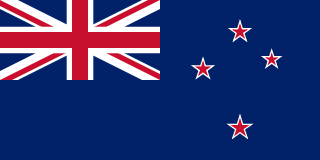
New Zealand
New Zealand
Population: UN WPP 2024, revision 1, projection for 1 July 2026. Sources and methodology.
Geography and territory
New Zealand, known in Maori as Aotearoa, or “land of the long white cloud,” is an island nation in the southwestern Pacific Ocean, roughly 2,000 kilometers southeast of Australia. The country consists primarily of two large landmasses, the North Island and the South Island, separated by the Cook Strait, along with numerous smaller islands including Stewart Island and the remote Chatham Islands. Altogether the country spans 268,021 square kilometers, a compact footprint that belies its remarkable geographic diversity.
The South Island is dominated by the Southern Alps, a dramatic mountain range that includes Aoraki, or Mount Cook, the nation’s highest peak at 3,724 meters. The Franz Josef and Fox glaciers descend almost to sea level through lush temperate rainforest, an unusual pairing rarely seen at these latitudes anywhere else on Earth. The North Island, by contrast, is defined by intense volcanic and geothermal activity: the Taupo volcanic zone contains active volcanoes such as Ruapehu, Tongariro, and Taranaki, alongside geysers, steaming vents, and bubbling mud pools around Rotorua.
Lake Taupo, the country’s largest lake, actually fills the caldera of a supervolcano that erupted catastrophically in the distant past. New Zealand’s coastline stretches for more than 15,000 kilometers, offering golden sand beaches in the north and dramatic cliffs and fjords carved by ancient glaciers in the south. With a population of roughly 5.3 million spread across this varied terrain, New Zealand remains one of the more sparsely populated countries in the developed world, leaving vast stretches of wilderness largely untouched.
Because the country sits astride the boundary of the Pacific and Australian tectonic plates, earthquakes are a regular feature of life, and seismic building codes are among the strictest anywhere. Isolation has also produced an extraordinary array of endemic wildlife, since New Zealand separated from the ancient supercontinent of Gondwana roughly 80 million years ago, before mammals could establish themselves. Flightless birds such as the kiwi and the kakapo evolved in the near-total absence of land predators, a fragile balance now closely guarded through extensive conservation programs.
History
The Maori, a Polynesian people who navigated to New Zealand by canoe around the thirteenth century, were the islands’ first inhabitants. They developed a sophisticated warrior culture rich in wood carving, facial tattooing known as ta moko, and the ceremonial dance called the haka. Maori society was organized around tribes, or iwi, and sub-tribes, or hapu, bound together by a deep spiritual connection to land and sea that continues to shape New Zealand identity today.
The first European to sight New Zealand was the Dutch explorer Abel Tasman in 1642, though it was British captain James Cook who, in 1769, mapped the coastline in detail and established sustained contact with Maori communities. In 1840 the Treaty of Waitangi, signed between the British Crown and Maori chiefs, became the nation’s founding document, though differing interpretations between its English and Maori-language versions have generated disputes that persist into the present day.
The New Zealand Wars of the 1860s and the subsequent confiscation of Maori land marked a painful chapter in the country’s history. Even so, the young nation distinguished itself early through progressive social reform: in 1893 it became the first country in the world to grant women the right to vote. In the twentieth century, the country’s costly participation at Gallipoli during World War I helped forge a distinct national identity separate from Britain. Today New Zealand actively works toward reconciliation with its colonial past, operating as an officially bilingual and bicultural nation.
Culture and society
New Zealand’s culture is a compelling fusion of Maori tradition and European heritage, further enriched by waves of Pacific Island and Asian immigration. Maori culture runs deep through national identity: the haka, a ceremonial dance of challenge, is famous worldwide thanks to the All Blacks rugby team, who perform it before every international match. Te reo Maori, an official language alongside English, has enjoyed a striking cultural revival through immersion schooling and dedicated Maori-language media.
The country has produced artists of genuine global stature. Filmmaker Jane Campion won the Palme d’Or at Cannes, while Peter Jackson transformed New Zealand’s landscapes into Middle-earth for The Lord of the Rings and The Hobbit trilogies, building a world-class film industry in the process. In literature, Katherine Mansfield remains one of the twentieth century’s great short-story writers, and Eleanor Catton later won the Man Booker Prize.
New Zealand society prizes egalitarianism, environmental awareness, and an outdoor lifestyle. New Zealanders, known colloquially as “Kiwis,” are passionate about rugby, cricket, sailing, and adventure sports, with Queenstown widely regarded as the world capital of extreme sports. This connection to nature is not merely recreational: more than a third of the country’s land area falls under some form of national park or nature reserve protection, an extraordinary commitment to conservation for a developed nation.
Immigration has also reshaped the country’s social fabric in recent decades, with growing Pacific Islander and Asian communities adding new layers to a society once defined almost entirely by its Maori and European roots. Auckland, the largest city, now ranks among the most ethnically diverse urban centers in the world relative to its size. This diversity plays out alongside a strong civic culture: New Zealand consistently scores near the top of global rankings for low corruption, government transparency, and political stability, traits that shape both domestic life and the country’s reputation abroad.
Economy
New Zealand runs an open, diversified economy with a gross domestic product of approximately $264.1 billion. Agriculture remains foundational, with the country ranking among the world’s leading exporters of dairy products, lamb, wool, and wine. Fonterra, the national dairy cooperative, stands as the largest dairy exporter on Earth. The country’s sheep population, still several times its human population despite decades of decline, reflects the historic centrality of pastoral farming.
Tourism forms another essential economic pillar, drawing millions of visitors each year captivated by the country’s dramatic scenery. The film industry, propelled by the international success of Peter Jackson’s productions, has generated a significant multiplier effect on tourism and local business. A fast-growing technology sector is expanding in software, biotechnology, and clean-tech innovation, diversifying an economy long associated primarily with farming.
New Zealand maintains free trade agreements with numerous partners and is regularly cited as a global leader in transparency and ease of doing business. Winemaking has become a high-value industry in its own right, with regions like Marlborough producing Sauvignon Blanc renowned internationally. The country has also committed firmly to sustainability, pursuing ambitious carbon-neutrality goals alongside efforts to protect its unique native biodiversity.
Food and cuisine
New Zealand cuisine reflects the country’s cultural blend, merging Maori ingredients and techniques with European and Pacific Asian influences. The hangi, a traditional Maori cooking method using heated stones buried in the earth, produces meat and vegetables with an unmistakable smoky flavor and remains an essential culinary experience for visitors and locals alike. Seafood features prominently on New Zealand tables, with green-lipped mussels, Bluff oysters, and paua, or abalone, ranking among the most prized delicacies.
New Zealand lamb enjoys a worldwide reputation for exceptional quality, raised on green pasture and fed almost exclusively on grass. Artisanal cheeses and dairy products are similarly first-rate, benefiting from the country’s clean natural environment. Kiwifruit, originally imported from China but perfected through New Zealand cultivation, has become something of a national culinary symbol despite its foreign origins.
The contemporary dining scene has flourished considerably, with restaurants in Auckland and Wellington now competing among the finest in the Southern Hemisphere. Wines from Marlborough, Central Otago, and Hawke’s Bay enjoy strong international standing. Pavlova, a meringue dessert topped with cream and fresh fruit, is the subject of a good-natured rivalry with Australia over its true origin, with both countries claiming it as their own invention.
Tourism and landmarks
New Zealand is a world-class travel destination, remarkable for the sheer variety of landscapes packed into a relatively compact territory. Milford Sound and Doubtful Sound, fjords along the southwestern coast of the South Island, offer breathtaking scenery where waterfalls cascade down vegetation-covered cliffs. Tongariro National Park, a UNESCO World Heritage Site, contains three active volcanoes and the celebrated Tongariro Alpine Crossing, frequently ranked among the finest single-day hikes anywhere in the world.
Queenstown, nestled beside Lake Wakatipu and ringed by snow-capped peaks, is the undisputed capital of adventure tourism, with bungee jumping, skydiving, jet boating, and skiing drawing thrill-seekers from across the globe. Rotorua delivers a distinctive geothermal experience of geysers, mud pools, and traditional Maori villages. The Bay of Islands, at the country’s northern tip, pairs idyllic beaches with rich Maori history and culture.
Hobbiton, the film set built for The Lord of the Rings near Matamata, has become one of the country’s most-visited attractions. The Franz Josef and Fox glaciers allow visitors to walk on ancient ice surrounded by native forest. Abel Tasman, the country’s smallest national park, offers sea kayaking between golden beaches and crystalline water. Native wildlife includes the flightless, nocturnal kiwi bird, the country’s national symbol, alongside penguin, seal, and dolphin colonies observable in their natural habitat.
Fun facts about New Zealand
- New Zealand was the first country in the world to grant women the right to vote, in 1893, three decades ahead of the United States
- Sheep still substantially outnumber people in New Zealand, though the ratio has fallen sharply since the 1980s
- In Rotorua, many homes tap directly into underground geothermal energy for heating and even cooking
- New Zealand has no native land snakes, making it one of the few snake-free territories on Earth
- The Maori name Aotearoa translates to “land of the long white cloud,” tied to the legend of Kupe, the first Polynesian navigator said to have reached these shores
- The All Blacks’ pre-match haka has become one of the most recognizable sporting rituals in the world
New Zealand in numbers
Latest World Bank and UNDP observations, each with its own year. “World median” is the middle value among the countries that report the same indicator; “#” ranks from the highest value.
Population since 1960
New Zealand had 2.4 million people in 1960 and 5.3 million in 2025 — 2.2 times as many.
People
84.0% of people live in towns and cities (world median 63.4%). 17.9% are under 15 and 17.6% are 65 or older — an ageing population. Women have 1.57 children on average, below the replacement level of about 2.1 needed to keep a population stable in the long run without migration.
Economy
The economy grew by 0.5% in real terms in 2025. Consumer prices rose by 2.8% in 2025. Services make up the largest share of output (68.2% of GDP); agriculture contributes 4.0%.
Development and environment
UNDP rates human development in New Zealand as very high, with an index of 0.938 in 2023 (rank 17 of 193). 93.5% of people use the internet and 100.0% have access to electricity. Forest covers 38.9% of the land (world median 32.8%).
Sources: World Bank, World Development Indicators (CC BY 4.0), most recent observation from 2015 onward; UNDP Human Development Report 2025. Retrieved 2026-10-10. Sector shares need not add up to 100% because taxes and subsidies on products are excluded. Missing values are left blank rather than estimated. Sources and methodology.
Climate of New Zealand
Averaged across New Zealand, the warmest month is February (15.6 °C) and the coolest is July (5.2 °C), a seasonal swing of 10.4 °C. The annual mean is 10.5 °C.
About 1,592 mm of precipitation falls in a typical year. June is the wettest month (152 mm) and February the driest (102 mm). Rain is spread fairly evenly through the year.
Show monthly values as a table
| Month | Mean °C | Low °C | High °C | Precipitation, mm |
|---|---|---|---|---|
| January | 15.4 | 9.9 | 20.8 | 115 |
| February | 15.6 | 10.2 | 21.1 | 102 |
| March | 13.8 | 8.5 | 19.1 | 122 |
| April | 11.1 | 6.4 | 15.9 | 127 |
| May | 8.5 | 4.1 | 12.9 | 143 |
| June | 6.0 | 2.0 | 10.2 | 152 |
| July | 5.2 | 1.1 | 9.4 | 138 |
| August | 6.3 | 1.9 | 10.7 | 146 |
| September | 8.2 | 3.6 | 12.8 | 147 |
| October | 10.0 | 5.2 | 14.9 | 145 |
| November | 11.7 | 6.7 | 16.8 | 120 |
| December | 14.0 | 8.9 | 19.1 | 135 |
Figures are 1991–2020 averages across the whole land area of New Zealand, from the World Bank Climate Change Knowledge Portal, CRU TS 4.08 (CC BY 4.0). They are not readings from one weather station: the capital, the coast and high ground can be much warmer, cooler, wetter or drier.
Travel essentials for New Zealand
The practical details visitors ask about first. Traffic in New Zealand drives on the left, one of 54 of the 196 countries profiled here that do — see the full list. Mains electricity is 230 V at 50 Hz, so devices made only for 110–120 V (common in North America) need a converter unless they are dual-voltage — most phone and laptop chargers are.
- Emergency number
- 111
- Driving side
- Left
- Plug types
- Type II: two angled flat pins plus earth
- Voltage
- 230 V50 Hz
- Dialling code
- +64From abroad: your exit code, then 64 and the number
- Currency
- New Zealand Dollar (NZD)
- Time zone
- NZST (UTC+12)Current local time in New Zealand
Compiled from IEC plug and voltage standards, national emergency-service listings and the UN road-traffic conventions. Emergency numbers and local coverage can change — confirm them locally on arrival. New Zealand's internet domain is .nz.
Where New Zealand ranks in the world
Each position counts only the countries with data in that ranking guide. First place is the highest value — for price levels, the most expensive. Select a card to see the full table.
- Population125th of 1965.3 millionUN projection, July 2026
- Land area74th of 195263,310 km²World Bank, 2023
- Population density165th of 19420 per km²World Bank, 2023
- GDP (nominal)51st of 187$261.5BWorld Bank, 2024, current US$
- GDP per capita23rd of 187$49,432World Bank, 2024, current US$
- Life expectancy29th of 19482.0 yearsWorld Bank, 2024
- Price level9th of 165108 (US = 100)ICP 2021, household consumption
Compare New Zealand with another country
Frequently asked questions about New Zealand
What is the capital of New Zealand?
The capital of New Zealand is Wellington.
What is the population of New Zealand?
The UN World Population Prospects projection for New Zealand is 5,287,479 people (5.3 million) on 1 July 2026. National statistical offices may publish different estimates.
What language is spoken in New Zealand?
The official language of New Zealand is English, Maori.
What currency is used in New Zealand?
The currency of New Zealand is the New Zealand Dollar (NZD).
How big is New Zealand?
New Zealand covers an area of 268,021 km².
What type of government does New Zealand have?
New Zealand is a parliamentary constitutional monarchy.
What is the highest point in New Zealand?
The highest point in New Zealand is Aoraki / Mount Cook (3,724 m).
