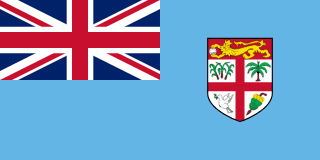
Fiji
Republic of Fiji
Population: UN WPP 2024, revision 1, projection for 1 July 2026. Sources and methodology.
Geography and territory
Fiji is a scattered archipelago in the South Pacific, made up of more than 330 islands, only about a third of which are inhabited. Covering a total land area of 18,274 square kilometers, the nation sits in the Melanesian region roughly halfway between New Zealand and Hawaii. Two islands, Viti Levu and Vanua Levu, dominate the map, holding most of the country’s 933,154 people along with its capital, industry, and infrastructure.
Viti Levu is home to Suva, Fiji’s capital, and to Mount Tomanivi, the country’s highest point at 1,324 meters. The interior of the larger islands rises into rugged, rainforest-cloaked mountains, while the coastlines unfurl into white sand beaches lined with coconut palms. Surrounding the islands is a vast system of coral reefs, including a formation often cited as the third-largest barrier reef on Earth.
The climate is tropical and maritime, warm year-round, with a wet season running roughly from November to April and a drier stretch from May through October. The waters around Fiji teem with marine life — well over a thousand fish species along with hundreds of coral varieties, sea turtles, sharks, and manta rays. Like many low-lying Pacific nations, Fiji faces mounting pressure from climate change, including rising seas and increasingly severe storms that threaten coastal communities. Several outlying villages have already been relocated to higher ground, and Fiji has become an outspoken advocate for climate action on the international stage.
Beyond the two main islands, smaller groups such as the Lau, Lomaiviti, and Kadavu islands add further variety to the archipelago, ranging from volcanic peaks to low coral atolls. Rivers on Viti Levu, including the Rewa and the Navua, cut through the interior highlands and support both agriculture and adventure tourism such as white-water rafting. Mangrove forests line many coastal areas, forming a natural buffer against storm surge and nurseries for juvenile marine species.
History
People have lived in Fiji for roughly 3,500 years, since Austronesian seafarers from Southeast Asia first settled the islands. Over the centuries these communities organized into competing chiefdoms with a strong warrior tradition; ritual practices, including cannibalism connected to warfare, persisted into the 1800s. The blending of Melanesian and Polynesian influences gave rise to a culture distinct from anywhere else in the Pacific.
European contact came early but colonization came late. Dutch navigator Abel Tasman sighted the islands in 1643, and British explorer James Cook passed through in 1774, but it was not until the nineteenth century that missionaries, sandalwood traders, and whalers established a lasting presence. In 1874, paramount chief Ratu Seru Epenisa Cakobau ceded Fiji to Britain, and it became a Crown colony. Colonial administrators subsequently brought indentured laborers from India to work the sugarcane plantations, a decision that permanently reshaped the islands’ ethnic makeup.
Fiji became independent on October 10, 1970, but its post-independence history has been turbulent, marked by recurring tension between indigenous Fijian and Indo-Fijian communities and by coups in 1987, 2000, and 2006. Despite this instability, the country has steadily moved toward more durable democratic governance. In 2017, Fiji became the first small island nation to preside over a United Nations climate conference, using the platform to advocate for vulnerable island states confronting global warming.
Culture and society
Fijian culture is a rich fusion of Melanesian and Polynesian custom layered with Indian and European influence. At its heart is the kava ceremony, known locally as yaqona, the country’s central social ritual. The drink, made from the pounded root of a pepper plant, is shared from a communal coconut-shell cup called a bilo during welcomes, community gatherings, and formal occasions. The sevusevu, a formal presentation of kava, is an essential protocol for any visitor entering a Fijian village.
The meke is Fiji’s traditional performance art, blending group dance with chants that recount stories of mythology, battle, and daily life. Men often perform vigorous war dances with spears and clubs, while women move through more fluid, fan-accompanied routines. Fijian craftspeople are also known for tapa cloth, made from pounded mulberry bark and decorated with geometric patterns, and for wood carving, historically used to produce ceremonial canoes and figures.
Community and hierarchy remain central to Fijian life. The concept of vanua — a word that encompasses land, people, and custom together — anchors indigenous identity, and villages are still organized around a chief and a council of elders. The Indo-Fijian community, roughly a third of the population, adds another layer to national life, contributing its own festivals, cuisine, and Hindu and Muslim traditions to the cultural mix.
Sports play an outsized role in Fijian national pride, above all rugby, which functions almost as a second national religion. Village greens and school fields across the islands double as training grounds for a sport that has produced some of the world’s most electrifying sevens players. English remains the main language of government, education, and media, existing alongside iTaukei (Fijian) and Fiji Hindi, and this multilingual, multi-faith society generally coexists with a striking degree of everyday warmth and hospitality toward visitors.
Economy
Fiji has one of the more diversified economies in the South Pacific, anchored above all by tourism, which accounts for a substantial share of national output and employs a large portion of the workforce. Hundreds of thousands of visitors arrive each year, drawn by postcard beaches, luxury resorts, and some of the best diving in the world.
Sugar, a legacy of the colonial era, remains an important though declining industry, grown chiefly on the coastal plains of Viti Levu and Vanua Levu. Fishing, particularly for tuna, contributes meaningfully to exports, as does bottled water — Fiji Water has become a globally recognized premium brand built on the islands’ name.
The country’s economic challenges include exposure to natural disasters, heavy reliance on tourism, and the ongoing need to diversify. The government has pushed to grow textiles, information technology, and green industries, while remittances sent home by Fijians working abroad remain a vital source of income for many families.
Fiji also serves as something of a regional hub for the South Pacific, hosting the headquarters of several international and diplomatic organizations and functioning as a transport and trade link between smaller island nations and the wider world. Suva’s port and Nadi’s international airport are both key pieces of infrastructure that keep goods, workers, and visitors moving through the region.
Food and cuisine
Fijian food mirrors the archipelago’s cultural mix, pairing fresh tropical ingredients with both traditional cooking methods and Indian-influenced technique. The signature dish is kokoda, raw fish marinated in lime or lemon juice and coconut milk — something like a Latin American ceviche but with a distinctly tropical character. For celebrations, food is often prepared in a lovo, an underground oven of heated stones that gives meats and root vegetables a deep, smoky flavor.
Staples of the Fijian table include taro, cassava, sweet potato, coconut, and plantain, alongside abundant fresh fish and shellfish. Palusami — taro leaves filled with meat and coconut cream, then wrapped and baked — is a beloved festive dish. The Indian influence shows up everywhere in the form of fragrant curries, roti, samosas, and sweets such as gulab jamun.
Tropical fruit is plentiful: mangoes, papayas, pineapples, passionfruit, and coconuts appear fresh or worked into desserts and drinks. Kava, while not food in the conventional sense, is inseparable from the country’s culinary and social life. Local markets, such as Suva’s municipal market, offer a vivid cross-section of the islands’ produce and flavors.
Tourism and landmarks
Fiji ranks among the world’s most sought-after tropical destinations, celebrated for white sand, clear water, and famously warm hospitality. The Mamanuca Islands, a chain of roughly twenty islands off western Viti Levu, host some of the Pacific’s most exclusive resorts and served as the filming location for Cast Away. The more remote Yasawa Islands offer a quieter, more traditional experience, with lodging often built around local village life.
Diving and snorkeling here are world-class. The Beqa Passage, nicknamed the shark diving capital of the world, allows divers to encounter as many as eight shark species on a single dive. The Great Astrolabe Reef and the reefs off Taveuni, known as Fiji’s “Garden Island,” showcase extraordinary soft coral gardens, while inland, Taveuni’s Bouma National Heritage Park hides spectacular rainforest waterfalls.
Suva, the capital, offers a lively municipal market, the Fiji Museum with artifacts from the pre-colonial era, and an energetic nightlife scene. Navala, a village in the Viti Levu highlands, is the only settlement in the country where every house still follows traditional thatched-roof Fijian architecture. Near Nadi, the Sabeto hot springs and mud pools offer a relaxing volcanic soak framed by tropical scenery.
Fun facts about Fiji
- Fiji sits astride the 180th meridian, which means it is among the very first places on Earth to greet each new day.
- Cannibalism was practiced in parts of Fiji until the late nineteenth century; the wooden forks once used in the ritual are now sold as souvenirs.
- In 2017, Fiji became the first small island state to preside over a United Nations climate change conference.
- Turning down an invitation to share kava is considered a serious breach of etiquette; no significant social or official gathering begins without the ceremony.
- Fiji’s national rugby sevens team is a genuine global powerhouse, having won the country’s first-ever Olympic medal — gold — at Rio 2016.
Fiji in numbers
Latest World Bank and UNDP observations, each with its own year. “World median” is the middle value among the countries that report the same indicator; “#” ranks from the highest value.
Population since 1960
Fiji had 404,887 people in 1960 and 933,154 in 2025 — 2.3 times as many.
People
59.5% of people live in towns and cities (world median 63.4%). 26.8% are under 15 and 6.6% are 65 or older — a middle-aged population. Women have 2.27 children on average, close to the replacement level of about 2.1.
Economy
The economy grew by 3.2% in real terms in 2025. Consumer prices fell by 1.4% in 2025. Services make up the largest share of output (57.0% of GDP); agriculture contributes 14.0%.
Development and environment
UNDP rates human development in Fiji as high, with an index of 0.731 in 2023 (rank 111 of 193). 74.7% of people use the internet and 95.9% have access to electricity. Forest covers 61.7% of the land (world median 32.8%).
Sources: World Bank, World Development Indicators (CC BY 4.0), most recent observation from 2015 onward; UNDP Human Development Report 2025. Retrieved 2026-10-10. Sector shares need not add up to 100% because taxes and subsidies on products are excluded. Missing values are left blank rather than estimated. Sources and methodology.
Climate of Fiji
Averaged across Fiji, the mean temperature stays between 22.8 °C (July) and 26.3 °C (February) — a swing of only 3.5 °C, so seasons are marked by rainfall rather than by heat.
About 2,491 mm of precipitation falls in a typical year. March is the wettest month (432 mm) and June the driest (76 mm). The wettest stretch is January to March, with 45% of the year's total.
Show monthly values as a table
| Month | Mean °C | Low °C | High °C | Precipitation, mm |
|---|---|---|---|---|
| January | 26.2 | 22.0 | 30.4 | 351 |
| February | 26.3 | 22.0 | 30.6 | 345 |
| March | 26.1 | 22.1 | 30.1 | 432 |
| April | 25.5 | 21.6 | 29.5 | 302 |
| May | 24.3 | 20.5 | 28.2 | 135 |
| June | 23.4 | 19.6 | 27.3 | 76 |
| July | 22.8 | 18.8 | 26.7 | 76 |
| August | 22.9 | 19.0 | 26.9 | 98 |
| September | 23.4 | 19.3 | 27.5 | 89 |
| October | 24.2 | 20.2 | 28.2 | 120 |
| November | 25.2 | 21.2 | 29.3 | 173 |
| December | 25.8 | 21.7 | 29.9 | 294 |
Figures are 1991–2020 averages across the whole land area of Fiji, from the World Bank Climate Change Knowledge Portal, CRU TS 4.08 (CC BY 4.0). They are not readings from one weather station: the capital, the coast and high ground can be much warmer, cooler, wetter or drier.
Travel essentials for Fiji
The practical details visitors ask about first. Traffic in Fiji drives on the left, one of 54 of the 196 countries profiled here that do — see the full list. Mains electricity is 240 V at 50 Hz, so devices made only for 110–120 V (common in North America) need a converter unless they are dual-voltage — most phone and laptop chargers are.
- Emergency number
- 911Police 917 · Fire 910
- Driving side
- Left
- Plug types
- Type II: two angled flat pins plus earth
- Voltage
- 240 V50 Hz
- Dialling code
- +679From abroad: your exit code, then 679 and the number
- Currency
- Fijian Dollar (FJD)
- Time zone
- FJT (UTC+12)Current local time in Fiji
Compiled from IEC plug and voltage standards, national emergency-service listings and the UN road-traffic conventions. Emergency numbers and local coverage can change — confirm them locally on arrival. Fiji's internet domain is .fj.
Where Fiji ranks in the world
Each position counts only the countries with data in that ranking guide. First place is the highest value — for price levels, the most expensive. Select a card to see the full table.
- Population159th of 196937,282UN projection, July 2026
- Land area151st of 19518,270 km²World Bank, 2023
- Population density134th of 19451 per km²World Bank, 2023
- GDP (nominal)154th of 187$6.0BWorld Bank, 2024, current US$
- GDP per capita102nd of 187$6,426World Bank, 2024, current US$
- Life expectancy150th of 19467.5 yearsWorld Bank, 2024
- Price level86th of 16546 (US = 100)ICP 2021, household consumption
Compare Fiji with another country
Frequently asked questions about Fiji
What is the capital of Fiji?
The capital of Fiji is Suva.
What is the population of Fiji?
The UN World Population Prospects projection for Fiji is 937,282 people (937,282) on 1 July 2026. National statistical offices may publish different estimates.
What language is spoken in Fiji?
The official language of Fiji is English, Fijian, Fiji Hindi.
What currency is used in Fiji?
The currency of Fiji is the Fijian Dollar (FJD).
How big is Fiji?
Fiji covers an area of 18,274 km².
What type of government does Fiji have?
Fiji is a parliamentary republic.
What is the highest point in Fiji?
The highest point in Fiji is Mount Tomanivi (1,324 m).


