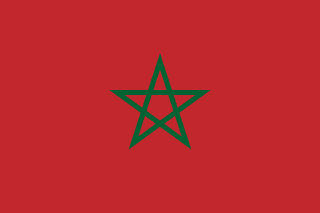
Morocco
Kingdom of Morocco
Population: UN WPP 2024, revision 1, projection for 1 July 2026. Sources and methodology.
Geography and territory
Morocco occupies a strategic perch at the northwestern tip of Africa, separated from Europe by a mere 14 kilometers across the Strait of Gibraltar. Covering 710,850 square kilometers, the country encompasses an extraordinary range of landscapes, from Atlantic and Mediterranean coastlines to the snowcapped summits of the Atlas Mountains and the vast reaches of the Sahara Desert. Few countries in Africa pack such geographic variety into a single national territory.
The Atlas range forms the backbone of Morocco’s terrain, running roughly 2,500 kilometers from southwest to northeast. The High Atlas contains the highest peak in North Africa, Jbel Toubkal, which rises to 4,167 meters. To the north, the Rif Mountains hug the Mediterranean coast in a landscape of steep slopes and fertile valleys. Between the mountains and the desert lie arid plateaus dotted with oases, where date palms create pockets of green amid otherwise unforgiving terrain.
Morocco’s coastline stretches more than 3,500 kilometers, washed by the Atlantic Ocean to the west and the Mediterranean Sea to the north. The Atlantic shore, exposed to steady trade winds, offers long beaches popular with surfers, while the Mediterranean coast tends toward more sheltered coves. The climate ranges from Mediterranean in the north to desert in the south, with continental conditions across the mountainous interior, a diversity that supports both varied agriculture and rich biodiversity. Morocco shares land borders with Algeria to the east and Mauritania to the south, and Spain maintains a physical presence on the North African mainland through the enclaves of Ceuta and Melilla.
History
Morocco’s history stretches back millennia, with evidence of human habitation dating to the Paleolithic era. The Berbers, or Amazigh, the indigenous people of North Africa, inhabited these lands long before successive waves of Phoenician, Carthaginian, and Roman settlers established colonies and cities along the coast. The Roman province of Mauretania Tingitana, centered on the city of Volubilis, left behind an archaeological legacy so significant that its ruins are now a UNESCO World Heritage Site.
The Arab conquest of the seventh century transformed the region profoundly, introducing Islam and the Arabic language, which blended with the existing Berber culture. In 788, Idris I founded Morocco’s first ruling dynasty and established Fez as its capital, turning the city into a leading center of scholarship and religious life. The Almoravid and Almohad dynasties later extended Moroccan power into the Iberian Peninsula and much of the Maghreb, leaving behind an extraordinary architectural legacy of mosques, madrasas, and palaces that still define the country’s historic cities.
The modern era brought rivalry among European powers for control of Moroccan territory. The 1912 Treaty of Fez established a French protectorate over most of the country, while Spain controlled the north and the Western Sahara. Mohammed V led the independence movement that culminated in Moroccan independence on March 2, 1956. Since then, the Alaouite monarchy has steered the country’s modernization, including significant constitutional reforms in 2011 that expanded civil rights and decentralized political power.
Culture and society
Moroccan culture is the product of a remarkable convergence of Berber, Arab, Andalusian, sub-Saharan, and European influences that together have shaped a truly distinctive identity. Moroccan craftsmanship enjoys an international reputation, with centuries-old traditions in ceramics, pottery, leatherwork, woodcarving, and carpet weaving. The souks of cities like Fez and Marrakech are living labyrinths of workshops where these crafts are still passed down from one generation to the next.
Moroccan music spans an unusually wide range of genres reflecting the country’s cultural diversity. Gnawa music, rooted in sub-Saharan traditions, blends hypnotic rhythms with ritual chanting and has been recognized by UNESCO as an element of intangible cultural heritage. Andalusian classical music, inherited from the golden age of Al-Andalus, is still performed by orchestras in cities such as Fez and Tétouan. Chaabi, Morocco’s urban popular music, and the distinct rhythms of the Atlas and Rif regions round out an exceptionally rich musical landscape.
Moroccan society places a high value on hospitality and communal life. The hammam, the traditional public bathhouse, remains a central social institution in everyday life. Religious observances such as Ramadan, Eid al-Adha, and Mawlid mark the rhythm of the social calendar throughout the year. Traditional domestic architecture, embodied in the riad with its interior garden courtyard and fountains, reflects a distinctly Moroccan idea of the home as a private sanctuary shielded from the noise of the outside world.
Economy
Morocco possesses one of the most diversified economies in Africa, with a gross domestic product of roughly $182.4 billion that places it among the leading economic powers of the region. The services sector leads economic activity, buoyed by a tourism industry that draws more than 13 million visitors a year and generates a substantial share of foreign currency earnings. The country has invested heavily in modernizing its infrastructure, building highways, high-speed rail, and major ports such as Tanger Med, one of the largest in the Mediterranean.
Agriculture remains a cornerstone of the Moroccan economy, employing close to 40 percent of the workforce. Morocco is the world’s largest exporter of phosphates and one of the leading producers of olives, citrus fruit, tomatoes, and early-season produce destined for European markets. The Green Morocco Plan has driven modernization of the agricultural sector, promoting higher-value farming and more sustainable water management amid growing climate pressures.
Industry has expanded notably in recent decades, with automakers such as Renault and Stellantis building major manufacturing plants that have made Morocco the leading vehicle producer in Africa. Aerospace, textiles, and electronics further strengthen an increasingly sophisticated industrial base. Morocco has also emerged as a continental leader in renewable energy, with ambitious projects such as the Noor solar power complex near Ouarzazate, one of the largest of its kind in the world.
Food and cuisine
Moroccan cuisine ranks among the most refined and complex in the Arab and African culinary worlds, a legacy of centuries of exchange among Berber, Arab, Andalusian, and sub-Saharan traditions. Spices are the soul of Moroccan cooking: cumin, saffron, cinnamon, ginger, turmeric, and ras el hanout, a blend that can include as many as thirty different spices, give dishes a depth of flavor that few culinary traditions can match.
The tagine, a slow-cooked stew named for the conical clay pot in which it is prepared, is perhaps Morocco’s most iconic dish, appearing in countless variations, from lamb with prunes and almonds to chicken with olives and preserved lemon, as well as vegetable and fish versions. Couscous, traditionally served on Fridays after midday prayers, is another emblematic dish, made from steamed semolina and topped with vegetables, meat, and chickpeas. Pastilla, a flaky pastry filled with pigeon or chicken, almonds, and cinnamon and dusted with powdered sugar, represents the pinnacle of Moroccan culinary sophistication.
Moroccan mint tea, poured from a height to create a light foam, is far more than a beverage; it is a ritual of hospitality central to social life throughout the country. Moroccan pastry offers a dazzling array of sweets built on almonds, honey, orange blossom water, and sesame, including gazelle horns, chebakia, and briouates. Bustling spice markets and street food stalls round out a sensory culinary experience that few destinations can rival.
Tourism and landmarks
Marrakech, the Red City, is Morocco’s most popular destination and one of the most visited cities in all of Africa. Jemaa el-Fna square, recognized by UNESCO as intangible cultural heritage, transforms every evening into an unrepeatable spectacle of storytellers, musicians, acrobats, and food vendors. The Marrakech medina holds treasures such as the Bahia Palace, the Saadian Tombs, the Ben Youssef Madrasa, and the Majorelle Garden, famously restored by fashion designer Yves Saint Laurent.
Fez, the kingdom’s spiritual capital, contains the largest car-free urban area in the world, a medieval medina of more than 9,000 narrow lanes where time seems to have stopped. The Chouara Tannery, the Bou Inania and Al-Attarine madrasas, and the University of al-Qarawiyyin, widely considered the oldest continuously operating institution of higher learning in the world, are essential stops. Chefchaouen, the Rif’s famous blue city, enchants visitors with streets washed in shades of indigo that create a strikingly photogenic atmosphere.
The Sahara Desert around Merzouga and Zagora offers unforgettable experiences, from camel treks and nights in Berber camps under brilliant starry skies to the towering dunes of Erg Chebbi. The Todra and Dades Gorges carve dramatic landscapes into the Atlas Mountains, while the Atlantic coast ranges from the walled city of Essaouira, another UNESCO World Heritage Site, to the surf beaches of Taghazout and the cosmopolitan bustle of Casablanca, home to the towering Hassan II Mosque.
Fun facts about Morocco
- The University of al-Qarawiyyin in Fez, founded in 859 by Fatima al-Fihri, is recognized by UNESCO and Guinness World Records as the oldest continuously operating institution of higher learning in the world.
- Morocco is the world’s only producer of argan oil, extracted from a tree species found exclusively in the country’s southwest, a region designated a UNESCO biosphere reserve.
- Morocco co-hosted the 2030 FIFA World Cup, becoming the first African nation to help stage the tournament.
- The Fez medina contains more than 9,000 alleyways and is so labyrinthine that GPS navigation does not reliably work inside it, leading most visitors to rely on local guides.
- Morocco controls roughly three-quarters of the world’s known phosphate reserves, making it the planet’s largest exporter of the mineral.
- Moroccan mint tea is traditionally served in three rounds, each carrying its own meaning, and declining an offer of tea is considered a serious breach of etiquette.
Morocco in numbers
Latest World Bank and UNDP observations, each with its own year. “World median” is the middle value among the countries that report the same indicator; “#” ranks from the highest value.
Population since 1960
Morocco had 11.6 million people in 1960 and 38.4 million in 2025 — 3.3 times as many.
People
63.1% of people live in towns and cities (world median 63.4%). 25.2% are under 15 and 8.5% are 65 or older — a middle-aged population. Women have 2.21 children on average, close to the replacement level of about 2.1.
Economy
The economy grew by 4.6% in real terms in 2025. Consumer prices rose by 0.7% in 2025. Services make up the largest share of output (52.3% of GDP); agriculture contributes 10.5%.
Development and environment
UNDP rates human development in Morocco as high, with an index of 0.710 in 2023 (rank 120 of 193). 91.2% of people use the internet and 100.0% have access to electricity. Forest covers 12.8% of the land (world median 32.8%).
Sources: World Bank, World Development Indicators (CC BY 4.0), most recent observation from 2015 onward; UNDP Human Development Report 2025. Retrieved 2026-10-10. Sector shares need not add up to 100% because taxes and subsidies on products are excluded. Missing values are left blank rather than estimated. Sources and methodology.
Climate of Morocco
Averaged across Morocco, the warmest month is August (26.9 °C) and the coolest is January (9.9 °C), a seasonal swing of 17.0 °C. The annual mean is 18.1 °C.
About 313 mm of precipitation falls in a typical year. December is the wettest month (46 mm) and July the driest (3 mm). The wettest stretch is November to January, with 40% of the year's total.
Show monthly values as a table
| Month | Mean °C | Low °C | High °C | Precipitation, mm |
|---|---|---|---|---|
| January | 9.9 | 4.2 | 15.7 | 39 |
| February | 11.6 | 5.8 | 17.4 | 36 |
| March | 14.3 | 8.4 | 20.3 | 37 |
| April | 16.4 | 10.5 | 22.3 | 28 |
| May | 19.8 | 13.7 | 25.8 | 18 |
| June | 23.5 | 17.1 | 30.0 | 5 |
| July | 26.8 | 20.1 | 33.7 | 3 |
| August | 26.9 | 20.3 | 33.6 | 7 |
| September | 23.2 | 17.0 | 29.4 | 17 |
| October | 19.3 | 13.4 | 25.1 | 35 |
| November | 14.5 | 9.1 | 20.0 | 42 |
| December | 11.0 | 5.5 | 16.6 | 46 |
Figures are 1991–2020 averages across the whole land area of Morocco, from the World Bank Climate Change Knowledge Portal, CRU TS 4.08 (CC BY 4.0). They are not readings from one weather station: the capital, the coast and high ground can be much warmer, cooler, wetter or drier.
Travel essentials for Morocco
The practical details visitors ask about first. Traffic in Morocco drives on the right, like most of the world. Mains electricity is 220 V at 50 Hz, so devices made only for 110–120 V (common in North America) need a converter unless they are dual-voltage — most phone and laptop chargers are.
- Emergency number
- 19Ambulance 15 · Fire 15
- Driving side
- Right
- Plug types
- Type C, Type EC: two round pins (Europlug); E: two round pins, earth pin in the socket
- Voltage
- 220 V50 Hz
- Dialling code
- +212From abroad: your exit code, then 212 and the number
- Currency
- Moroccan Dirham (MAD)
- Time zone
- UTC+1Current local time in Morocco
Compiled from IEC plug and voltage standards, national emergency-service listings and the UN road-traffic conventions. Emergency numbers and local coverage can change — confirm them locally on arrival. Morocco's internet domain is .ma.
Where Morocco ranks in the world
Each position counts only the countries with data in that ranking guide. First place is the highest value — for price levels, the most expensive. Select a card to see the full table.
- Population41st of 19638.8 millionUN projection, July 2026
- Land area55th of 195446,300 km²World Bank, 2023
- Population density99th of 19485 per km²World Bank, 2023
- GDP (nominal)58th of 187$160.6BWorld Bank, 2024, current US$
- GDP per capita126th of 187$4,153World Bank, 2024, current US$
- Life expectancy82nd of 19475.5 yearsWorld Bank, 2024
- Price level87th of 16546 (US = 100)ICP 2021, household consumption
Bordering countries of Morocco


Compare Morocco with another country
Frequently asked questions about Morocco
What is the capital of Morocco?
The capital of Morocco is Rabat.
What is the population of Morocco?
The UN World Population Prospects projection for Morocco is 38,762,441 people (38.8 million) on 1 July 2026. National statistical offices may publish different estimates.
What language is spoken in Morocco?
The official language of Morocco is Arabic and Berber (Amazigh).
What currency is used in Morocco?
The currency of Morocco is the Moroccan Dirham (MAD).
How big is Morocco?
Morocco covers an area of 710,850 km².
What type of government does Morocco have?
Morocco is a parliamentary constitutional monarchy.
Which countries border Morocco?
Morocco shares land borders with Algeria, Mauritania, Spain.
What is the highest point in Morocco?
The highest point in Morocco is Jbel Toubkal (4,167 m).


