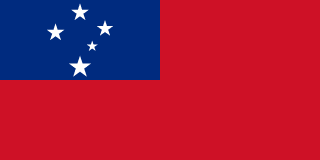
Samoa
Independent State of Samoa
Population: UN WPP 2024, revision 1, projection for 1 July 2026. Sources and methodology.
Geography and territory
Samoa sits at the heart of Polynesia in the South Pacific Ocean, roughly midway between Hawaii and New Zealand. The country is made up of two principal islands, Upolu and Savai’i, along with eight smaller islets, spread across a total land area of 2,831 square kilometers and home to a population of 219,306. Upolu, though smaller than Savai’i, is home to the capital city of Apia and holds roughly three-quarters of the national population.
Savai’i, the larger of the two main islands and one of the biggest in all of Polynesia, is a volcanic landscape of dramatic contrasts, marked by fields of hardened lava, forest-covered craters, and striking waterfalls. Mount Silisili, at 1,858 meters, is the country’s highest point and rises near the center of Savai’i. The last major volcanic activity struck the island between 1905 and 1911, when lava from Mount Matavanu buried several villages and left behind an otherworldly landscape that visitors can still explore today.
Samoa’s coastlines are ringed by coral reefs that shelter white sand beaches and turquoise lagoons. Lush rainforest covers much of the interior of both islands, supporting tree ferns, orchids, and the teuila flower, the national symbol. Beyond Upolu and Savai’i, the eight minor islets scattered around the archipelago, including small, largely uninhabited outcrops near the Aleipata coast, serve as nesting grounds for seabirds and add to the country’s ecological diversity despite contributing little to its total land area. The tropical climate stays warm and humid year-round, with a wet season running from November through April. Samoa is vulnerable to tropical cyclones and tsunamis, most notably the devastating 2009 tsunami that struck the southern coast of Upolu, and the country continues to invest in early-warning systems and coastal resilience to guard against future disasters.
History
Samoan history stretches back more than 3,000 years to the arrival of Austronesian voyagers of the Lapita culture, making Samoa one of the oldest centers of Polynesian civilization. Samoan oral tradition regards the islands as the “cradle of Polynesia,” the point of origin from which navigators set out to settle other Pacific islands, including Tonga, Tahiti, and eventually Hawaii and New Zealand.
The first sustained European contact came in the eighteenth century with Dutch and French explorers. By the nineteenth century, Samoa had become a flashpoint for imperial rivalry among Germany, Great Britain, and the United States, a struggle that culminated in the 1899 partition of the archipelago, with the western islands falling under German control and the eastern islands passing to the United States. After the First World War, New Zealand administered Western Samoa under a League of Nations mandate.
The Samoan independence movement, known as the Mau, was among the earliest and most influential in the Pacific. In 1929, New Zealand troops opened fire on peaceful Mau demonstrators in an event remembered as Black Saturday, killing several people. Samoa achieved independence on January 1, 1962, becoming the first Pacific island nation to gain sovereignty in the twentieth century. In 2011, Samoa shifted to the other side of the International Date Line, skipping December 30 entirely and jumping straight from December 29 to December 31, in order to align its business week with major trading partners Australia and New Zealand.
Culture and society
Samoan culture, known as fa’a Samoa, or “the Samoan way,” ranks among the oldest and most intact cultural systems in Polynesia. This comprehensive way of life governs nearly every part of daily existence, from family relationships and political organization to social etiquette and ceremony. Fa’a Samoa rests on three foundational pillars: the aiga, or extended family; the lotu, or church; and the matai, the chiefly system.
The matai system sits at the center of Samoan social organization. Each extended family selects a matai, who may be a man or a woman, to represent it before the village council, or fono. Matai oversee communal land, mediate disputes, and make decisions affecting the wider community. This traditional form of democratic governance carried directly into the modern political system, since only matai were permitted to vote and stand for parliament until 1990.
Samoan cultural expression is rich and varied. The siva, a traditional dance marked by graceful, flowing hand and body movements, is performed by both men and women in distinct styles. Siapo, bark cloth decorated with geometric designs, and the ie toga, a finely woven mat made from pandanus fiber that ranks as the most treasured ceremonial gift in Samoan culture, showcase extraordinary craftsmanship. Traditional Samoan tattooing, the pe’a for men, which covers the body from waist to knee, and the malu for women, remains a painful and deeply respected rite of passage.
Economy
Samoa’s economy blends a traditional subsistence base with growing modern sectors. Agriculture remains the foundation of rural livelihoods, with coconut, banana, taro, cocoa, and coffee among the principal crops. Artisanal and commercial fishing supplement the primary economy, though marine resources face increasing pressure.
Tourism has grown into one of the country’s leading economic drivers, drawing visitors from New Zealand, Australia, and beyond with its pristine beaches, authentic culture, and relaxed pace of life. Remittances sent home by the large Samoan diaspora, particularly from New Zealand, Australia, and the United States, make up a significant share of national income and remain essential to many families’ livelihoods.
The government has pursued economic diversification through incentives for light manufacturing, commercial fishing, and services. A Yazaki factory producing automotive wiring harnesses was for years the country’s largest private employer. Samoa has also found a creative revenue stream in its “.ws” internet domain, marketed internationally as shorthand for “website.” Ongoing challenges include vulnerability to natural disasters, heavy reliance on imports, and the emigration of skilled young workers.
Food and cuisine
Samoan cuisine reflects both the tropical abundance of the islands and long-standing Polynesian culinary tradition. The umu, an earth oven in which food is cooked over hot stones beneath layers of banana leaves, remains the traditional cooking method of choice and the centerpiece of virtually every Samoan celebration. Each Sunday, following church services, families prepare a to’ona’i, a festive umu-cooked lunch of pork, chicken, fish, taro, breadfruit, and banana.
Oka, raw fish marinated in lime juice and mixed with coconut milk, onion, and chili, is arguably the most iconic Samoan dish and appears at nearly every significant meal. Palusami, taro leaves filled with corned beef and coconut cream and cooked in the umu, is another essential classic. Taro itself holds a place of particular honor in Samoan cuisine, cultivated in dozens of local varieties.
The ava, or kava, ceremony is a socially significant ritual accompanying formal receptions, chiefly gatherings, and important events. The drink is prepared by mixing the dried, ground root of the Piper methysticum plant with water and served in strict order according to the rank of those present. Tropical fruits, including coconut, papaya, mango, pineapple, and passion fruit, are eaten fresh or worked into desserts. Koko Samoa, a hot chocolate drink made from locally roasted and ground cacao beans, is a favorite breakfast beverage.
Tourism and landmarks
Samoa offers a genuine, uncrowded travel experience that stands in contrast to more commercialized Pacific destinations. The To Sua Ocean Trench, on the southern coast of Upolu, is a spectacular natural swimming hole set within a volcanic rock chasm connected to the sea, reached by a wooden ladder that descends roughly 30 meters to brilliant emerald-green water. It is widely regarded as one of the most beautiful natural pools anywhere in the world.
The Aleipata District, on the eastern tip of Upolu, offers idyllic beaches and superb snorkeling among the reefs surrounding its small offshore islets. On Savai’i, the lava fields of Mount Matavanu, the Taga Blowholes, where seawater erupts skyward through volcanic rock, and stretches of primary rainforest provide extraordinary natural adventures. The Falealupo Canopy Walkway, at the western tip of Savai’i, gives visitors access to an elevated forest canopy via a suspended walkway strung between the treetops.
Samoa’s living culture is itself a major draw for travelers. Visitors can take part in kava ceremonies in traditional villages, watch the preparation of a Sunday umu, observe siapo cloth being made, and attend siva dance performances. The Robert Louis Stevenson Museum in Apia, housed in the mansion the celebrated Scottish author called Vailima during his final years, draws literary pilgrims from around the world, and his grave atop Mount Vaea offers sweeping views over Apia and the coast.
Fun facts about Samoa
- In 2011, Samoa jumped an entire day on the calendar, moving straight from December 29 to December 31 by switching sides of the International Date Line to align with its Australasian trading partners.
- Scottish novelist Robert Louis Stevenson, author of Treasure Island, spent his final five years in Samoa, where locals affectionately called him Tusitala, “the teller of tales.”
- The pe’a, the traditional Samoan male tattoo covering the body from waist to knee, is applied entirely by hand with traditional bone tools and can take weeks to complete, making it one of the oldest continuous tattooing traditions in the world.
- Samoa was the first Pacific island nation to achieve independence in the twentieth century, gaining sovereignty on January 1, 1962.
- The ie toga, finely woven pandanus mats that can take months or even years to make, are considered a Samoan family’s most valuable possession and are exchanged at weddings, funerals, and ceremonies of apology.
Samoa in numbers
Latest World Bank and UNDP observations, each with its own year. “World median” is the middle value among the countries that report the same indicator; “#” ranks from the highest value.
Population since 1960
Samoa had 112,490 people in 1960 and 219,306 in 2025 — 95% more.
People
17.5% of people live in towns and cities (world median 63.4%). 38.1% are under 15 and 6.1% are 65 or older — a young population. Women have 3.80 children on average, above the replacement level of about 2.1.
Economy
The economy grew by 4.2% in real terms in 2025. Consumer prices rose by 2.2% in 2025. Services make up the largest share of output (72.1% of GDP); agriculture contributes 9.1%.
Development and environment
UNDP rates human development in Samoa as high, with an index of 0.708 in 2023 (rank 122 of 193). Forest covers 57.6% of the land (world median 32.8%).
Sources: World Bank, World Development Indicators (CC BY 4.0), most recent observation from 2015 onward; UNDP Human Development Report 2025. Retrieved 2026-10-10. Sector shares need not add up to 100% because taxes and subsidies on products are excluded. Missing values are left blank rather than estimated. Sources and methodology.
Climate of Samoa
Averaged across Samoa, the mean temperature stays between 26.8 °C (August) and 28.2 °C (March) — a swing of only 1.4 °C, so seasons are marked by rainfall rather than by heat.
About 3,175 mm of precipitation falls in a typical year. January is the wettest month (450 mm) and August the driest (153 mm). The wettest stretch is December to February, with 37% of the year's total.
Show monthly values as a table
| Month | Mean °C | Low °C | High °C | Precipitation, mm |
|---|---|---|---|---|
| January | 28.1 | 25.6 | 30.6 | 450 |
| February | 28.1 | 25.3 | 31.0 | 355 |
| March | 28.2 | 25.5 | 30.9 | 306 |
| April | 28.1 | 25.5 | 30.8 | 250 |
| May | 27.6 | 25.1 | 30.3 | 230 |
| June | 27.2 | 24.7 | 29.7 | 155 |
| July | 26.9 | 24.1 | 29.6 | 162 |
| August | 26.8 | 24.1 | 29.5 | 153 |
| September | 27.1 | 24.3 | 30.0 | 185 |
| October | 27.3 | 24.5 | 30.2 | 249 |
| November | 27.7 | 24.9 | 30.5 | 296 |
| December | 28.0 | 25.1 | 30.9 | 385 |
Figures are 1991–2020 averages across the whole land area of Samoa, from the World Bank Climate Change Knowledge Portal, CRU TS 4.08 (CC BY 4.0). They are not readings from one weather station: the capital, the coast and high ground can be much warmer, cooler, wetter or drier.
Travel essentials for Samoa
The practical details visitors ask about first. Traffic in Samoa drives on the left, one of 54 of the 196 countries profiled here that do — see the full list. Mains electricity is 230 V at 50 Hz, so devices made only for 110–120 V (common in North America) need a converter unless they are dual-voltage — most phone and laptop chargers are.
- Emergency number
- 994Police 995 · Ambulance 996
- Driving side
- Left
- Plug types
- Type II: two angled flat pins plus earth
- Voltage
- 230 V50 Hz
- Dialling code
- +685From abroad: your exit code, then 685 and the number
- Currency
- Samoan Tala (WST)
- Time zone
- WST (UTC+13)Current local time in Samoa
Compiled from IEC plug and voltage standards, national emergency-service listings and the UN road-traffic conventions. Emergency numbers and local coverage can change — confirm them locally on arrival. Samoa's internet domain is .ws.
Where Samoa ranks in the world
Each position counts only the countries with data in that ranking guide. First place is the highest value — for price levels, the most expensive. Select a card to see the full table.
- Population177th of 196220,528UN projection, July 2026
- Land area167th of 1952,780 km²World Bank, 2023
- Population density107th of 19478 per km²World Bank, 2023
- GDP (nominal)176th of 187$1.2BWorld Bank, 2024, current US$
- GDP per capita111th of 187$5,393World Bank, 2024, current US$
- Life expectancy117th of 19471.8 yearsWorld Bank, 2024
Compare Samoa with another country
Frequently asked questions about Samoa
What is the capital of Samoa?
The capital of Samoa is Apia.
What is the population of Samoa?
The UN World Population Prospects projection for Samoa is 220,528 people (220,528) on 1 July 2026. National statistical offices may publish different estimates.
What language is spoken in Samoa?
The official language of Samoa is Samoan, English.
What currency is used in Samoa?
The currency of Samoa is the Samoan Tala (WST).
How big is Samoa?
Samoa covers an area of 2,831 km².
What type of government does Samoa have?
Samoa is a parliamentary republic.
What is the highest point in Samoa?
The highest point in Samoa is Mount Silisili (1,858 m).

